
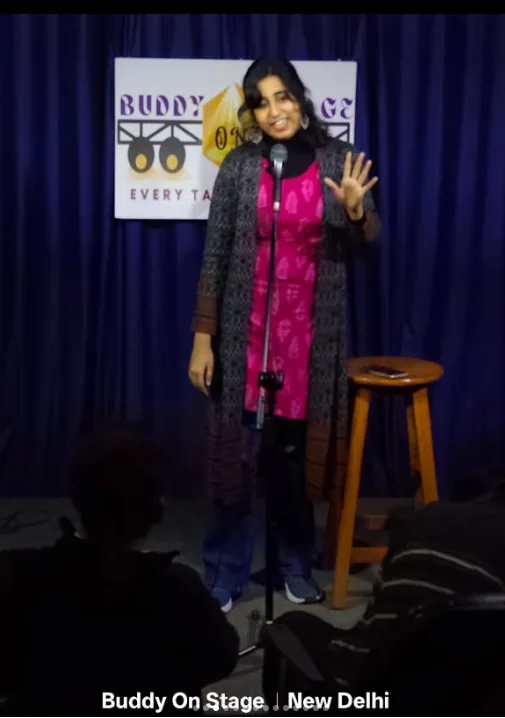
You have watched a hundred sets on Netflix, YouTube, live comedy clubs, your friend's cousin's Instagram. At some point, possibly years ago, possibly last week, a quiet thought showed up: I could do this. I think I could actually do this.
That thought is information. It did not appear randomly. It means something in you recognised the craft, saw the mechanics, and sensed that the gap between audience and performer is smaller than it first appears. This blog is about that gap — what it actually is, and the single small step that crosses it.
The Mindset Shift You Are About To Make
Audience members consume comedy. Performers contribute to it. That is the entire fundamental difference — and the gap between the two is not talent, not preparation, not confidence. It is one small decision: signing up for a slot.
Everyone on stage today was, at some earlier point, in the audience thinking about being on stage. The ones who made the shift did so not because they were ready but because they decided, on some random Tuesday, to just book the thing. Every single working comic started exactly where you are sitting right now.
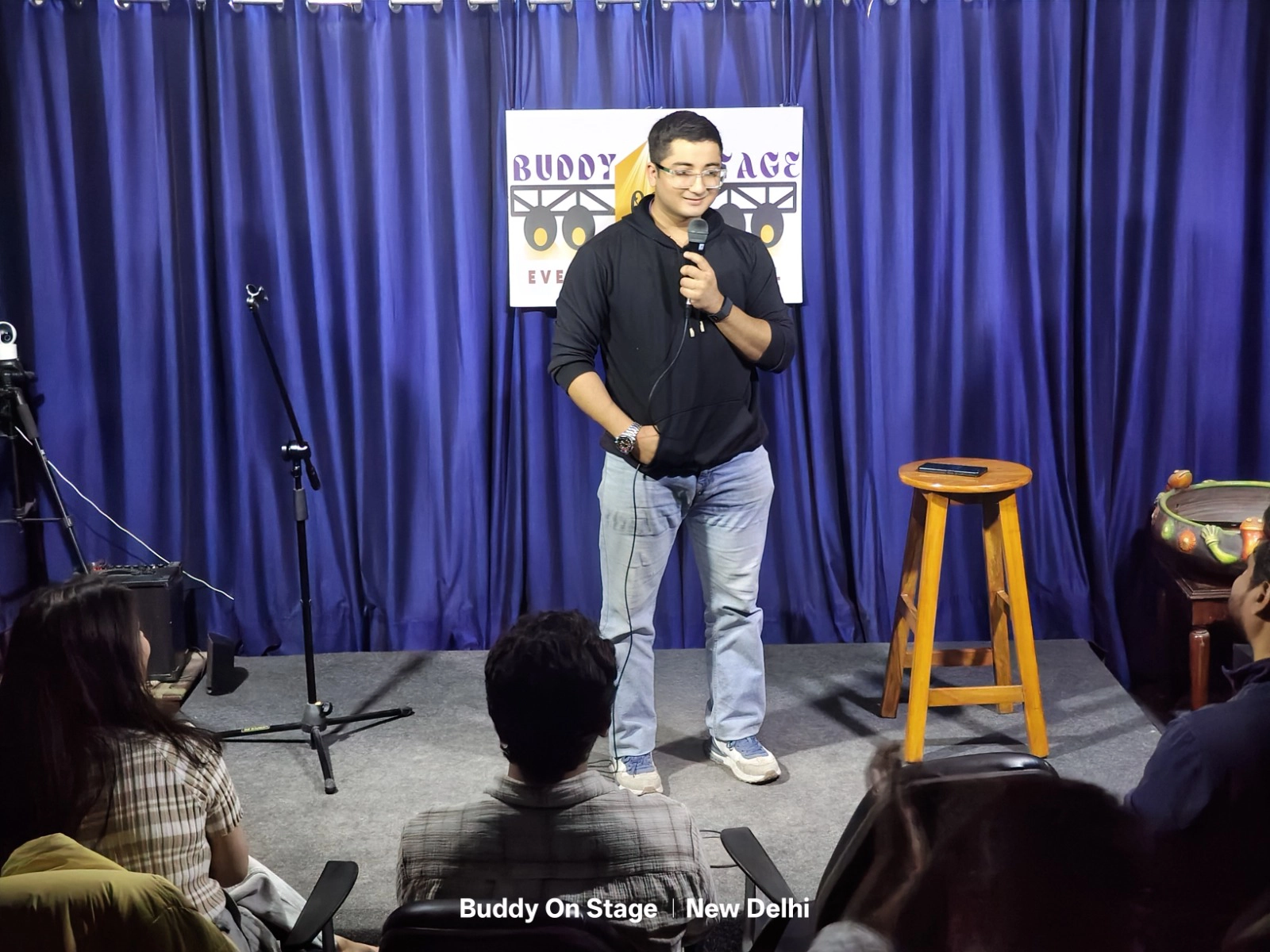
What Watching Has Already Taught You (More Than You Realise)
Years of watching stand-up have built instincts in you that you do not fully acknowledge. You know what pace feels good. You sense when a joke is overwritten. You recognise the difference between a confident comic and a shaky one. You can tell when a callback lands. You feel the moment a set is about to end before the comic says anything.
That accumulated pattern recognition is the foundation that most beginners underestimate. You are not starting from zero; you are starting from "I have watched 500+ hours of comedy" which is a genuine base of knowledge, even if it is implicit rather than explicit.
Your first set will be rough in execution, not in understanding. Your ear is already trained; your voice and body just have not caught up yet. Catching them up is what stage time does.
The Specific First Step
The step is shorter than you imagine. It literally takes three minutes.
- Open buddyonstage.com/open-mics
- Pick a city and a date 10-21 days out — close enough to feel real, far enough to prepare
- Book your 6-minute performer slot
- Start writing 6 minutes of material from your own life, using the 14-day prep plan
That is the entire first step. Not a career commitment. Not a declaration to anyone. Just a booking, followed by two weeks of writing. The hardest part — the decision — is done in three minutes.
Cross the line today
The difference between audience member and performer is one click. Book your Buddy On Stage open mic now.
Register for an Open Mic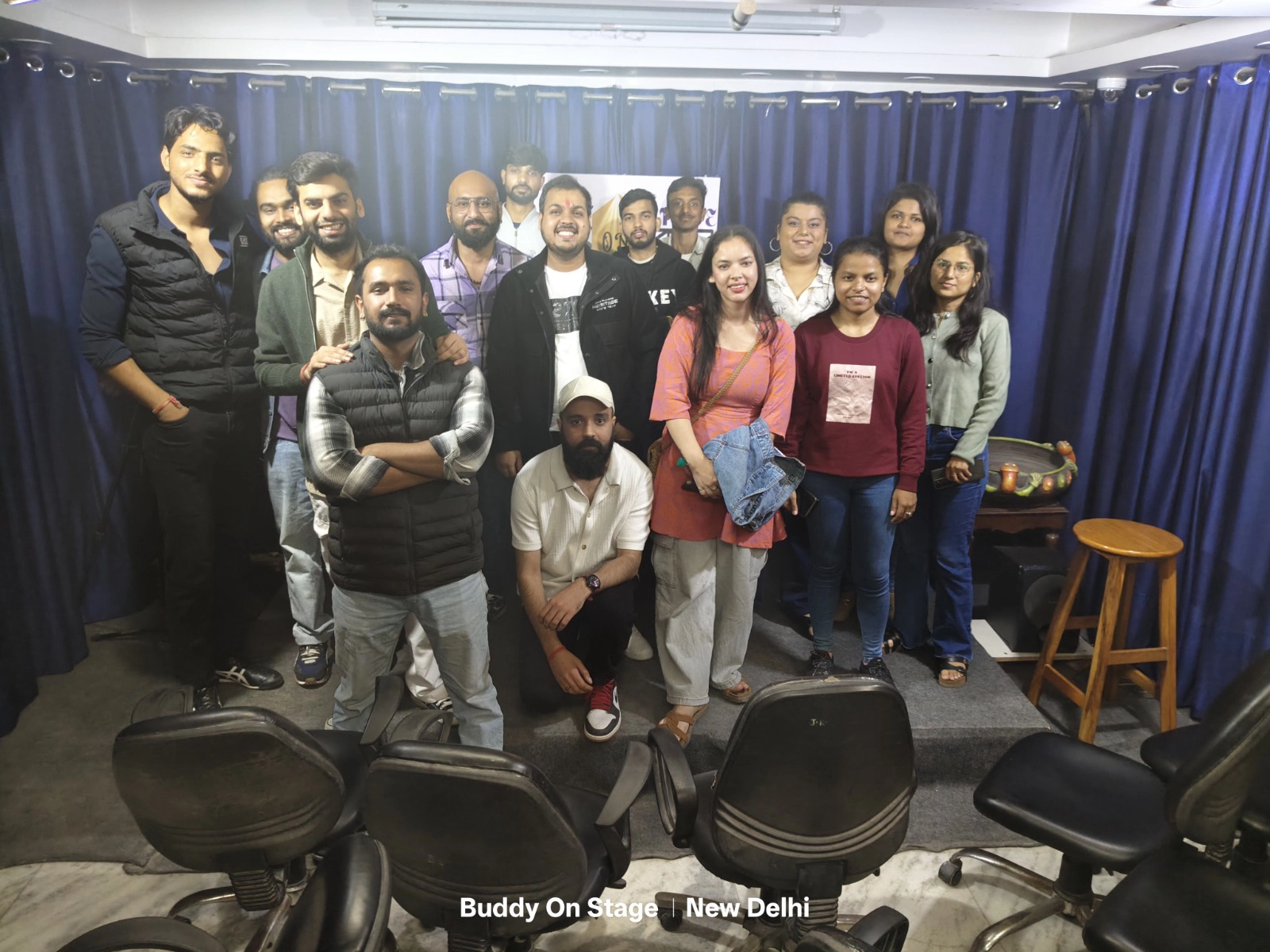
Why People Hesitate At The Line
Four fears stop most people at the exact threshold:
- Fear of not being good enough. This is universal. Every first-timer has it. It disappears after mic 3.
- Worry about what friends will think. Most friends will admire the courage. The ones who do not are not worth optimising for.
- Uncertainty about whether you really want it. Only doing it once tells you the truth. Thinking about it forever tells you nothing.
- The feeling of "not yet." There is no "yet." There is only before and after the first mic.
All four fears are valid. All four are cured permanently by actually performing once. No amount of thinking resolves them; only doing does.
What Changes After You Cross The Line
You watch stand-up differently forever. You notice structure, callbacks, timing, setup length, the specific shape of each laugh. The content you used to consume passively becomes a craft you now understand actively. Both the audience-you and the performer-you coexist; you become a better fan and a growing performer simultaneously.
You also start meeting comics, hanging out at venues, absorbing the scene. The comedy world opens as a community you are part of, not one you observe from outside. That shift in identity is subtle but significant.
"I watched stand-up obsessively for 4 years before booking my first mic. Walked off thinking "why did I wait so long?" The version of me that had been thinking about it for years could have been a year-3 comic by the time I actually booked. Do not wait like I did."
Every comic you admire was once you — sitting in an audience, quietly wondering if they could do it. The wondering ends at the booking page.