
Every HR team we work with in Delhi NCR is fighting some version of the same eleven problems. The details differ — a 40-person startup in Saket and a 900-person captive centre in Noida do not have identical constraints — but the failure modes are strikingly consistent.
Here they are, with the fix for each. Some fixes are free. Some are structural. One of them is what we do, and we will flag that honestly when we get there.
1. The engagement committee dies in Q2
January: five enthusiastic volunteers, a shared spreadsheet, a twelve-month plan. March: quarter-end. April: two of the five have changed teams. June: the spreadsheet has not been opened since. Nobody quit and nobody was negligent. The plan simply had no owner whose actual job it was.
The fix: stop relying on volunteer capacity for a recurring commitment. Either fund a real role, or put the recurring part with a partner who is contractually obliged to deliver it. Committees are good at ideas and bad at cadence.
2. Budget only exists in December
Engagement spend gets approved as an annual event line, so it clusters in one quarter and starves the rest of the year. This is a budgeting artefact, not a strategy decision, but it shapes behaviour completely.
The fix: reclassify it. A monthly programme is an operating expense with a predictable monthly figure, which is far easier to defend in a budget review than a lumpy annual event that looks discretionary. Same money, better shape, and a monthly plan gives finance a number they can model.
3. Half the office is at home on the day you booked
Hybrid has quietly broken in-office engagement. You plan for 120, 55 turn up, the room looks empty and the people who came feel like they attended something that failed.
The fix: stop scheduling around the activity and start scheduling around attendance. Pick the day your office is fullest — most NCR companies know exactly which day that is — and anchor the session to it permanently. Announce it as a fixed monthly slot rather than a surprise. People plan their office days around things they know are happening. There is more on this in our guide to engagement for hybrid teams.
4. Nobody actually wants to participate
The single biggest silent problem with corporate engagement in India. Team-building activities that require people to perform — sing, act, present, compete — are experienced as work by a large chunk of any team, especially introverts and anyone junior enough to feel watched.
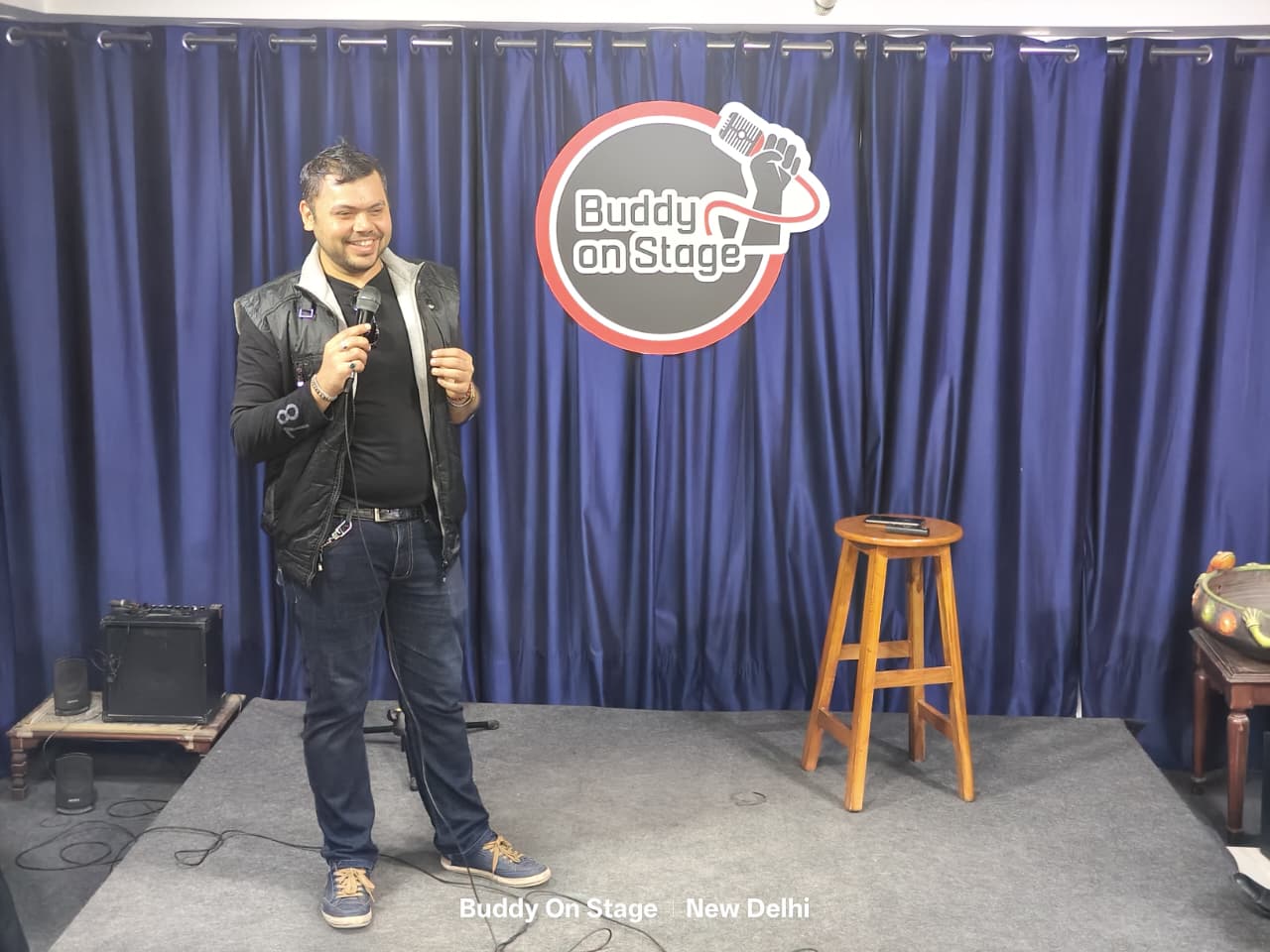
The fix: default to produced rather than participatory. A professional performing for the room asks nothing of the audience but attention. If you want interaction, let a trained host pull it out voluntarily rather than assigning it. This is why our sessions pair a performer with a host who can read a room, rather than handing your team an activity sheet.
5. It is always the same thing
Once a format repeats three times it stops being an event and becomes a routine. The third quiz of the year is not the first quiz of the year, however good the quizmaster is.
The fix: rotate deliberately. Comedy one month, live music the next, magic and mentalism after that, then poetry or storytelling, then host-led games. Our engagement plans are built around a different art form each time for exactly this reason — variety is not a luxury in a monthly programme, it is the thing that keeps it alive.
Solve nine of these eleven with one decision
A monthly programme fixes the owner problem, the budget-shape problem, the repetition problem, the logistics problem and the participation problem in one move. Tell us your headcount and city.
See Engagement Plans6. Leadership shows up for ten minutes and leaves
Nothing signals this is not important faster than the leadership team appearing for the photograph and disappearing before the first act. Employees read it instantly and correctly.
The fix: get a commitment to the full session in advance, in writing, or do not schedule leadership into it at all. A session without leadership is fine. A session where leadership visibly leaves is worse than no session.
7. You cannot prove it worked
Finance asks what the return was. HR says people enjoyed it. That exchange has killed more engagement budgets than any cost-cutting drive.
The fix: instrument it lightly but consistently. Attendance as a percentage of eligible headcount, a two-question pulse the next morning, voluntary referral rate, and regretted attrition tracked quarterly. Four numbers, tracked over twelve months, beat any anecdote. We wrote a full method in how to measure engagement ROI.
8. The logistics eat the enthusiasm
Sourcing an artist, negotiating, verifying they are any good, arranging sound, finding a host, managing the run-of-show, chasing invoices — this is thirty hours of work that your HR generalist does on top of payroll queries and three open requisitions. It is why the second event never happens.
The fix: buy the outcome, not the components. One price that includes the performers, the host, the sound and equipment, the games and the coordination means nobody on your team becomes an accidental event producer.
9. Content that lands badly
A comedian who is genuinely funny in a club can be a serious problem in a corporate room with a mixed-seniority, mixed-language audience and a compliance policy. The risk is real and one bad set undoes a year of goodwill.
The fix: content boundaries in writing before the booking is confirmed, and artists who have actually worked corporate rooms rather than only club rooms. We put language mix and content boundaries into the brief as standard — the same discipline we describe in how to write an entertainment brief.
10. The engagement is for the head office only
The Gurgaon office gets a comedy night. The Faridabad plant and the Noida support floor get an email about it. This creates a two-tier culture faster than almost anything else a company can do.
The fix: rotate locations across the year and budget for it explicitly. Since we cover Delhi, Gurgaon, Noida, Faridabad and Ghaziabad, a rotating monthly programme can move between your sites rather than defaulting to whichever one leadership sits in.
11. It is treated as a perk instead of an operating system
The deepest problem of the eleven. When engagement is a perk, it is the first thing cut when the quarter is tight — which is precisely the quarter your team most needs evidence that the company is not falling apart.
The fix: a fixed, unglamorous, recurring line item that survives quarterly mood swings. Boring is the point. The value of a monthly session is not any single session; it is the reliability. That is also why our plans have no lock-in — a programme should earn its place every month rather than trap you into a year.
Engagement does not fail because HR ran out of ideas. It fails because ideas need an owner, and everyone who could own it already has a full-time job.
The one root cause under most of these
Read the eleven again and you will notice how many collapse into a single sentence: nobody outside your company is responsible for making next month happen. The committee problem, the budget-shape problem, the logistics problem, the repetition problem and the perk problem are all versions of that.
Which is the whole reason we sell monthly engagement plans rather than one-off bookings. You pick one, two or four sessions a month. We agree the dates with you, then bring the performer, the host, the sound and the games to your office and run each session end to end — a different art form every time. It works for teams from around twenty to a few hundred, and a regular session usually needs only about a week's notice.
No lock-in, billed monthly, and annual prepay saves 30%. Current plans and inclusions are on the employee engagement page — or send us your headcount on WhatsApp and we will come back within a business day.