
The phrase 'Fun Friday' has taken a beating in Indian offices, and mostly it has earned it. Somewhere between the mandatory dumb charades and the WhatsApp forward about a themed dress code, the idea acquired a reputation for being neither fun nor optional.
It is worth rescuing, though, because the underlying instinct is right. The end of the week is the correct moment to punctuate work, and a team that closes the week together starts the next one differently. The problem is not the concept. It is the execution, and it fails in three specific ways.
Why most Fun Fridays fail
- It is mandatory but pretends not to be. Nobody says attendance is compulsory, and everybody knows who noticed you left. The gap between the stated and the actual rule is what generates the eye-roll, not the activity itself.
- It asks people to perform. Sing, act, dance, present, compete in front of colleagues. For a large share of any team — especially juniors and introverts — this is not a break from work. It is a harder version of work.
- It is scheduled at 5:30pm on a Friday. The single most reliable way to punish anyone with a commute from Ghaziabad, a family at home, or a train to catch. Attendance at a 5:30pm Friday activity does not measure engagement. It measures who lives nearby.
Fix those three and the format works. Ignore them and no amount of budget will save it.
If people have to be reminded twice to attend, you did not plan a Fun Friday. You scheduled a meeting with snacks.
The three rules
- Run it inside the working day, not after it. 3pm to 4:30pm on a Friday beats 5:30pm to 7pm every single time. Giving people ninety minutes of company time is a real gift; taking ninety minutes of their evening is a cost dressed as a gift.
- Nobody performs unless they volunteer. The default is that a professional performs and the team watches. If you want interaction, a trained host can pull it out of people who want to be pulled in, without calling on anyone who does not.
- Make it genuinely optional and mean it. Say it plainly, and make sure managers say it too. Paradoxically, optional attendance is almost always higher than compulsory attendance, because people who chose to be there change the temperature of a room.
What works: monthly anchors
Do not try to make every Friday special — you will exhaust your team and your budget. Make one Friday a month genuinely good, and keep the other three light and free.
The monthly anchor: something live
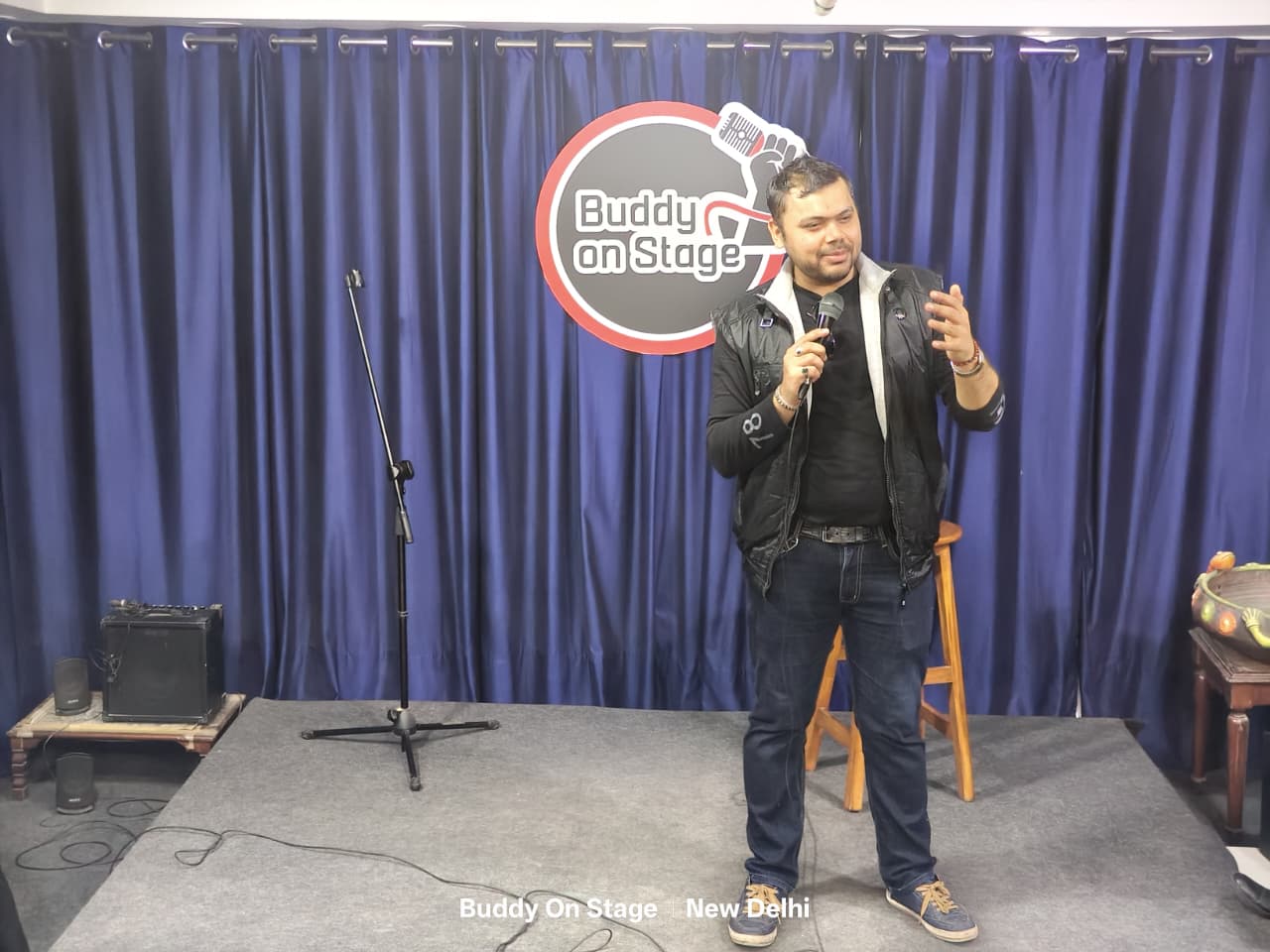
One Friday a month, a professional comes in. A stand-up comic for a 45-minute set. A duo playing an acoustic hour. A close-up magician moving table to table. A mentalist doing a piece the whole room talks about on Monday. Host-led team games run by someone who actually knows how to read a room.
This is the one that needs to be produced properly, and it is the one worth spending on. It also solves the participation problem completely: nobody has to be good at anything.
It is exactly what our monthly engagement plans deliver — the performer, the host, the sound and the games, brought to your office and run end to end, with a different art form each month so the anchor Friday never becomes predictable.
The other Fridays: light and free
- Long lunch, company-funded, cross-team seating. Randomly assign tables. The cross-team mixing is the output; the food is the excuse.
- Show and tell, thirty minutes. Two volunteers, anything unrelated to work. A photography hobby, a restored motorcycle, an argument about a film. Volunteers only, always.
- A no-meeting Friday afternoon. The most popular engagement initiative in any company that has tried it, and it costs nothing but discipline.
- Early close once a quarter. Not every week — it stops being a gift. Once a quarter, announced, protected.
- Named recognition, five minutes. In the room, by name, by someone senior, for something specific.
One good Friday a month, handled entirely
We bring the act, the host, the sound and the games to your office in Delhi, Gurgaon, Noida, Faridabad or Ghaziabad and run the session end to end. Your team clears a room and shows up.
See Engagement PlansWhat to stop doing
- Themed dress codes. Enjoyed by a small, loud minority. Quietly resented by everyone who now has to think about clothes on a work morning.
- Games that create winners in front of colleagues. Competitive formats produce a handful of delighted people and a majority who wanted the hour back.
- Anything requiring people to touch each other. Still surprisingly common in team-building decks. Do not.
- Forced fun on a deadline week. Read the room. A team shipping on Monday does not want ninety minutes of enforced joy on Friday afternoon; they want the ninety minutes.
- Cancelling it when things get busy. The most damaging habit of all. The message received is that engagement matters only when nothing else does — which is the opposite of what you want to say.
That last point is why we structure this as a monthly commitment with dates agreed in advance rather than a nice-to-have. The value is in the reliability, not in any individual session.
Fun Fridays in a hybrid office
If your team is in the office two or three days a week, Friday may be the emptiest day in the building — in which case a Fun Friday is a Fun Friday for eleven people.
Two options. Either move the anchor session to whichever day your office is genuinely fullest and keep calling it Fun Friday if the name has stuck, or fix the Friday and announce the schedule a quarter ahead so people can choose to come in for it. Both work. What does not work is booking something good on a day the office is empty and concluding that engagement does not work. There is more in our guide to engagement for hybrid teams.
A quarter that actually works
- Month 1: stand-up comedy, 3pm, 45 minutes, plus five minutes of named recognition first.
- Month 2: live acoustic music over an extended lunch.
- Month 3: close-up magic or a mentalism set, plus host-led games.
- Every other Friday: no-meeting afternoon. Free, and consistently the most appreciated thing on this list.
- Once in the quarter: an early close, announced in advance and protected even if the week is busy.
Three produced sessions a quarter, nine light Fridays, one early close. Nobody has to perform, nothing is compulsory, and by the end of the year your team has twelve concrete memories rather than a vague sense that the company once did a quiz.
We can run the produced part across Delhi NCR at one, two or four sessions a month, one price covering performers, host, sound, games and coordination, with no lock-in and monthly billing. Current plans are on the employee engagement page.