
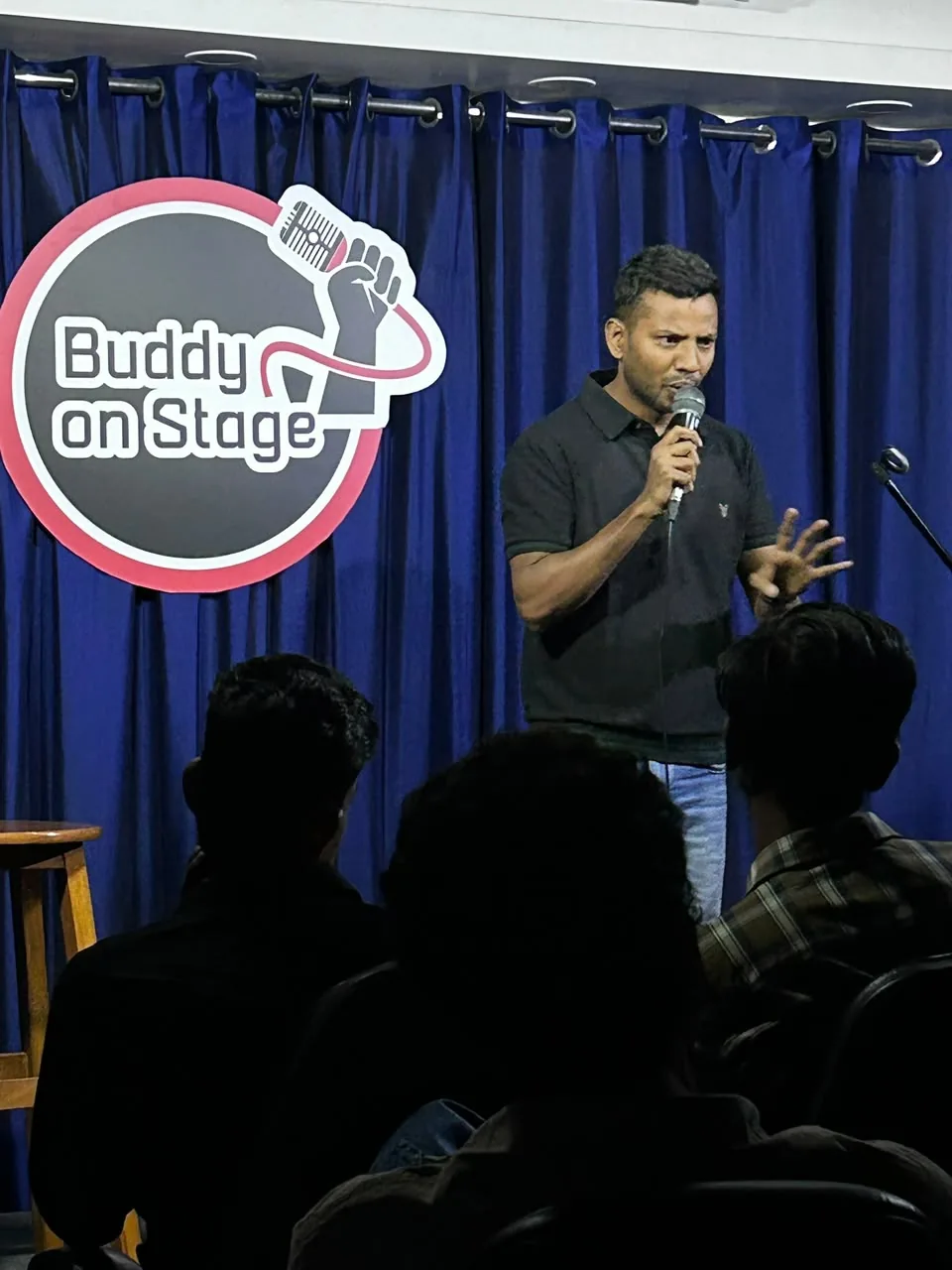
To grow as a comedian on Instagram, post consistently, post material that has already been tested on a live audience, and keep doing the stage work that makes your content worth watching. That is it. Not a secret hashtag, not a magic posting time. The comics who grow online are mostly comics who got good on stage first and then learned to clip, caption and post the moments that already worked. Here is how to do that without turning into a full-time reel factory.
What Should a Comedian Post on Instagram?
There are a few formats that work for comics. Pick two or three and get good at them rather than trying everything:
- Tested stand-up clips: a single joke or bit from a live set, with the real laugh in it. This is the most direct showcase of what you do.
- Crowd work moments: unscripted back-and-forth with the audience. Often very shareable — but only post with care and good judgement about the audience member.
- Sketches and characters: short scripted pieces shot for the phone. A different skill, but a good outlet for ideas that do not fit your set.
- Talking-to-camera bits: a premise delivered straight to the lens. Fast to make, useful for testing whether an idea has legs.
- Behind the scenes: open mic life, travel to gigs, the green room. Builds a relationship with followers beyond the jokes.
For the filming and editing side — framing, audio, cutting the clip — read how to film a stand-up comedy reel. This blog is about what to post and how to grow, not which phone mount to buy.
Why Should You Test Bits Live Before Posting?
Because a live room is the cheapest honest focus group you will ever get. If a joke gets silence at five open mics, it is not going to suddenly kill online. If it gets a big laugh every time, you know it works — and you have a recording with a real reaction in it, which reads far better on a phone than a joke told to an empty room.
This is where a good recording does double duty. Perform at open mics, record every set, and look for the moments with the biggest, longest laughs. AI feedback on your set makes this quick: it marks where the audience laughed or clapped, down to the second, and how long the laugh lasted — so you know exactly which 40 seconds to clip, without scrubbing through the whole recording.
What a set note can look like when you are hunting for clips
- [01:22] “Landlord ka aadhar card” punch — set ka sabse lamba laugh. Reel candidate.
- [03:05] Front row se crowd work — achha laugh, par audio thoda dabba hua.
- [04:30–05:10] Metro bit flat — post karne se pehle rewrite karo.
- Next set ka focus: metro bit ka setup chhota karo.
Know which 40 seconds of your set are worth posting.
Upload your set and get timestamps of where the room laughed loudest and longest — plus what to fix in the bits that are not ready yet.
Analyse My SetHow Often Should a Comedian Post on Instagram?
Often enough to be consistent, rarely enough that quality stays high. A rhythm you can actually keep — say, a few posts a week — beats a burst of daily posting followed by a month of silence. The easiest way to stay consistent is to make content a side effect of stage work: every set you record is potential material, and the open mic becomes your content pipeline.

Reels vs Stage: Which Matters More for a Comedian?
Both, but in a specific order. Stage first, reels second. Online reach without stage strength creates a gap that shows up the first time those followers buy a ticket and you have only fifteen solid minutes. Stage strength without any online presence makes it harder for new audiences and organisers to find you.
A sensible balance for most comics: keep performing every week, treat Instagram as a way to share the best of what already works, and never let the hunt for a viral clip stop you from trying new, rough material on stage. The stage is where the next good clip gets written.
How Do You Write Hooks and Captions for Comedy Reels?
Your first two seconds decide whether anyone watches the next twenty. Start the clip as close to the premise as possible — cut the “so, um, anyway” and the walk to the mic. On-screen text that states the premise in a few words (“When your landlord asks for your Aadhaar… again”) helps people who scroll with sound off. Keep the caption short and in your own voice; it is not the place to explain the joke. And always add subtitles — Hinglish punchlines get lost fast on a phone speaker.
How Do You Turn Instagram Followers Into People at Your Shows?
Followers are not an audience until some of them turn up in person. Tell people where you are performing next. Post clips from the show afterwards so followers see what they missed. Reply to comments, remember regulars, thank people who come. When you eventually do your own show, those are the first people who will buy a ticket — and they will only keep coming back if the live set is as good as the clips promised. That is one more reason the stage has to stay first.
Common Mistakes Comedians Make on Instagram
- Posting untested jokes: if the room did not laugh, the feed probably will not either.
- Chasing trends that are not you: a trending audio with no connection to your voice builds an audience for someone else.
- Bad audio: people forgive shaky video, not a punchline they cannot hear.
- Inconsistent bursts: ten posts one week, none for the next month.
- Dropping stage time for content: the reel is a trailer; the stage is the film.
Final Thoughts
Growing as a comedian on Instagram is mostly about getting good on stage and then getting good at sharing it. Post what is tested, post consistently, keep the audio clean and never stop writing new material for the live room.
Your next reel is hiding inside your next set. Book an open mic, record it, and find out exactly where the room laughed hardest. Then clip that.