
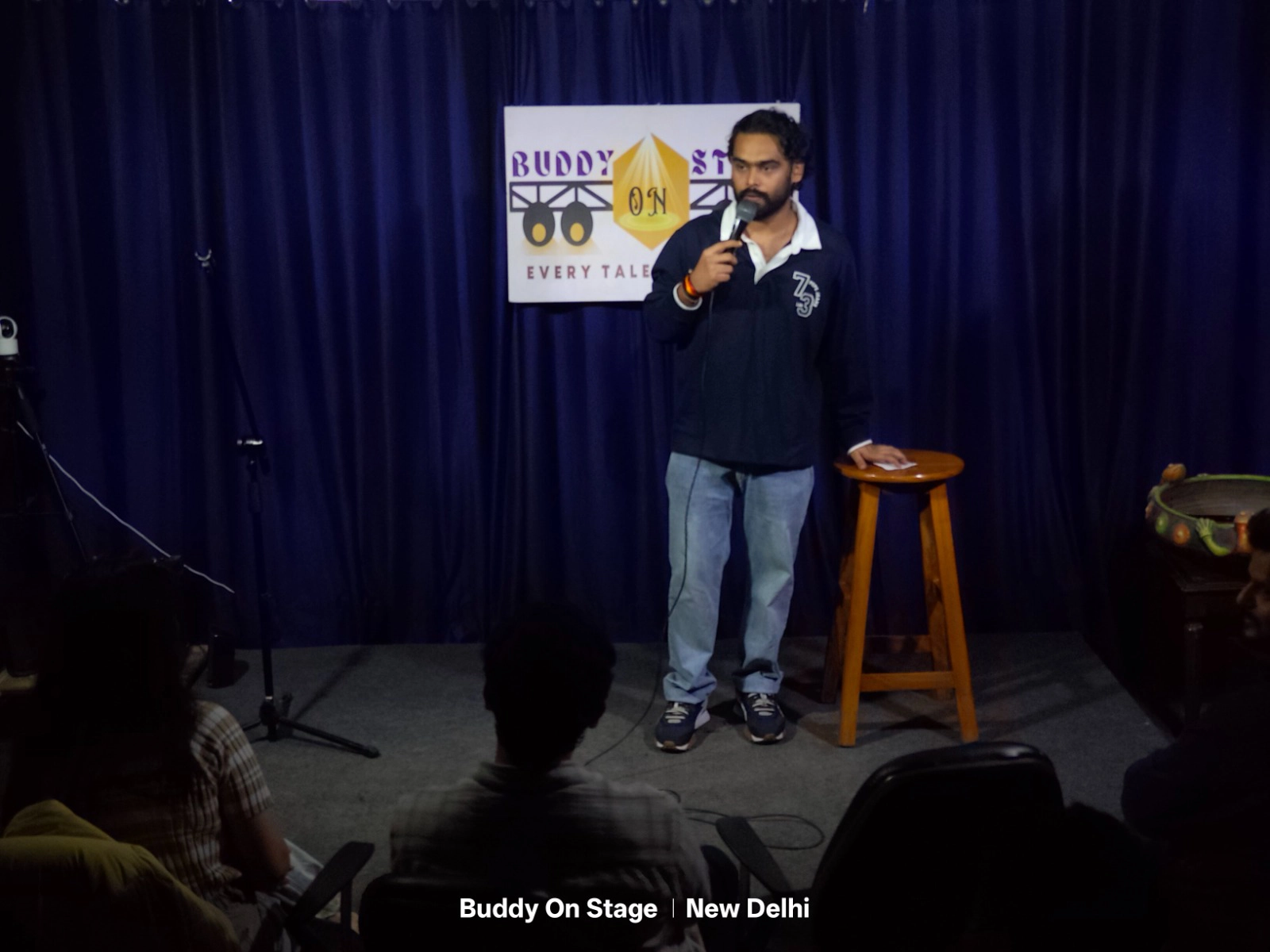
Most first-time comics fall into one of two traps. They either over-prepare — memorising every word, scripting every pause, flattening the delivery into something that sounds like a school recitation — or they under-prepare, showing up with vague ideas scribbled on a phone that morning, then crumbling when the spotlight hits.
The sweet spot is neither. It is a clean 14-day plan that is structured enough to feel confident but loose enough to sound human. Here is the day-by-day version that works for almost every first-time comic.
Day 1-4: Finalise Your 6 Minutes
Lock your setlist before anything else. Three premise chunks of roughly 90-120 seconds each, with a cold-opener that grabs attention in the first 10 seconds and a closer that earns your biggest laugh. This structure gives the audience a clear shape, even if individual jokes wobble.
Write the full set out word-for-word at this stage. Not because you will memorise it verbatim, but because writing the full version reveals which jokes depend on fragile wordings and which are robust to paraphrasing. Once you have the document, collapse it into a bullet-point setlist — one line per joke, nothing more.
Example bullet for your pocket card: Mom wedding story → 400-person "small" → horse → tradition hai. That is enough to trigger the full joke from memory, but too little to read verbatim under pressure on stage.
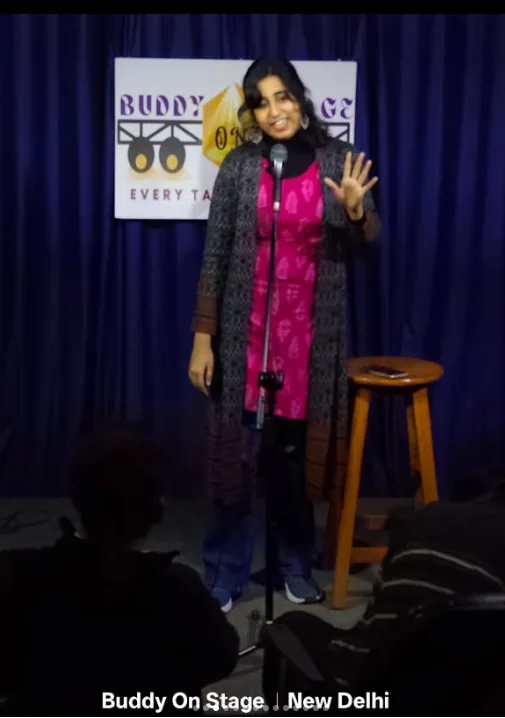
Day 5-8: Say It Out Loud 20 Times
This is where the body learns the set. Each rehearsal should be at normal speaking pace, standing up, into a phone recorder. Do not do it silently — jokes that sound funny in your head often stumble out loud. That gap between head and mouth is exactly what you are training against this week.
Watch three of your recordings back during this window. You will catch filler words ("so", "like", "basically" showing up every 15 seconds), sections you rushed through because you were unsure, and jokes you delivered two slightly different ways across takes. Pick the stronger version and commit to it so your muscle memory has a single clean version.
A common beginner mistake: only rehearsing the punchlines you love. Rehearse the weak middles twice as much — those are where you stumble live, where your pace drops and your confidence wobbles. The strong jokes take care of themselves on stage.
Day 9-11: Rehearse In Front Of A Human
Pick one honest friend, ideally not your closest one (their affection will skew the laughs toward being too generous). Someone whose humour you respect and who will tell you the truth. Tell them your set exactly the way you plan to deliver it, standing up, without stopping.
Watch their face, not their words. Real laughter creates involuntary micro-expressions that fake politeness cannot replicate. A flat face mid-joke is data — that joke needs a rewrite. A genuine laugh you did not expect is gold — that line is stronger than you thought. A "that's funny" without a laugh usually means the joke reads well but is not actually funny yet.
If your friend tells you "it was great, all of it" — rotate to a different friend next time. You need specific feedback, not reassurance. The goal of this step is to find the two or three jokes that do not work and either fix them or cut them before the real stage.
The next Buddy On Stage open mic is waiting
14 days of preparation means nothing without a booked date on the calendar. Register now and lock the deadline that pulls the work out of you.
Register for an Open MicDay 12-13: Night-Of Simulation
By now you have the set memorised, recorded, reviewed, and friend-tested. The final two days are simulation — run the night as closely to the real thing as possible. Your body needs to know what the actual performance feels like before it feels it for the first time.
Put on the clothes you plan to wear. Stand up, not sit. Hold a pen or marker as a mic substitute. Start a 6-minute timer. Deliver the full set as if 40 strangers are watching. Do not stop, do not restart, do not edit mid-run. Just finish — that is the same discipline you will need on the real stage.
If you finish under 5 minutes, you are rushing — add internal pauses and expand your tags. If you blow past 7 minutes, your setlist has drift — cut every sentence that does not directly serve a punchline. At exactly 5:30 to 6:00, you are stage-ready. Aim to land in that window twice in a row before Day 14.

Day 14: The Day Itself
Morning
Run the full set one final time in a quiet room. Do not rewrite anything today — it is too late, and new material is untested. Trust what you built over the last 13 days. If a line has bugged you for two weeks but you never fixed it, live with it for one night. It is not that one line that will ruin the set.
Afternoon
Eat a light, familiar meal about two hours before the slot. Hydrate steadily — one glass per hour — but stop caffeine within four hours of the mic. Read your setlist twice, silently. Watch one set from a comic you admire, not to absorb new ideas, but to remind your brain that this thing is doable by an ordinary person on an ordinary night.
Evening
Arrive 45 minutes before the show. That buffer is non-negotiable — it lets the venue stop feeling alien. Introduce yourself to the host. Confirm your slot number. Find a middle-row seat. Watch the first 2-3 performers just enough to read the room's energy, then mentally step back into your own set to keep focus sharp.
What To Pack
- Printed setlist + digital backup. One folded in your pocket, one in your phone's notes app. Redundancy is cheap insurance when nerves are high.
- A small water bottle. Stage lights and adrenaline both dry out your throat — nothing kills delivery like a dry crack mid-punchline.
- Pen and notebook. For capturing feedback and observations in the 15 minutes after you walk off, while the set is still fresh.
- Cash. Some venues run on cash or have cover charges where cards mysteriously do not work.
- Comfortable shoes. This is not the night for breaking in new chappals or heels — you want to stand steady, not adjust.
- One friend (optional). Bring one if their presence calms you. Skip it if they distract you. No middle ground — a friend who texts you pre-slot is worse than none.
"I followed this 14-day plan before my first open mic at Buddy On Stage. Day 9 feedback from a friend saved one of my jokes — she laughed at a line I was planning to cut. Ended up being my biggest laugh on stage that night."
Preparation is not about erasing fear. It is about trusting your own plan enough that fear stops running the show.