
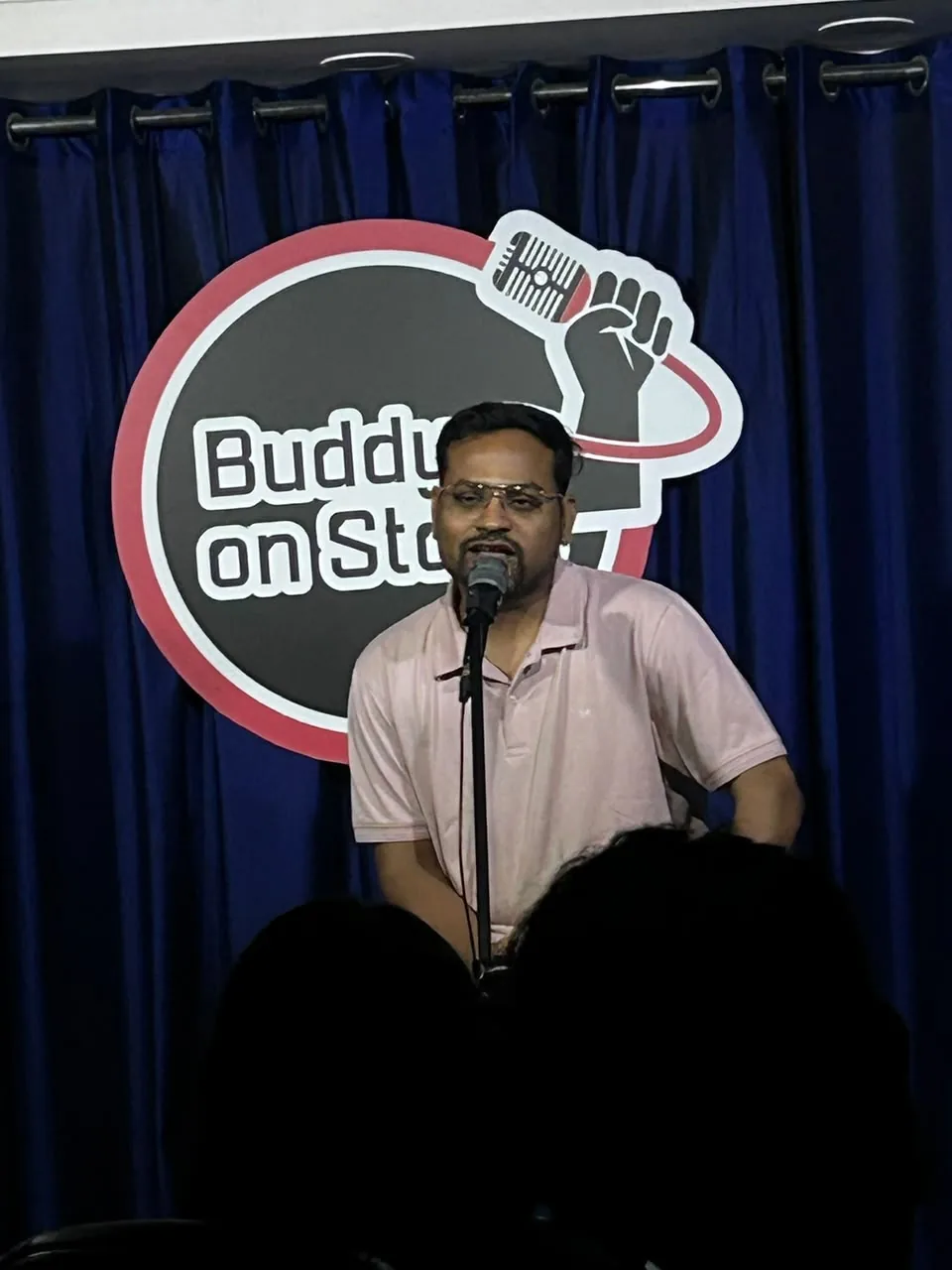
You have a poem you love. It looks beautiful in your notes app. But an open mic is not a page — the room hears your poem once, out loud, with no chance to scroll back up and re-read a line they missed. Writing for that moment is a different craft, and it is a learnable one.
The good news: you do not need fancier vocabulary or a heavier theme. You need a poem built for the ear and the breath. Here is how to write one that lands in the room the first time it is heard.
Write for the Ear, Not the Eye
On the page, a reader can pause, re-read, admire a clever line break. On the mic, your words arrive in a single stream. If a line needs to be seen to work — a visual pun, a shape on the page, a footnote — it will vanish out loud. Test every line by reading it aloud. If your own tongue trips or the meaning blurs when heard, rewrite it plainer.
This is why spoken word leans on sound: rhythm, repetition, internal rhyme, a beat you can feel. Hindi and Urdu poetry already know this — a good sher lives in its radeef and qaafiya, the repeating end-sound that the mehfil waits for. Give your English poem the same gift: something for the ear to hold on to.
Open With a Line That Earns the Next 30 Seconds
An open-mic crowd decides in the first two lines whether to lean in or drift to their phone. Do not open with throat-clearing (“This is a poem I wrote about…”) or three lines of scene-setting. Open with an image, a confession, or a question that makes them need the next line. You can always explain later; you cannot un-lose their attention.
One Poem, One Feeling
A five-minute slot is not a book launch. Pick one emotional core — one heartbreak, one city, one memory of your nani’s kitchen — and go deep, not wide. Beginners try to cram their whole worldview into one poem and the room feels the effort without feeling anything. Trust that one clear feeling, honestly delivered, is enough. It is more than enough.
Build in Breath and Rhythm
Read your draft aloud and mark where you naturally breathe. Those pauses are part of the poem — they are where the room catches up and feels the weight. Short lines land like punches; long lines build a wave. Vary them on purpose. A poem that is all one speed, however lovely on paper, flattens into a drone on the mic.
- Short line for impact and silence after.
- Long line to build momentum and pull the room forward.
- A repeated line the room starts to anticipate — your radeef, your refrain.
- A hard, clean last line so they know exactly when to breathe out and clap.
A poem is only finished on the mic.
You can edit a poem forever at your desk, but a live room tells you in one reading which lines land and which you love only because you wrote them. Book a slot and find out.
Register for an Open MicLand the Ending on Purpose
The most common open-mic mistake is a poem that stops instead of ends. The room cannot see the page, so they do not know you are done — and an unsure ending gets an unsure, delayed clap. Write a final line that clearly signals arrival: a return to your opening image, a turn, a quiet resolution. When the last word lands right, the applause comes on its own.
Cut Until Only the Poem Is Left
After your draft works, cut ten percent. Delete the line that explains the metaphor you already showed. Delete the adjective doing the same job as the noun beside it. Spoken word rewards economy — every extra word is a second the room waits instead of feels. Read it aloud one final time. If nothing is missing, you are ready.
A page poem asks to be studied. A mic poem asks to be felt, once, in the time it takes to say it. Write the second kind and the room is yours.
Your First Real Edit Is the Open Mic
Every technique here is a guess until a live room hears it. Bring one poem, read it, and watch exactly where the room goes still and where it fidgets. That feedback — impossible to get alone at your desk — is how poems get sharp. At Buddy On Stage you get honest minutes on a real mic in front of a room that came to listen. Write the poem, then let the room finish teaching you.