
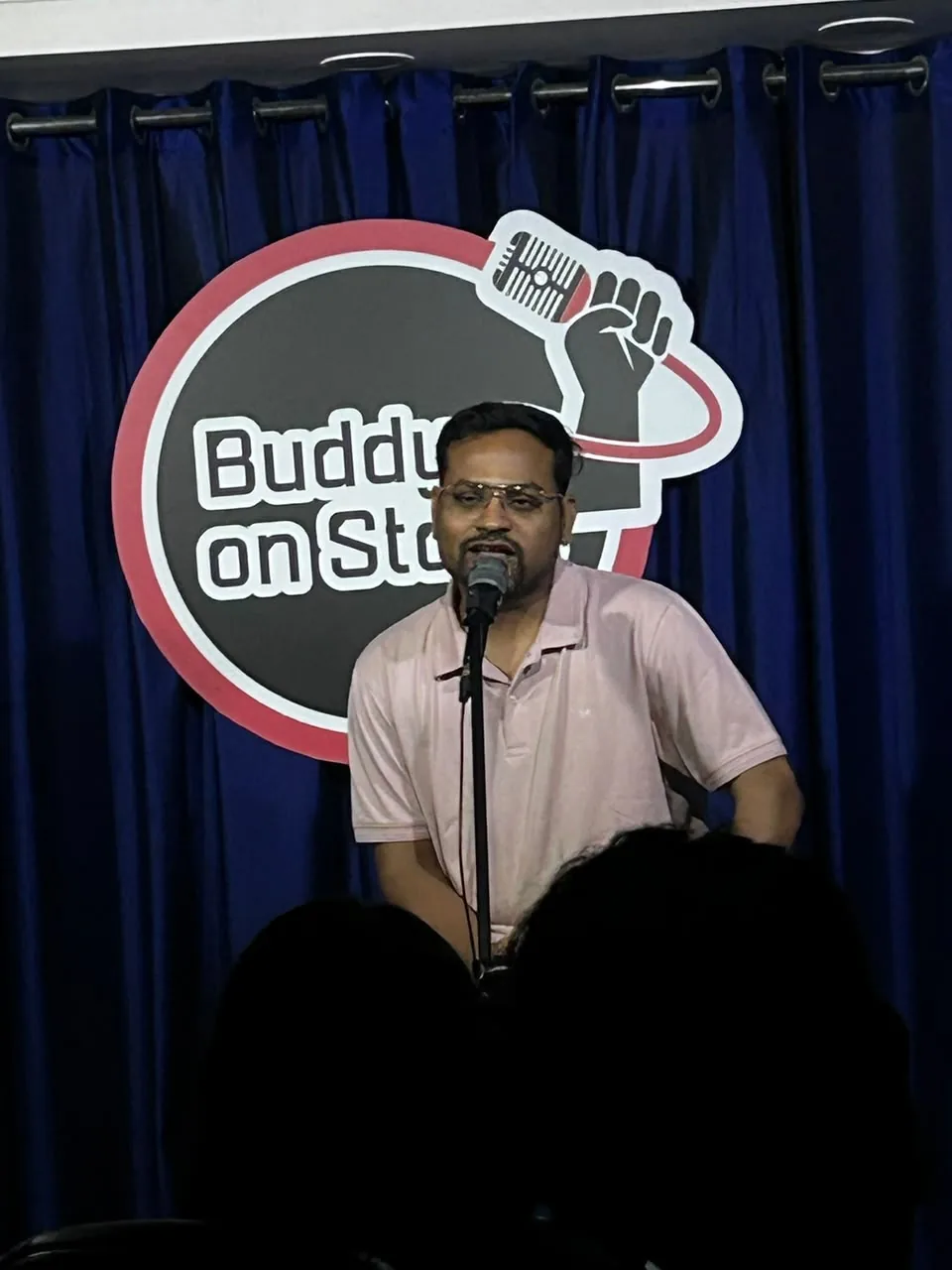
AI feedback matters in stand-up comedy because it gives you an honest, timestamped record of what the room actually did during your set — where they laughed, where they went quiet and how your pace held up — so you can improve with evidence instead of guesswork. Comedy is learned on stage, but only if you know what happened on stage. Most comics don’t.
Every comedian improves the same way: perform, review, fix, perform again. The problem is the middle step. Here is why that step breaks down for most beginners, and why AI feedback has become one of the most useful tools for fixing it.
Why Is Feedback So Important in Stand-Up Comedy?
Because the audience is the only judge that counts, and the audience never explains itself. A joke either gets a laugh or it doesn’t. Nobody stands up after your set to tell you the setup was two sentences too long or that you rushed the punchline.
So comics have to read the verdict themselves. That is what feedback is: turning the room’s reaction into a decision about what to keep, cut or rewrite. Without it, you can do fifty open mics and repeat the same mistakes fifty times. With it, every set teaches you something. Our guide on why stage time matters makes the same point: stage time builds you only when you learn from it.
Why Can’t Comedians Remember Their Own Sets?
Ask any comic straight off stage how it went and you will get either “killed it” or “died”, often about the same set. Adrenaline does strange things to memory. You remember the one joke that bombed and the one that got a big laugh, and very little in between.
- You misjudge silence. Four seconds of quiet feels like a minute on stage. On a recording it is often just the room thinking.
- You miss small laughs. Chuckles and smiles don’t register under the lights, but they tell you which lines are close.
- You lose track of time. Most beginners have no idea how long their intro took or when the first laugh came.
- You remember emotions, not facts. “It felt bad” is not something you can fix.
This is exactly why comics record their sets. But a recording only helps if you actually listen to it properly, which most people avoid because it is painful and slow.
Why Isn’t Feedback From Friends Enough?
“Badhiya tha bhai.” Every comic has heard it. Friends are kind, and that kindness makes them terrible editors. They laughed because they know you, not because the joke worked on strangers.
Experienced comics give much better notes, and you should listen to them. But they are busy, they saw your set once, and they are usually watching from the back while thinking about their own spot. Human feedback is valuable. It is just rare, inconsistent and hard to ask for after every single set. We cover all the sources in how to get feedback on your stand-up comedy.
Find out what your room was really telling you.
Upload a recording of your set and get timestamped notes on laughs, quiet stretches, pace and pauses, plus one clear focus for your next set. No login, and you see the exact price before you pay.
Get AI Feedback on My SetWhat Does AI Feedback Actually Give a Comedian?
Buddy On Stage AI feedback listens to the audio of your set (a video works too; only the sound is used) and sends a report on WhatsApp and email, usually within 5–10 minutes. It covers:
- Timestamps of laughs and claps, so you know exactly which lines worked.
- Quiet stretches, so you can see where the room drifted away.
- Pace, pauses and filler words like “um” and “basically”.
- Time management — how long your intro ran and whether you fit your slot.
- 2–4 things that worked and 2–4 things to fix.
- One focus for your next set, so you walk into the next mic with a plan instead of a vague hope.
It works for sets in Hindi, Hinglish and English, which matters in India, where most open-mic sets switch languages mid-joke.
What a few lines can look like
- [00:00–00:52] Pehla laugh 52 sec pe aaya — intro mein apna naam aur city do baar bola.
- [02:15] Metro wale bit pe sabse lamba laugh — isko set ke end ke paas le jao.
- [03:30–04:10] Room quiet — setup mein background zyada hai, seedha conflict pe aao.
- Next set ka focus: pehla joke 20 second ke andar.
Why Does AI Feedback Matter More for Beginners?
Experienced comics have built an internal ear over hundreds of sets. They can feel a room drift and adjust. Beginners don’t have that ear yet, and building it is the whole point of the first year.
AI feedback works like training wheels for that ear. When a report shows the quiet started at the exact moment you began explaining backstory, you start to notice it on stage next time. After a few sets you catch it yourself. The tool speeds up a skill you are supposed to develop anyway.
How Does AI Feedback Make Every Open Mic Count?
Stage time is limited. You might get one or two slots a week, and each one is about six minutes. If you leave a set without a clear lesson, that slot is mostly wasted. AI feedback turns each set into a short loop:
- Perform your set and record it on your phone.
- Upload the recording after the show.
- Read the timestamps and the one focus.
- Rewrite one or two things, not everything.
- Test the change at your next open mic and compare.
Do that every week and you can see your sets getting tighter, instead of hoping they are. It also makes knowing whether you are improving much less of a mystery.
Is AI Feedback Better Than ChatGPT for Comedy?
They do different jobs. A chatbot can only read your written jokes and guess whether people might laugh. It has never heard your delivery, your pause or the room. Set feedback is built from the actual recording of a real audience, so it reports what happened instead of predicting it. We go deeper on this in AI feedback for comedians.
What Can’t AI Feedback Do?
Being honest about limits is part of using any tool well:
- It can’t tell you what to write. Your point of view and your material are yours.
- It can’t replace experienced comics. It is a second pair of ears, not a mentor. Keep asking seniors for notes.
- It depends on the room. A small or tired crowd laughs less. Compare sets over several mics, not one.
- It needs a clear recording. Put your phone close to the stage speaker or the front row.
Is It Safe to Upload My Set?
Your feedback is shared only with you. The recording is encrypted and deleted within 7 days, and partners may not train on it. There is no login, and you see the exact price before you pay. Buddy On Stage open-mic performers get it free during the testing phase.
No set to upload yet? Start there.
Book a beginner-friendly 6-minute slot at a Buddy On Stage open mic in Malviya Nagar, New Delhi. No audition, open mics every week without skip. Record it, then get feedback.
Book My Open Mic SlotFinal Thoughts
Stand-up has always been learned on stage, and that won’t change. What AI feedback changes is how much you learn from each set. It remembers what adrenaline erases, swaps polite praise for timestamps and hands you one clear thing to work on next.
Your next open mic is going to happen anyway. Get feedback on it and make sure it teaches you something.