
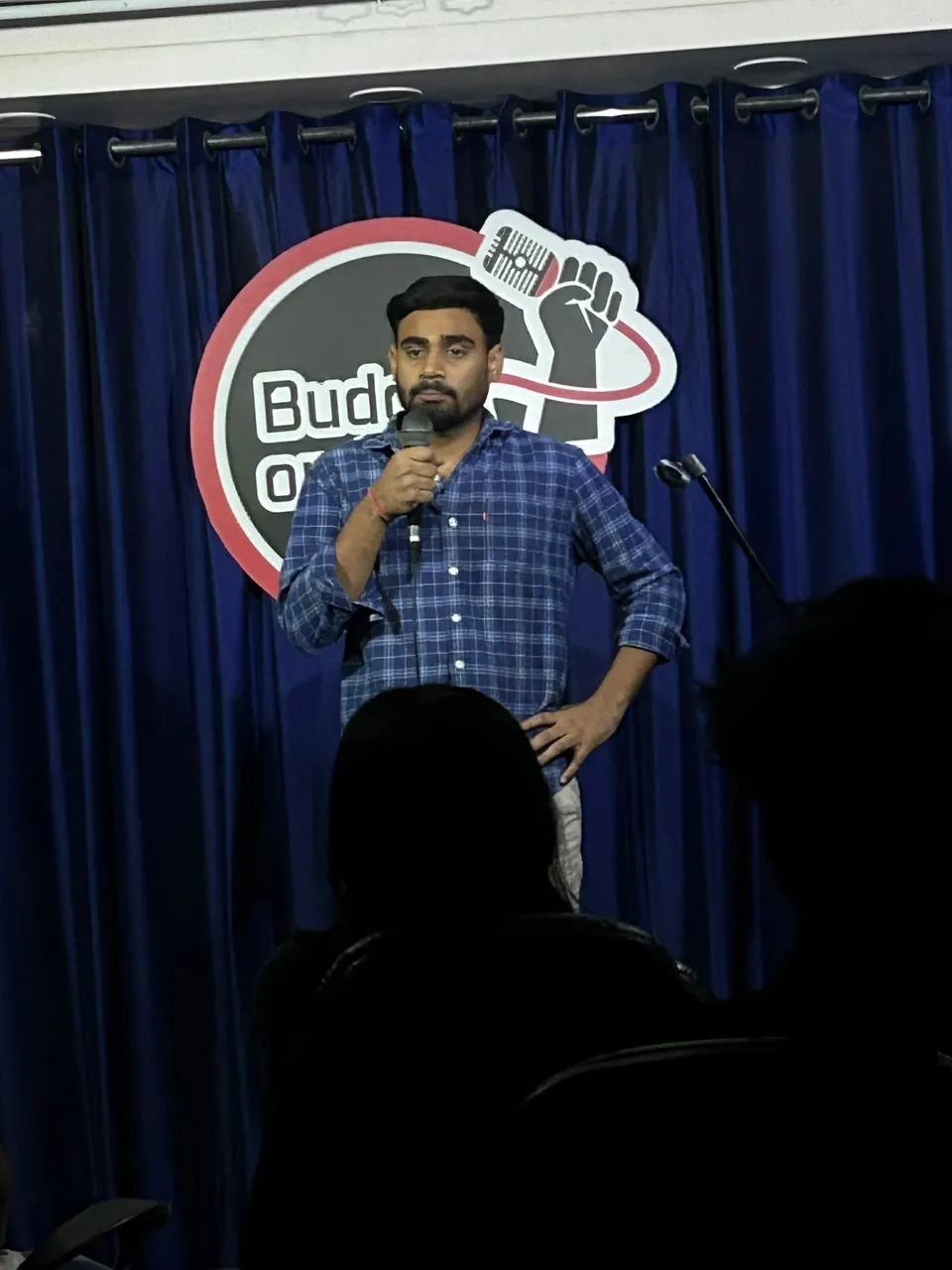
The best stand-up comedy topics for beginners are things you know from the inside: your family, your job or college, your commute, your phone, your city and your own small embarrassments. Specific, personal topics are easier to write, easier to remember on stage and much harder for an audience to have heard before. Below are 50+ topic ideas from everyday Indian life, grouped so you can find your angle fast.
One warning before the list: a topic is not a joke. “Indian parents” is a subject a thousand comics have touched. Your mother’s habit of saving every gift-wrap since 2009 is material. Use the list to find a door, then walk through it with your own details.
How Do You Choose a Stand-Up Comedy Topic as a Beginner?
Ask three questions about any topic before you write a word:
- Do I have a strong opinion about it? Comedy runs on attitude. If you feel nothing about online banking, you will not be funny about it.
- Do I have specific details? Names, places, exact phrases people said. Details are where laughs hide.
- Will a room of strangers recognise it? The best topics are personal to you but familiar to them: they have lived a version of it too.
If a topic gets three yeses, it is worth a page in your notebook. For where the raw material comes from in the first place, read where comedians get their jokes from.
Family and Home Topics
- The family WhatsApp group and its forwarded ‘good morning’ images
- Your parents learning to use a smartphone (and then using it better than you)
- Relatives who ask about marks, salary and marriage in that exact order
- The one drawer in every Indian home full of plastic bags inside plastic bags
- Sibling rivalry that somehow survives into your thirties
- Being the ‘tech support’ of the entire extended family
- Arranged-marriage meetings, biodata and the questions nobody prepares you for
- Living with parents as an adult and negotiating curfew at 28
- The rules about the ‘guest’ crockery that guests never actually use
Work, College and Career Topics
- The daily stand-up meeting that is somehow never short
- Corporate jargon: ‘let’s circle back’, ‘bandwidth’, ‘quick call’
- Work from home with family walking into your video call
- Appraisal season and the feedback you were not expecting
- Engineering, then MBA, then wondering what happened
- Hostel food, hostel roommates and hostel rules
- Group projects where one person does everything
- Coaching-centre culture and competitive exam pressure
- Your first job interview and what you actually said
City, Travel and Commute Topics
- Metro etiquette, or the total absence of it
- Negotiating with auto drivers and cab apps
- Delhi winters, Delhi summers and the two weeks of pleasant weather in between
- House hunting, brokers and landlords with very specific rules
- Moving to a new city and pretending you know the shortcuts
- Overnight train journeys and the uncle who shares his life story
- Wedding season traffic and baraat logistics
- Flying budget airlines and the war over the armrest
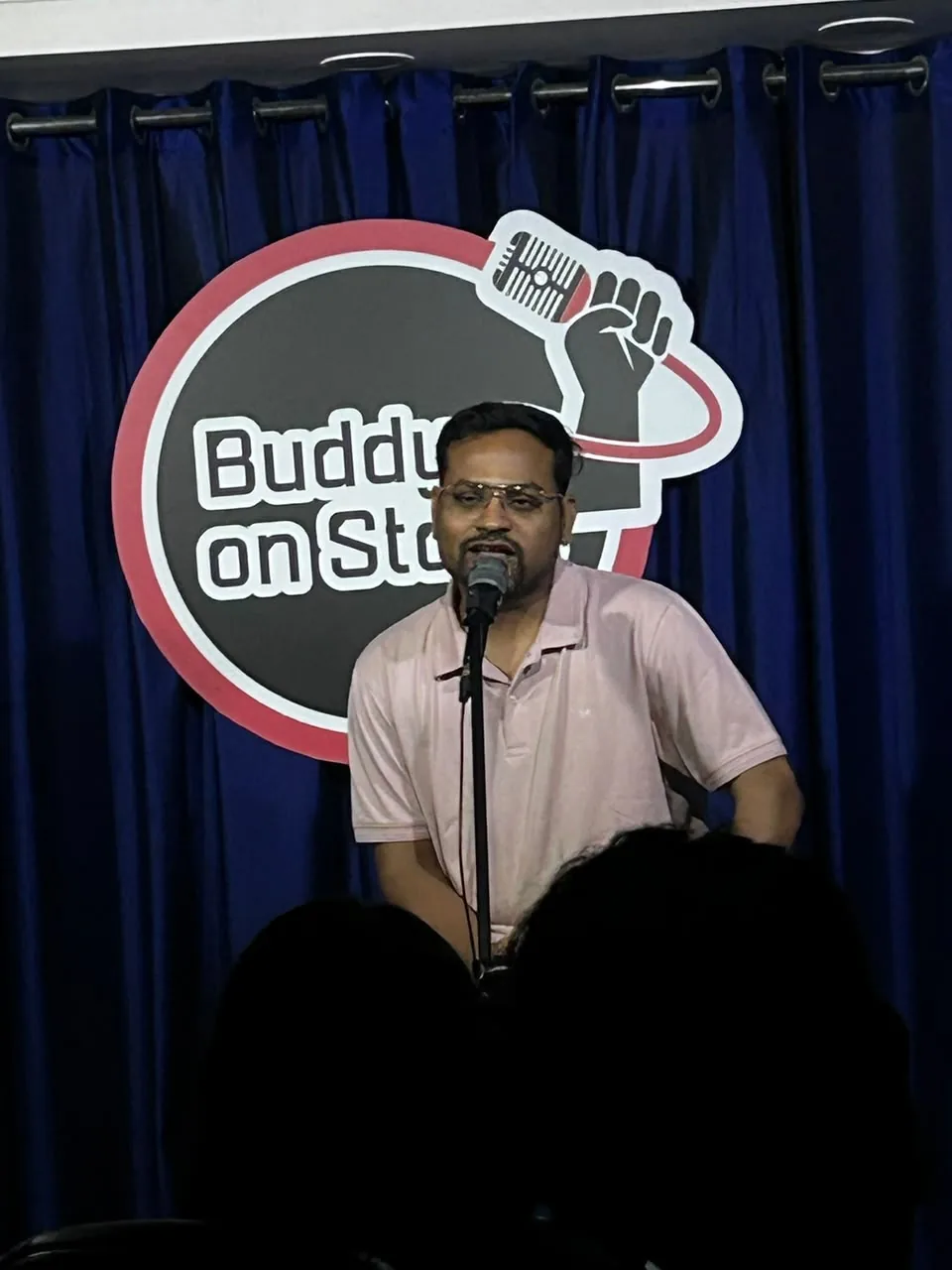
Tech, Internet and Modern Life Topics
- Dating apps and bios that say nothing
- Food delivery apps and ordering the same thing every time
- Online shopping returns and the courier who never calls
- OTP anxiety, password rules and two-factor everything
- Influencer culture and filming your food before eating it
- Smart speakers that only understand you when you shout
- Fitness apps, step counts and gym memberships you never use
- Group chats that you have muted but never left
Personal and Self-Deprecating Topics
- Your height, your hair, your accent or your name being mispronounced
- Being bad at something everyone assumes you are good at
- Your failed attempts at cooking, fitness or adulting
- Being an introvert in a family of extroverts (or the opposite)
- Your most awkward first date
- The hobby you started with full energy and abandoned in a week
- Things you are scared of that are not scary
- Trying stand-up itself: your family’s reaction to your new hobby
Food, Festivals and Culture Topics
- Regional food wars: whose biryani, whose momos, whose chole bhature
- Diwali cleaning that turns into a full house renovation
- Festival gifting and the dry-fruit box that gets re-gifted
- Weddings: the food, the dance floor, the relative who judges both
- Chai versus coffee loyalty
- Diet culture meeting Indian mothers who insist you eat more
- Language mix-ups in a Hindi, English and Hinglish household
Got a topic you cannot stop thinking about?
The only way to know if it is funny is to say it out loud to strangers. Book a beginner-friendly 6-minute slot — no audition, open mics every week without skip.
Book My Open Mic SlotHow Do You Turn a Topic Into a Joke?
Here is a simple four-step process that works for almost any topic on this list:
- Narrow it down. Not ‘relatives’, but ‘the aunty who asks about my salary at every wedding’.
- Find the attitude. Is it weird, unfair, scary, stupid or hard? Pick one feeling and commit to it.
- Write the setup. State the situation in as few words as possible so the room is with you.
- Find the surprise. The punchline is the twist the room did not see coming: an exaggeration, a reversal, an honest admission or an act-out.
For a deeper breakdown of setup and punchline, see joke structure explained simply. To build a routine around one strong topic, read how to turn daily life into stand-up material.
A quick illustrative example
Topic: the family WhatsApp group. Narrowed: ‘my father replies to every message with a thumbs up’. Attitude: it is weird. Setup: “My father replies to everything on WhatsApp with one thumbs-up emoji.” Surprise: “I told him I lost my job. Thumbs up. I told him I got a new one. Thumbs up. I am fairly sure if the house is on fire, he will forward it with a thumbs up and ‘please check’.” Not a masterpiece — but it is specific, and it gives you something to test.
Which Topics Should Beginners Avoid?
No topic is banned forever, but some are much harder to make work in your first months on stage:
- Topics everyone has already done the obvious way: airline food, generic ‘men versus women’, ‘Indian parents are strict’. If you go there, you need a truly personal angle.
- Punching down: jokes that mock people for things they cannot change tend to make rooms tense, not laugh.
- Religion and politics without craft: these need careful writing and a strong point of view. Early on, the room may hear only the topic, not the joke.
- Trending news: it dates fast, and half the room may not have seen the post you are referencing.
- Real people in the audience’s circle: jokes about a named friend or colleague only work for people who know them.
- Shock for its own sake: a gasp is not a laugh. Shock wears off fast; specific truth does not.
How Many Topics Do You Need for a First Open Mic?
Fewer than you think. In a short slot, one or two topics with a few jokes each is plenty. Jumping between eight unrelated topics in six minutes feels like channel-surfing to an audience. Our guides on how long an open mic set is and writing your first 6 minutes show how to fill the time without padding.
How Do You Know if a Topic Is Working?
You find out on stage. A topic is working when the room laughs in the places you expected, and sometimes in places you did not. It is not working when the room goes quiet right after the setup — that usually means they do not recognise the situation, or your angle is not clear yet.
The trouble is that adrenaline wipes your memory of the set. Record every performance. If you want a second pair of ears, upload the recording to Buddy On Stage AI feedback to see timestamps of laughs and quiet stretches, your pace and pauses, and one focus for your next set — in Hindi, Hinglish or English.
Tested a new topic? Find out exactly where it landed.
Upload the recording of your set and get timestamped feedback on laughs, quiet stretches, pace and one thing to fix next time. No login, and you see the exact price before you pay.
Get AI Feedback on My SetFinal Thoughts
The best stand-up comedy topics for beginners are hiding in your phone, your home and your daily commute. Pick one topic from this list that made you nod, narrow it until it is unmistakably yours, write four or five jokes and test them in front of real people.
When you are ready, book a slot at a Buddy On Stage open mic. Six minutes, one topic, one friendly room — that is how every comic’s first material was found.