
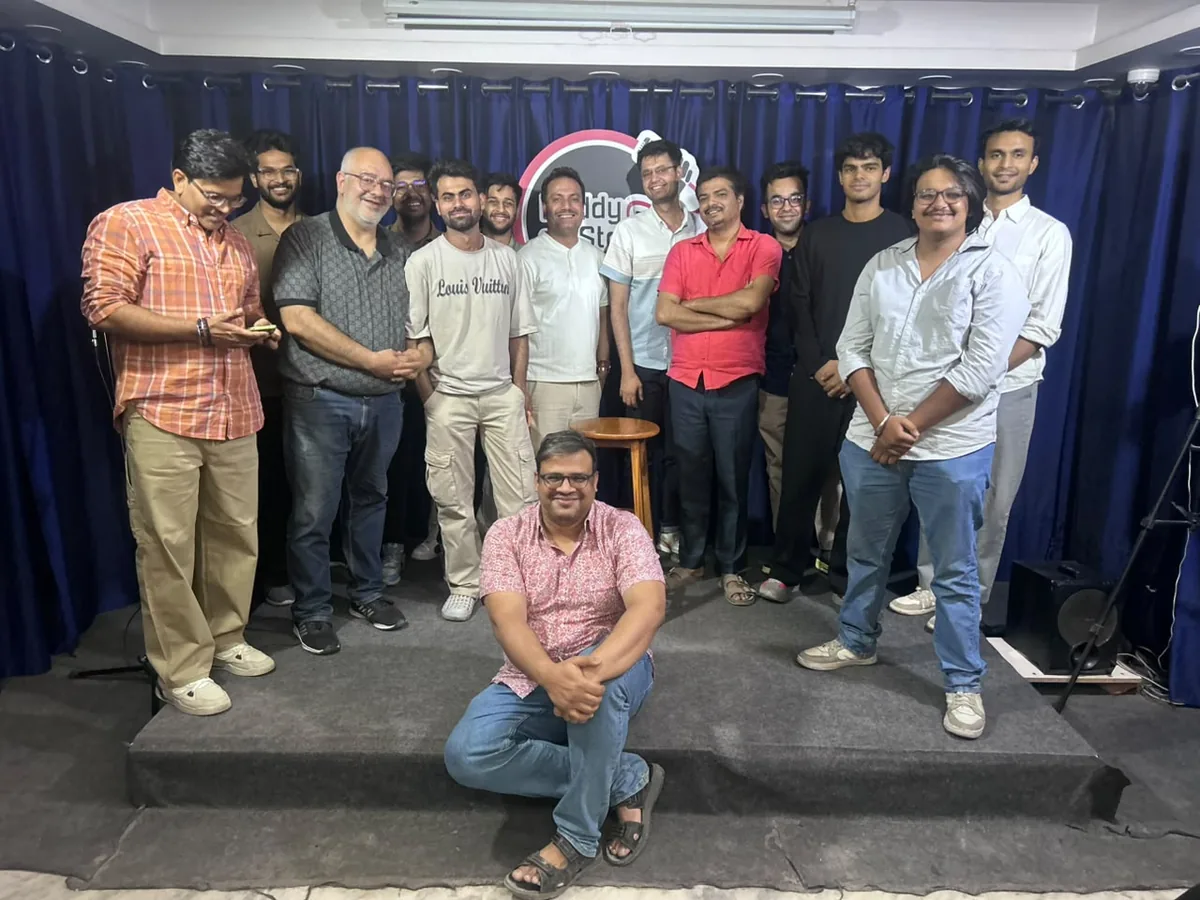
An open mic is a live event where anyone can sign up and perform a short set on stage, usually without an audition and without being a professional. Comedians try new jokes, poets read fresh verses, singers test songs and storytellers share real-life stories — all in front of a real audience, one short slot at a time. An open mic night is simply an evening built around this format.
If you have seen the phrase on an Instagram poster and wondered what actually happens there, this guide walks you through the meaning, the sign-up, the slots, the etiquette and what it feels like to be in the room.
What Does Open Mic Mean?
The name is literal: the microphone is open to anyone who signs up. That is the big difference from a regular show, where the line-up is booked in advance and every performer has been chosen for you. At an open mic, the stage belongs to whoever turned up with something to share.
That openness is the whole point. Open mics are where beginners take their first step, and where experienced performers go to test new material before it reaches a paid show. One evening, you might watch someone on their very first set followed by someone polishing their hundredth.
How Does an Open Mic Work?
Formats vary from venue to venue, but most open mics follow the same basic flow:
- Sign-up: performers register in advance online or put their name on a list at the venue. Booking in advance is the safer option, because popular nights fill up.
- The line-up: the host arranges the order. You may know your spot early, or only find out on the night.
- The host: an emcee warms up the room, introduces each act and keeps the evening moving.
- Your slot: each performer gets a fixed time on stage. At Buddy On Stage, the standard slot is around 6 minutes.
- The light: near the end of your time, the host signals you to wrap up. Finishing on time is the single most respected habit at any open mic.
Curious about time limits in more detail? Our guide on how long an open mic set is covers it.
Who Can Perform at an Open Mic?
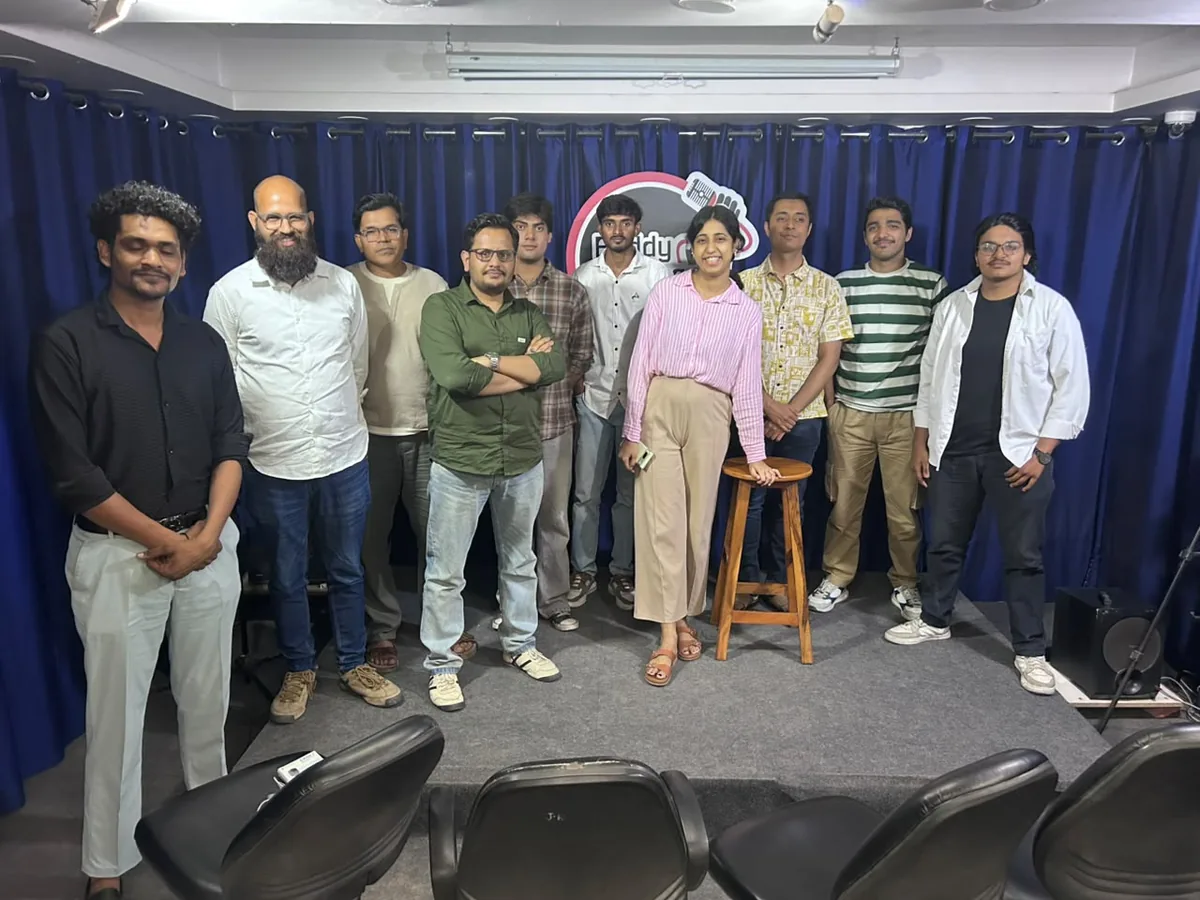
Anyone who signs up. You do not need experience, a portfolio or a following. At Buddy On Stage, our open mics are multi-category, so the same stage welcomes:
- Stand-up comedians trying out jokes, from first-timers to working comics testing new bits.
- Poets and shayars performing in Hindi, Urdu, English or a mix of all three.
- Singers and musicians with a guitar, a backing track or just their voice.
- Storytellers sharing a true story from their own life.
This mix is one of the best things about the format. A comic learns timing from a poet’s pauses; a singer learns crowd connection from a storyteller. Everyone leaves a slightly better performer.
Want to see an open mic from the stage instead of the seat?
Book a beginner-friendly 6-minute slot for comedy, poetry, singing or storytelling. No audition, open mics every week without skip.
Book My Open Mic SlotWhat Is the Difference Between an Open Mic and a Show?
- Who performs: at an open mic, anyone who signs up. At a show, only booked performers.
- Material: open mics are for new, raw, in-progress work. Shows are for tested, polished sets.
- The vibe: open mics are supportive and experimental. Shows are slicker and more predictable.
- The purpose: open mics are practice with a real audience. Shows are the finished product.
For a fuller comparison, read open mic vs comedy show.
What Are the Basic Rules of Open Mic Etiquette?
- Respect the time limit. Running over eats into someone else’s slot.
- Stay and watch others. Leaving right after your set is noticed — and the support you give comes back.
- Perform your own material. Covers are normal for singers, but comics, poets and storytellers are expected to bring their own work.
- Keep your phone silent during other people’s sets.
- Thank the host and keep your intro short.
Our full list of open mic etiquette rules goes deeper.
What Is an Open Mic Like for the Audience?
For audiences, an open mic is an affordable, unpredictable night out. You might hear a shayari that gives you goosebumps, a joke that makes you snort your chai and a story that stays with you for days — all in one evening. You also get to say you saw someone’s first-ever performance, which is a special kind of bragging right.
Do You Need Experience to Go to an Open Mic?
No. Most people who perform at an open mic for the first time have never been on a stage before. All you need is a few minutes of material, some rehearsal and the courage to walk up. Our guide on how to prepare for your first open mic breaks the preparation down step by step.
After your first few sets, the trick to improving is reviewing what actually happened. Adrenaline wipes your memory of the room, so record your set. You can upload that recording to Buddy On Stage AI feedback for timestamped notes on where the room laughed or clapped, where it went quiet, your pace and one clear focus for next time.
Already performed at an open mic? Find out what the room really thought.
Upload a recording of your comedy, poetry or storytelling set and get timestamped feedback on WhatsApp and email. No login, and you see the exact price before you pay.
Get AI Feedback on My SetFinal Thoughts
An open mic is the most democratic stage there is: no audition, no gatekeeper, just a few minutes and a room willing to listen. It is where every comic, poet, singer and storyteller you admire once started.
If you have been watching from the audience and wondering “what if”, book your slot at a Buddy On Stage open mic. Six minutes. A friendly room. The best way to understand an open mic is to stand at one.