
If you only run five employee engagement activities, run these five. Not because they are the most exciting, but because each one does a job the other four cannot, and together they cover the whole surface area of why people disengage.
Short version, then the detail: specific recognition, a monthly live session, manager one-to-ones that are not status updates, a weekly fifteen-minute ritual, and one quarterly event with real weight. That is the whole programme.
Why five beats fifty
Every engagement list you have read has between twenty and ninety items. None of them will be run, because the constraint on your programme was never the number of ideas. It is the number of things one busy person can keep alive.
Five activities, run consistently for a year, produce a company where something is always happening. Fifty activities, dipped into occasionally, produce a company where people cannot remember the last thing that happened. Same effort, opposite outcome.
1. Specific, named recognition — said out loud
This is first because it is free, it is the most underused, and it addresses the single most common reason people leave: feeling invisible.
The rules that make it work, and the reason most recognition programmes do nothing:
- Specific, not general. 'Great work this quarter' is noise. 'You rewrote the onboarding doc nobody asked you to, and three new joiners have used it' is recognition.
- Public, not private. A DM is nice. Said in front of the room is different in kind, because it changes how colleagues see that person, not just how they feel.
- Frequent, not annual. An Employee of the Year award recognises one person and quietly tells everyone else they lost.
- No form, no nomination, no shortlist. The moment recognition requires process, it stops happening.
Fifteen minutes a week. Zero budget. If you do nothing else on this page, do this one.
2. One live session a month
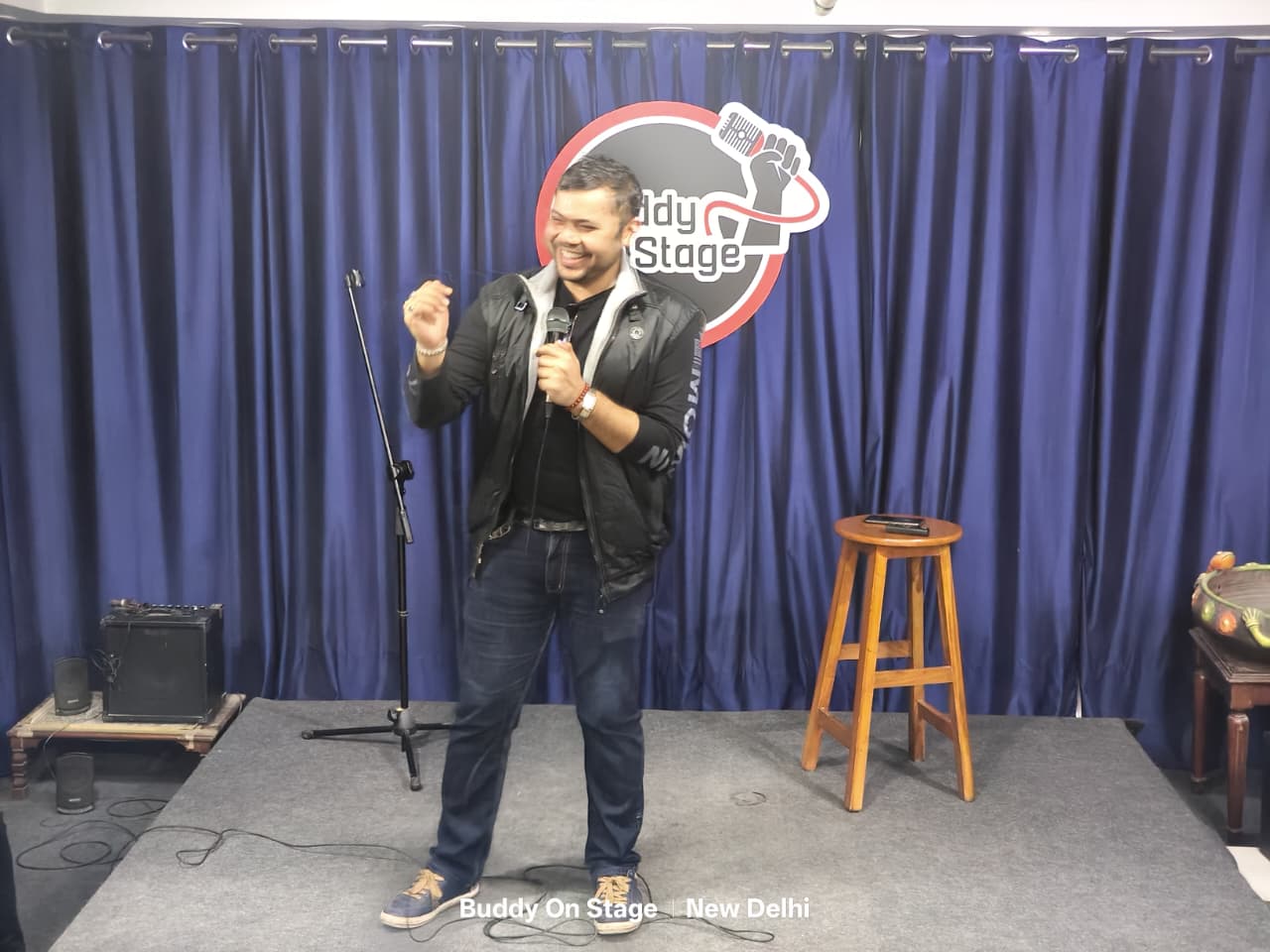
This is the activity that creates the thing people reference for months afterwards, and it is the only one on this list that you cannot generate internally.
The mechanism is specific. Internal activities are always run by a colleague, inside the hierarchy, in a room where everyone is managing how they come across. An outside performer suspends that for an hour. People laugh without checking who is watching. Your HR team, for once, sits in the audience instead of running the room.
What to rotate through: stand-up comedy, live music, close-up magic, host-led interactive games, poetry and spoken word, storytelling. Rotating matters — the same format every month turns into furniture. That rotation is exactly how our monthly engagement plans are structured: one, two or four sessions a month, a different art form each time, with the performer, host, sound, games and coordination in one price. If you would rather book a single act yourself, the artist directory is browsable by category, city and language.
One session a month, run end to end.
We bring the performer, the host, the sound and the games to your Delhi NCR office and run the room. 1, 2 or 4 sessions a month, a different art form each time, billed monthly with no lock-in. Tell us your headcount and we will tell you what fits.
See Engagement Plans3. Manager one-to-ones that are not status updates
The least glamorous item on this list and probably the highest-impact. People do not generally leave companies; they leave managers, and most manager relationships fail for a boring reason — the only regular conversation is a status update.
A one-to-one that builds engagement has three properties: it is scheduled and never cancelled, the report sets the agenda, and it is explicitly not for project updates. Thirty minutes a fortnight. The cost is entirely manager attention, which is why it is simultaneously the cheapest and the hardest item here.
If you want one diagnostic: ask your managers when they last had a one-to-one where no project was discussed. The answers will tell you more than an engagement survey.
4. A weekly fifteen-minute ritual
Small, cheap, relentless. Its job is not to be memorable — it is to keep the floor from going cold between the bigger things.
Rose-thorn-bud. A two-minute show-and-tell. Mixed-table lunch roulette. Whiteboard Pictionary using internal jargon. Office trivia about the office. There are twenty-two of these sorted by duration if you want a list to work through.
The only rule that matters: fix the slot before you fix the activity. Same day, same time, every week. Which game you play is nearly irrelevant. Whether it is at a predictable time is everything.
5. One quarterly event with real weight
Four times a year, something that is clearly bigger than the monthly rhythm. A properly hosted awards evening. A festival night. A family day. A quarter kickoff with an act attached.
Two things make the difference between a memorable quarterly event and a long one. The first is a professional host — the gap between an emcee who controls pace and a manager reading names off a sheet is the gap between an event and an assembly. The second is order: business context first, entertainment second. Entertainment before the serious part makes the serious part feel like a tax; the other way round makes the entertainment feel earned.
Putting the five together
| Activity | Frequency | Cost | The job it does |
|---|---|---|---|
| Specific named recognition | Weekly | Free | Fixes invisibility - the top reason people leave |
| Live session | Monthly | Budgeted | Creates the shared memory nothing internal can |
| Real one-to-ones | Fortnightly | Manager time | Fixes the manager relationship |
| Fifteen-minute ritual | Weekly | Free | Keeps the floor warm between events |
| Quarterly event | Quarterly | Budgeted | Recognition and reset with actual weight |
Three of the five cost nothing. Two need budget. Together they produce roughly sixty-four touchpoints a year, against the standard Indian office programme of one Diwali party, one annual day and ten months of silence.
If you want to prove it worked, how to measure employee engagement ROI covers the four numbers you already have and the one slide that gets budget approved.