
Most attempts to add fun to a workplace fail in the same way, and it is worth naming precisely: fun gets treated as an activity to schedule rather than a condition to create.
So a Fun Friday appears in the calendar. Attendance is tracked. A committee is formed. Somebody buys a bag of props. And the result is a room full of adults being observably fun for forty minutes before going back to a floor where nobody speaks above a murmur.
Fun is a by-product. It happens when people feel enough permission to stop managing how they come across. Everything below is about creating that permission — and then, separately, about the events worth actually booking once the permission exists.
The four things that kill workplace fun
- Surveillance. Attendance sheets at social events. Monitored chat. Managers who appear whenever a group laughs. Nothing informal survives observation, and people are far better at detecting observation than organisations assume.
- Status rigidity. In an office where nobody jokes upward, nobody jokes at all. The direction humour is allowed to flow tells you almost everything about a culture.
- Chronic time pressure. People who are behind cannot relax, and a team that is permanently behind will treat any social event as time stolen from a deadline. This one cannot be fixed with entertainment. It is fixed by fixing the workload.
- Fun as an obligation. The moment it is mandatory it is work. A tracked Fun Friday is just a meeting where you have to seem happy.
If two or more of those are true in your office, start there. Booking a comedian into a surveilled, overworked floor produces a polite audience and nothing else, and we would rather say so than sell you one.
In an office where nobody jokes upward, nobody jokes at all.
Six changes that create permission
- Leaders go first, and go self-deprecating. The single fastest lever. When the most senior person in the room makes a joke at their own expense, the entire floor recalibrates what is allowed. When leaders only ever joke downward, humour becomes a hierarchy tool and everyone stops.
- Stop tracking attendance at anything social. Immediately. The tracking is buying you a compliance number and costing you the actual thing.
- Protect one non-work channel and do not manage it. A pets channel, a food channel, a cricket channel. Leadership can be in it. Leadership cannot moderate it into professionalism.
- Let the office look lived-in. Photos on desks, a whiteboard of small wins, a wall of terrible internal puns. Sterile offices produce sterile behaviour, and clear-desk policies quietly communicate that nobody is really at home here.
- Build in unstructured overlap. Fun almost never happens during scheduled fun. It happens in the ten minutes before a meeting starts and the twenty minutes around lunch. Protect those instead of filling them.
- Make opting out socially free. Counterintuitive, and it is the one that actually raises attendance. When people are confident they can skip something without it being noticed, they stop treating the invitation as a trap.
Then, and only then, programme actual events
Once permission exists, events work — and they are the accelerant. The reason a booked live act does something an internal activity cannot comes down to who is running the room.
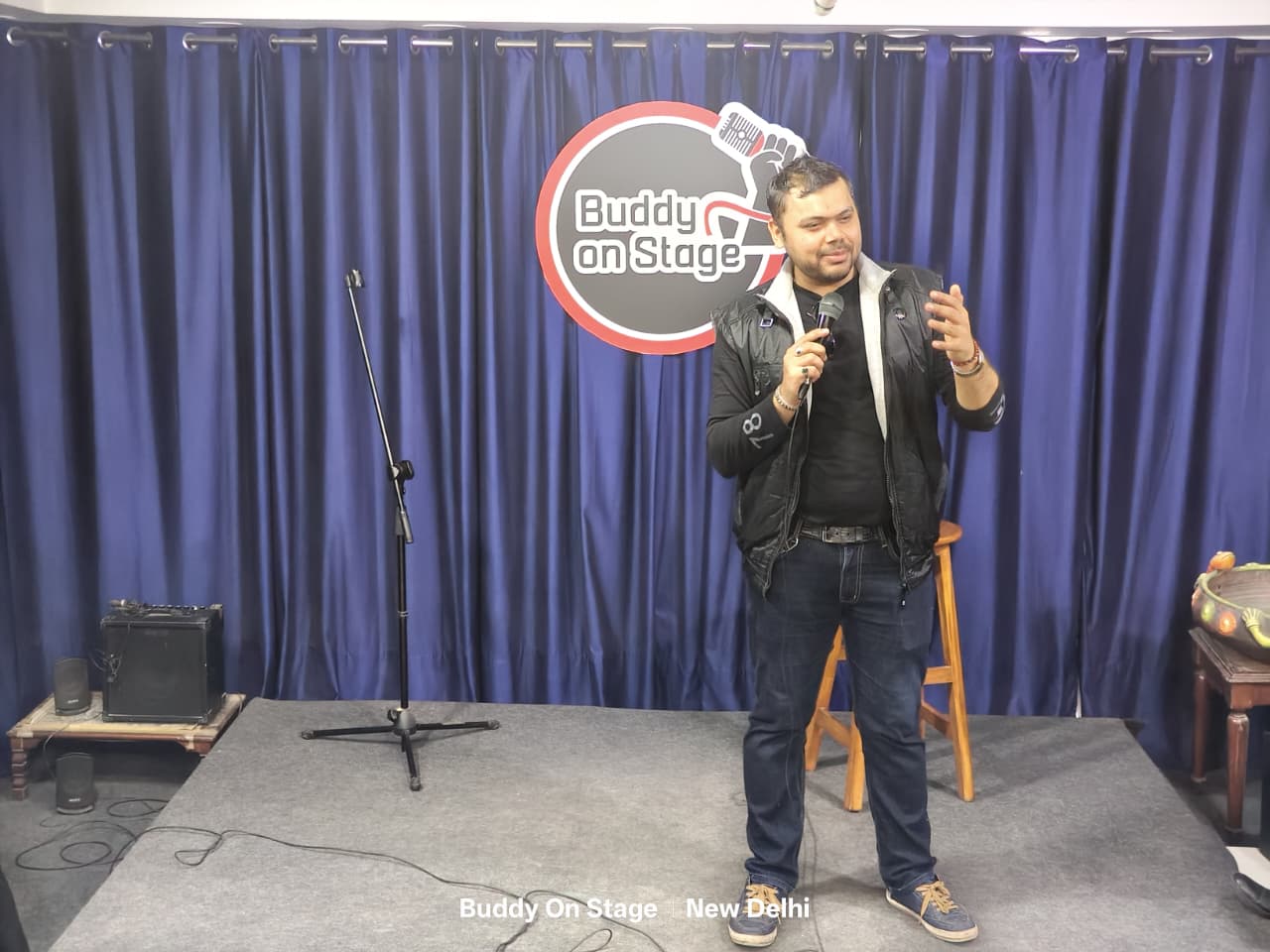
When an internal person runs an activity, every attendee is still inside the org chart. They are watching a colleague, being watched by a manager, and managing their own workplace image the whole time. When a professional performer takes the room, that awareness drops. Everybody is just an audience member having the same experience at the same second, and the entire floor laughs at the same thing without anyone deciding to.
That hour does something for a floor's social temperature that no amount of scheduling does. Formats that work in an office: stand-up comedy, close-up magic that moves table to table, a live acoustic set at the end of the day, host-led interactive games, spoken word and storytelling. All of them are browsable by category, city and language if you want to book one directly.
The rhythm, not the one-off.
We run a live session at your Delhi NCR office every month - a different art form each time, with the performer, host, sound, games and coordination in one price. 1, 2 or 4 sessions a month, billed monthly, no lock-in.
See Engagement PlansHindi, English or Hinglish — the bit most offices get wrong
In an Indian office, the language of the fun decides who is included in it. An English-only quiz in a mixed floor quietly excludes half the room, and those people will be recorded as 'not participating' rather than 'not invited'.
The practical fix is boring and effective: run things in the language the floor actually speaks, which in most Delhi NCR offices means Hinglish rather than either pure option. It is also worth asking about when you book — artist profiles list the languages each performer works in, and a comedian who can move between Hindi and English mid-set will hold a mixed room far better than one who cannot.
What good looks like after six months
Not a themed day. Not a props budget. The markers that a workplace has actually become more fun are quieter than that:
- People arrive a few minutes early and talk before meetings start
- Somebody other than the usual four people organises something
- Juniors make jokes in front of seniors without checking their expressions first
- Attendance at optional things is high without anyone tracking it
- The office is audibly louder at 4pm than it was six months ago
None of those are on an engagement survey. All of them are visible from a desk, and they are a better read on a floor than any annual score.
If you want the practical layer underneath all this, twenty-two small fun activities you can run in fifteen minutes is the weekly version, and Fun Friday ideas that actually work covers the specific format most offices get wrong.