
Almost every Indian company runs the same engagement structure. A large evening in December or around the annual day. Venue, dinner, a headline act, awards, photographs, a dance floor. It costs a meaningful share of the people budget and, on the night, it usually works — people enjoy it, the photos look good, leadership feels good.
Then nothing happens for eleven months.
We book those evenings. We produce them, we like them, and we are not about to argue against our own business. But if you only have one engagement decision to get right this year, the shape of the spend matters more than the size of it — and one evening is the worst available shape.
The maths nobody runs
Take whatever your annual event costs. Divide by twelve. In most NCR companies that monthly figure is smaller than the team's coffee budget, and it buys a live session every single month.
Now compare what your team receives in each scenario, holding total spend constant:
| One annual evening | Twelve monthly sessions | |
|---|---|---|
| Memorable days in the year | 1 | 12 |
| Months with visible engagement | 1 of 12 | 12 of 12 |
| Reaches people who joined in March | Only if they stay to December | Within weeks |
| Reaches people who left in August | Never | Five times before they left |
| Cross-team friendships formed | One evening's worth | Compounding across a year |
| Cost shape | One large, lumpy, visible line | Small, predictable, defensible |
| Survives a bad quarter | First thing cut | Small enough to defend |
| HR effort | Concentrated, exhausting, months of planning | Handled by a partner monthly |
The right-hand column is not a better party. It is a different product entirely. A party is an event. A cadence is evidence.
Why frequency beats magnitude
There is a simple reason a December event does not carry a year, and it has nothing to do with how good the event was.
People do not evaluate their employer by peaks. They evaluate it by the ambient texture of ordinary weeks — because ordinary weeks are what they actually live in. If the answer to what has this company done for its people lately is something great, eight months ago, the honest emotional reading is nothing lately.
Worse, a big annual event can quietly set an expectation it then fails to meet. The January after a brilliant December is emptier than a January that followed nothing, because the contrast is sharper.
A single great evening tells your team what the company is capable of. A monthly cadence tells them what the company is like.
Who the annual model quietly excludes
This is the part that rarely gets discussed. A once-a-year model systematically misses large parts of your workforce:
- Anyone who joined after it. A person who starts in February gets ten months of nothing before their first company moment. That is most of the window in which they decide whether to stay.
- Anyone who left before it. Your entire regretted attrition for the year experienced a company that did nothing for them, regardless of what December looked like.
- Anyone who could not attend. Sickness, travel, a family event, a late release. In an annual model, missing the one night means missing the entire year.
- Everyone outside the head office. The annual evening is almost always where leadership sits. Satellite offices and plant sites get the photographs.
- Everyone who dislikes large parties. Loud room, late finish, drinks, dance floor. This describes a genuine minority of every workforce, and in an annual model they simply have no engagement at all.
A monthly programme fixes all five almost automatically. Different formats suit different people, missing one session costs nothing, new joiners are included within weeks, and if you have multiple sites the sessions can rotate between them.
Reshape the same budget
Tell us your headcount, city and what you currently spend on your annual evening. We will show you what the same money looks like as a monthly programme - and you can keep the annual night too, smaller.
See Engagement PlansThis is not an argument against annual days
To be clear: keep it. Annual days do things a monthly session cannot. They mark the year. They bring remote and satellite teams into one room. They carry the awards that matter. They give leadership a stage to say something that lands. If you are running one, our 90-day annual day playbook is the practical version.
The argument is against the annual day being the whole strategy. The healthiest structure we see in NCR companies is a floor plus two peaks:
- The floor: one live session a month at the office, different art form each time, run by someone whose job it is. Small, reliable, unglamorous.
- Peak one: a festival evening — Diwali or year-end — with families included where it makes sense.
- Peak two: the annual day, with the awards and the leadership moment.
In practice, funding the floor often costs less than people expect, because the annual evening does not need to carry the entire emotional weight of the year any more. You can run a leaner annual day when it is not the only thing that happens.
The objection you will hear from finance
A recurring cost is harder to approve than a one-off. In our experience the opposite is true, and it is worth arguing.
A lumpy annual event line looks discretionary. It is visible, large, and it appears next to a quarter's results, which makes it the first thing anyone points at in a tight year. A small monthly operating cost with a fixed figure is modellable, and finance teams are structurally more comfortable with predictable recurring numbers than with occasional large ones.
It also helps that our monthly plans have no lock-in. You are billed monthly and you can stop any time, so nobody is being asked to commit a year of budget on faith. If you do want to commit for a year, prepaying saves 30% — but that is your call to make after a few months, not before.
What the monthly version actually looks like
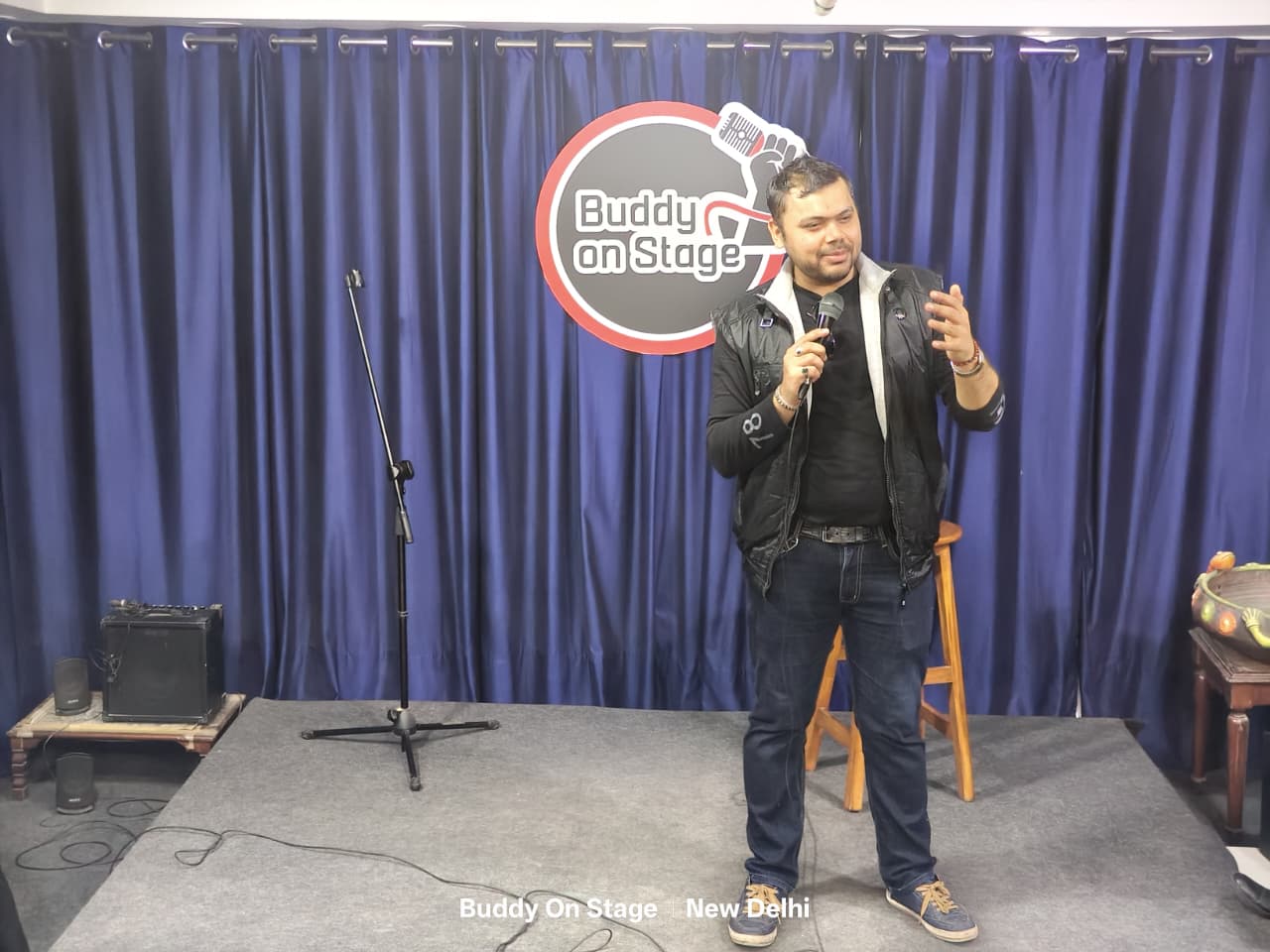
Concretely, so this is not abstract. You pick one, two or four sessions a month. We agree the dates with you upfront. Then we bring the performer, the host, the sound and the games to your office in Delhi, Gurgaon, Noida, Faridabad or Ghaziabad, and we run each session end to end — you clear a room and tell your team a time.
A different art form each time, so August is a comic, September is a live band, October is a mentalist, November is host-led games. One price includes the performers, the host, the sound and equipment, the games and all the coordination — there are no add-ons at invoice stage. It works for teams from around twenty to a few hundred, and a regular session usually confirms with about a week's notice.
Prices are exclusive of GST, and current plans and inclusions are on the employee engagement page.
Keep your annual party. Just stop asking it to do a year's work in one night.