
There is a specific facial expression that appears when a team building day is announced. Not hostility — resignation. The look of adults who know they are about to be asked to fall backwards into a colleague's arms, or build a bridge out of newspaper, and then discuss what that taught them about trust.
The activities are not really the problem. The problem is that most corporate team building is designed around a metaphor rather than around a behaviour. Building a spaghetti tower is supposed to represent collaboration. It does not create any. On Monday morning the same two departments still will not answer each other's emails.
This is a guide to the categories that hold up, what each one is actually good for, and how to choose based on the problem your team has rather than on what looked fun in the vendor deck.
Why corporate team building usually fails
Four failure modes cover almost every disappointing team building day.
- It demands forced vulnerability. Trust falls, 'share something nobody here knows about you', personality-type confessionals. Asking people to be emotionally open in front of their appraiser is not bonding; it is a test with social consequences.
- It rewards the people who already dominate. Most competitive team games are won by whoever is loudest and most confident — the same people who already dominate meetings. The quiet half of your team ends the day feeling exactly as invisible as before.
- It has no connection to the actual friction. If Design and Engineering are not talking, an afternoon of laser tag does not address that. Everyone has fun, nothing changes, and next quarter someone books laser tag again.
- It is one day a year. A single intense day cannot build a relationship. Relationships are built by repeated low-stakes contact, which is exactly what an annual offsite is not.
Team building does not fail because people hate fun. It fails because it asks for performance and calls it connection.
What actually builds a team
Strip the industry vocabulary away and there are only three mechanisms that reliably make colleagues work better together.
- Shared context. Knowing what the other person actually does all day, and what makes their week hard. Most cross-team friction is ignorance, not malice.
- Low-stakes contact, repeated. Not one intense day. Many small ordinary interactions where nothing is being assessed.
- A shared memory. One thing that happened to everyone at the same time that they can reference later. This is the one people underestimate, and it is the only one a single event can deliver.
Every good team building activity delivers at least one of those three. Every bad one delivers a metaphor.
Category 1: Shared-context activities
Best for cross-functional friction, post-merger teams, and companies where half the floor does not know what the other half does.
- Team-swap shadowing. Half a day sitting with another function, doing nothing but watching. Unglamorous and more effective than almost anything else on this page.
- 'What we actually do' showcase. Each team gets ten minutes to explain their real work, including the boring parts and the parts other teams make harder for them.
- Reverse briefing. Each team presents another team's work back to the room. The gaps are the useful output.
- Internal process roast. Comedic complaints about internal processes, with leadership in the room and not allowed to defend. Funny, cathartic, and it produces a genuine fix list.
Category 2: Low-stakes repeated contact
Best for new teams, fast-growing teams, and hybrid teams where people only overlap physically twice a week.
- Mixed-table lunches on a rota. Cheap, weekly, no facilitation needed.
- Interest clubs with a calendar slot. Running, board games, book club, football. The calendar slot is what makes it real; the interest is almost incidental.
- Pair rotations on small internal projects. Deliberately pair people who would not otherwise work together on something genuinely low-risk.
- A weekly fifteen-minute floor ritual. Something small and consistent. We listed twenty-two options in small fun activities for employees in the office.
Category 3: A shared memory — where live entertainment earns its place
This is the category most people mean when they say team building event, and it is the one an outside act does better than any internal activity can.
The mechanism is simple and slightly unfair to internal organisers: when a professional walks into the room, nobody in your company has to generate the energy. The senior manager is not performing leadership. The HR lead is not running anything. Everyone is in the same audience having the same experience at the same time — which is, functionally, what a shared memory is made of.
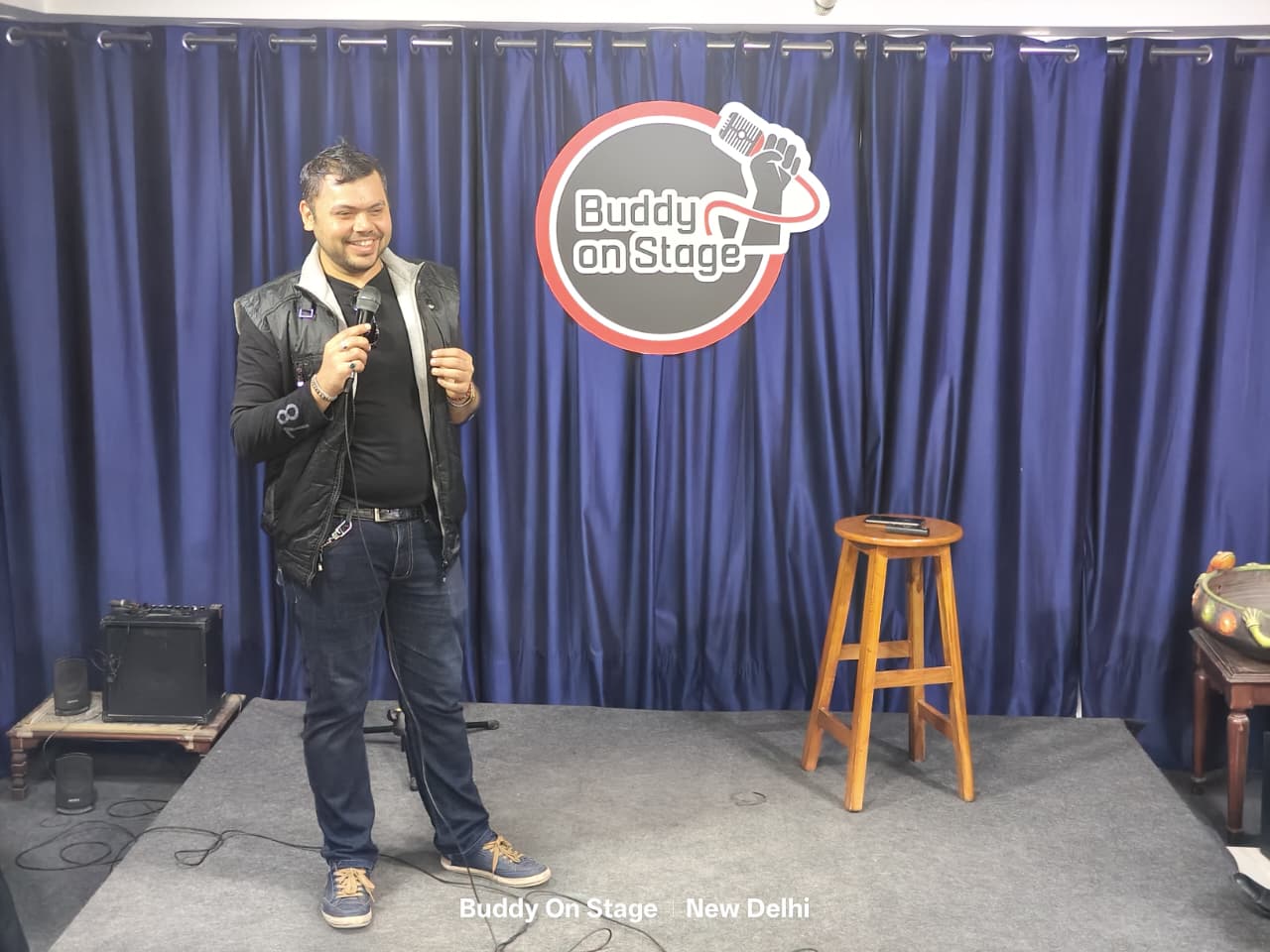
- Stand-up comedy for the team. The fastest way to get a room of 40 to 300 people laughing at the same thing. Content boundaries are agreed in writing beforehand. Browse verified stand-up comedians and read their style and languages before you shortlist.
- Host-led interactive games. A professional host running team games is a different species from an HR-run quiz — they manage the quiet tables, keep pace, and stop the loudest team running away with it. Hosts and emcees are browsable by city and language.
- An improv or interactive comedy set. Volunteers only, never conscription. Good improv performers make the audience the hero without embarrassing anyone.
- A live music set. Lower intensity than comedy, works while people eat, and does not require a stage or a silent room.
- Close-up magic or mentalism. Works table to table, so you do not have to stop the whole floor at once — useful for shift-based or open-plan teams.
Pick the act, we'll handle the rest.
Browse verified artists by category, city and language. Read the profile, check the experience, shortlist who suits your room, and send one enquiry. Comedy, music, magic, poetry and hosts - across Delhi NCR and cities around India.
Browse ArtistsCategory 4: Physical and outdoor activities
We do not run these, so treat this as a neutral read rather than a pitch. Outdoor and physical activities — treks, obstacle courses, sports days, adventure parks — genuinely work for some teams and genuinely exclude others.
They work when the group is roughly uniform in age and fitness, when participation is optional in practice and not just on paper, and when the day is not the only engagement activity of the year. They fail when a sizeable part of the team cannot comfortably take part, at which point the activity quietly divides the room into the athletic and the excluded — the opposite of the stated goal.
If you do run one, our honest suggestion is to programme the evening properly. The daytime activity separates people by physical ability; a live act in the evening puts everyone back in one room. That is a pattern worth stealing even if you never book anything from us.
How to choose: match the activity to the actual problem
| The problem you actually have | The category that addresses it |
|---|---|
| Two departments don't talk to each other | Shared context — shadowing, reverse briefings, process roast |
| New joiners feel outside the group | Low-stakes repeated contact — mixed lunches, pair rotations, weekly rituals |
| The floor is flat, nothing feels alive | Shared memory — a booked live act, hosted games |
| Hybrid team barely overlaps | Low-stakes contact on the days they do overlap, plus one monthly in-person event |
| Team just went through a hard quarter | Shared memory first, then shared context. Do not lead with a workshop |
| Nobody knows what other teams do | Shared context, and only shared context |
The most common planning mistake is buying a shared-memory event to solve a shared-context problem. A comedy night will not make Design and Engineering collaborate. It will make the room warmer, which makes the shared-context work land better afterwards — but the order matters and so does the honesty about what each one does.
One day a year is the real problem
Whichever category you pick, the annual-offsite model is fighting you. A single day cannot build repeated low-stakes contact, by definition. It can create one shared memory, which then has eleven months to fade.
Companies that get this right run something small most weeks and something real every month, and treat the annual offsite as a highlight rather than as the entire programme. For Delhi NCR offices we build that monthly layer as an employee engagement programme — one, two or four sessions a month, a different art form each time, performer and host and sound and games in one price, no lock-in. Anywhere in India, you can book a single artist for one occasion instead.
Related reading: why an annual party is not employee engagement goes through the maths of the once-a-year model in detail.