
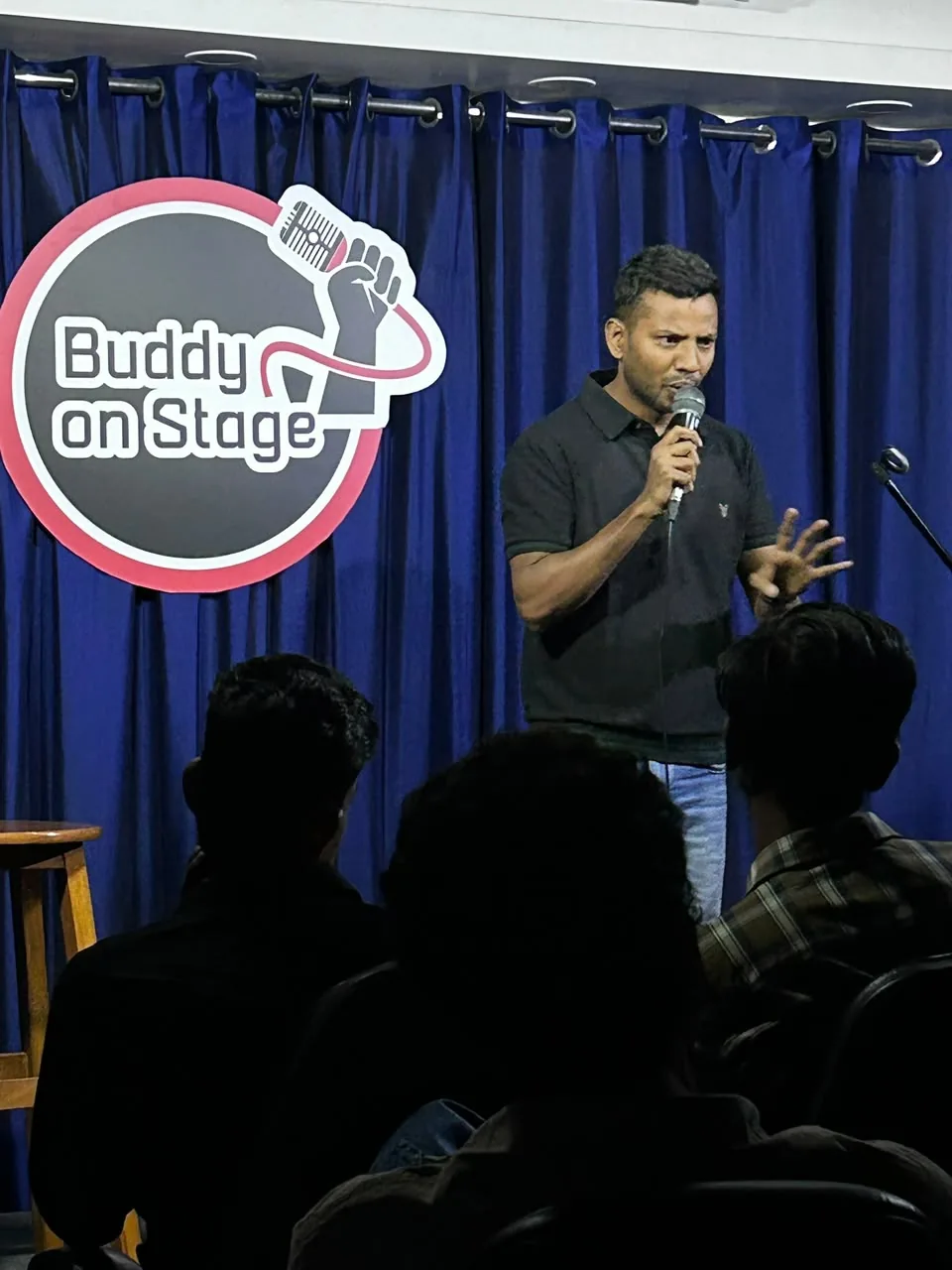
Crowd work — talking directly with the audience instead of only delivering written jokes — looks like magic when a pro does it, and terrifying when you imagine doing it yourself. Beginners assume it requires lightning wit and years of experience. In reality, you can start with a few safe, simple moves that make a room feel alive without ever putting you on the spot. Here is the beginner-friendly version.
What Crowd Work Actually Is (And Is Not)
Crowd work is a real-time conversation with the audience — a quick question, a reaction to someone’s laugh, a comment on the room. It is not the same as roasting or insulting people, which is an advanced and risky move. Good beginner crowd work is warm and curious, not aggressive. You are inviting the room in, not picking a fight.

The Safest Starter: One Simple Question
You do not need a clever ad-lib to begin. You need one easy, open question to the room or front row: “Who here came alone tonight?” or “Anyone on a first date? — no? good, less pressure.” The answer is not the point. The point is that you broke the wall between you and the audience and made the room feel personal. Even a small exchange shifts the energy.
Listen and React Honestly
The secret to crowd work is not being quick — it is being present. When someone answers, actually listen and respond like a human, not like you are hunting for a zinger. Often your honest, surprised reaction is the funny thing. Audiences love watching a comic genuinely react in the moment far more than a forced punchline. Curiosity beats cleverness.
Keep One Hand on the Wheel
The big fear is losing control — a chatty audience member hijacking your set. The fix is a clean exit line you can always reach for to steer back to material:
- “Okay, I could talk to you all night, but I actually wrote some jokes…”
- “Love that — anyway, back to my deeply prepared material.”
- “We will come back to you, sir. Maybe.”
Knowing you have a ripcord back to your set removes most of the fear. Dip into crowd work, then pull yourself back whenever you want.
Crowd work is a live-only skill.
There is no way to practise talking to an audience without an audience. Get 6 minutes on a real stage and try one simple question. Book your slot.
Register for an Open MicStart With 20 Seconds, Not 2 Minutes
Do not plan to improvise your whole set on night one. Bookend a small, 20-second crowd-work moment at the top of an otherwise written set. That gives you the thrill and skill of live interaction with almost none of the risk. As you get comfortable, stretch those moments longer. Crowd-work confidence is built in small, safe doses.
Why It Is Worth Learning
Crowd work makes every show unrepeatable and makes you look fearless. It is also your safety net for the rest of your career: when a written joke flops or you lose your place, the ability to simply talk to the room buys you time and warmth. The comics who never freeze are almost always the ones comfortable having a conversation with strangers under lights.
Crowd work is not about being the wittiest person in the room. It is about being the most relaxed one — the person who can talk to anyone, anywhere, even with a spotlight on.
Try One Question This Week
Your entire crowd-work goal for your next open mic is this: ask the room one friendly question and genuinely react to the answer. That is it. Do that a few times across a few mics and you will feel the wall between you and the audience dissolve. Buddy On Stage gives you a warm, willing room every week to practise the art of the conversation.