
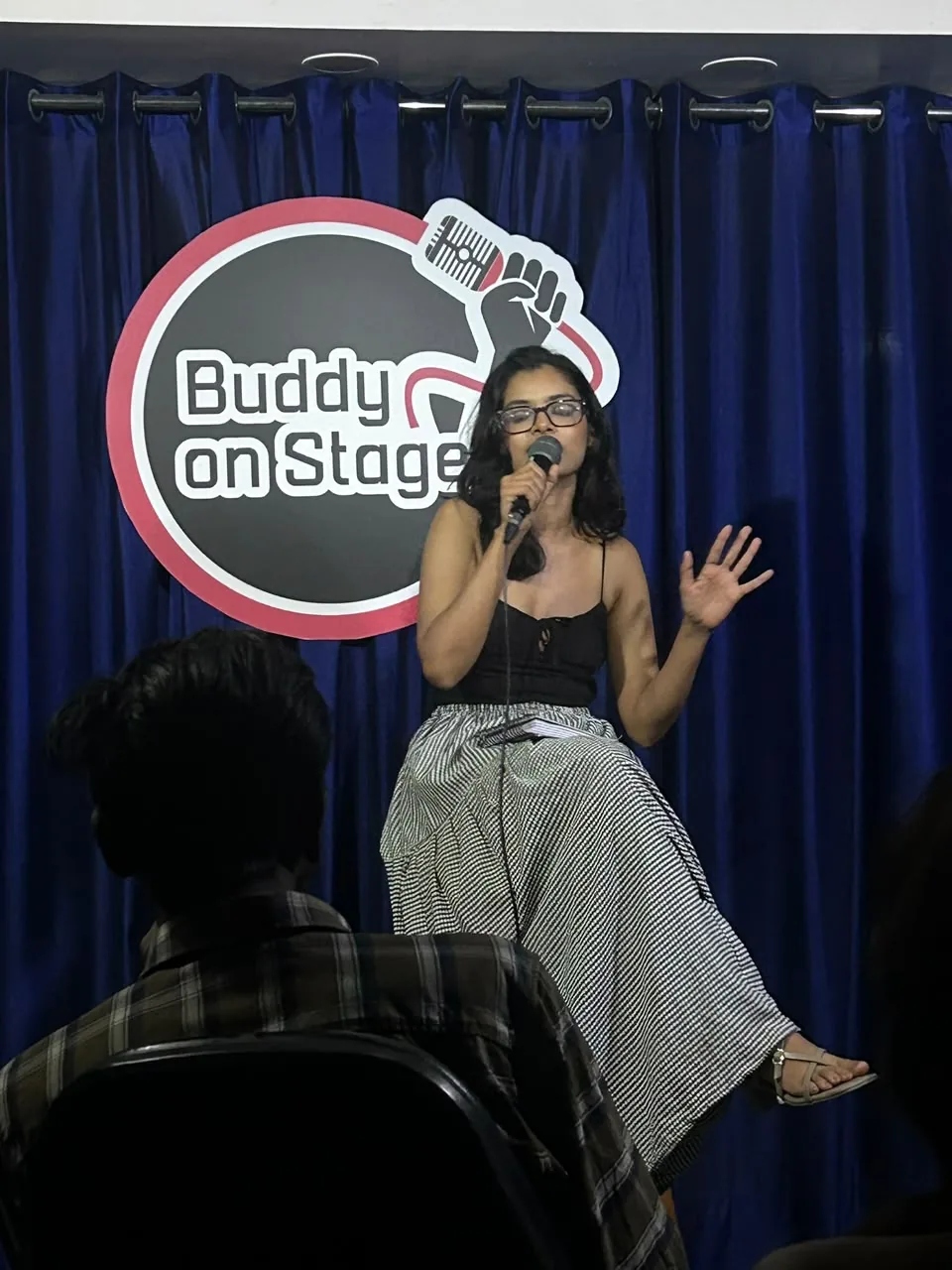
The main types of comedy are observational, storytelling (anecdotal), one-liners, self-deprecating, satire and political, dark, absurd or surreal, crowd work, musical, character, sketch, improv, and slapstick or physical comedy. Most comedians blend two or three, but each type has its own engine: a different way of building surprise and getting the laugh.
Think of it like Indian food. Everybody eats, but some people are a dal-chawal comic, some are a spicy-chaat comic, and one guy at every open mic is basically a durian. Here is the full menu, each with a short definition and an original example.
What Is Observational Comedy?
Observational comedy points at everyday things everyone has noticed but nobody has said out loud. The laugh is recognition: “Yes! That is exactly what happens!”
“Every Indian lift has one uncle who presses the button that is already glowing. Twice. Because the lift needs to know he is serious.”
What Is Storytelling (Anecdotal) Comedy?
Storytelling comedy builds one longer true-ish story with laughs along the way and a big payoff at the end. Its power is investment: the room cares where the story goes. We compare the two in detail in observational vs storytelling comedy.
What Are One-Liners?
One-liners are complete jokes in a sentence or two: a quick setup and a hard twist. Highest laugh density, lowest margin for error.
“My diet is going great. I have lost three kilos and all respect for myself at buffets.”
What Is Self-Deprecating Comedy?
Self-deprecating comedy makes you the target. It wins rooms fast because the audience relaxes when they see you are not above them.
“I am the kind of person who says ‘you too’ when the Zomato guy says ‘enjoy your meal’.”
What Is Satire and Political Comedy?
Satire uses exaggeration and irony to criticise people in power, institutions or society. Political comedy is satire aimed at politics and current affairs. The best satire is funny first and pointed second.
“Our society has a new pothole-filling scheme. Step one: wait for the monsoon. Step two: call it a lake. Step three: inaugurate it.”
What Is Dark Comedy?
Dark comedy finds humour in grim subjects such as death, illness and disaster. Done well, it releases tension. Done carelessly, it just creates more. The rule of thumb: punch at the situation, not at the person suffering.
“My grandfather wrote his will very clearly. Unfortunately, he wrote it in the family WhatsApp group.”
What Is Absurd or Surreal Comedy?
Absurd comedy builds a ridiculous premise and then follows it with complete seriousness. The laugh comes from committed logic inside nonsense.
“I think my pressure cooker is unionising. Third whistle today was clearly a strike notice.”

Which type are you? The stage will tell you.
You only find your comedy style by trying it on real people. Book a 6-minute beginner-friendly slot at a Buddy On Stage open mic and experiment.
Book My Open Mic SlotWhat Is Crowd Work?
Crowd work is unscripted conversation with the audience: asking questions and riffing on the answers. It makes every show feel one-of-a-kind. Most good crowd workers have plenty of written jokes too; the “spontaneous” moments are built on practice. See crowd work for beginners.
“Sir, what do you do? … Chartered accountant. Great, so you are the only person here who knows exactly how much this ticket hurt.”
What Is Musical Comedy?
Musical comedy uses songs, parodies or an instrument as the vehicle for jokes. The melody sets up an expectation and the lyric breaks it.
Picture a soulful old-film-style ghazal, slow harmonium, eyes closed… and the heartbreak turns out to be about a cancelled Swiggy order.
What Is Character Comedy?
Character comedy means performing as someone else: a nosy aunty, a motivational guru, a desperate startup founder. The laugh comes from a sharply observed type taken one step too far.
As a career-counselling uncle: “Beta, passion is fine. But have you considered passion plus government job?”
What Are Sketch, Improv and Slapstick?
- Sketch comedy: short scripted scenes with several performers, the format behind much online comedy. Example: a job interview where the candidate interviews the HR manager.
- Improv: scenes made up live from audience suggestions, built on the “yes, and” principle. Example: given “wedding” and “space station”, two players stage a baraat in zero gravity. Compare it with stand-up in improv vs stand-up comedy.
- Slapstick and physical comedy: laughs from movement, falls and exaggerated body language. It is the oldest type of all and works in any language. Example: a man fighting a plastic chair that refuses to unstack.
How Do You Find Your Type of Comedy?
You do not pick a type from a list. You discover it by performing and noticing what gets the biggest, most natural laughs from you. A few practical steps:
- Write in three styles: take one topic, say your landlord, and write an observational bit, a story and a one-liner about it.
- Perform all three: rotate them across a few open mics.
- Listen back: record every set and note which style got longer laughs and which felt like you.
- Double down: build your next five minutes around the style that worked, while keeping the others as spice.
Listening back is where most people get lazy. AI feedback on your set does it for you: upload the recording and get timestamps of where the room laughed and where it went quiet, which shows you which style is working.
Find out which style the room actually loved.
Upload your set recording and get timestamped feedback on WhatsApp and email: where the laughs came, where it dipped, and one focus for your next set.
Get AI Feedback on My SetFinal Thoughts
Comedy has many types, but they all share one job: build an expectation and break it in a way that feels true. Observational comics break it with recognition, absurd comics with logic, satirists with exaggeration, physical comics with a falling chair.
Reading about types is the starter. Performing them is the meal. Book an open mic slot, try two styles in one set, and let the room vote with its laughter.