
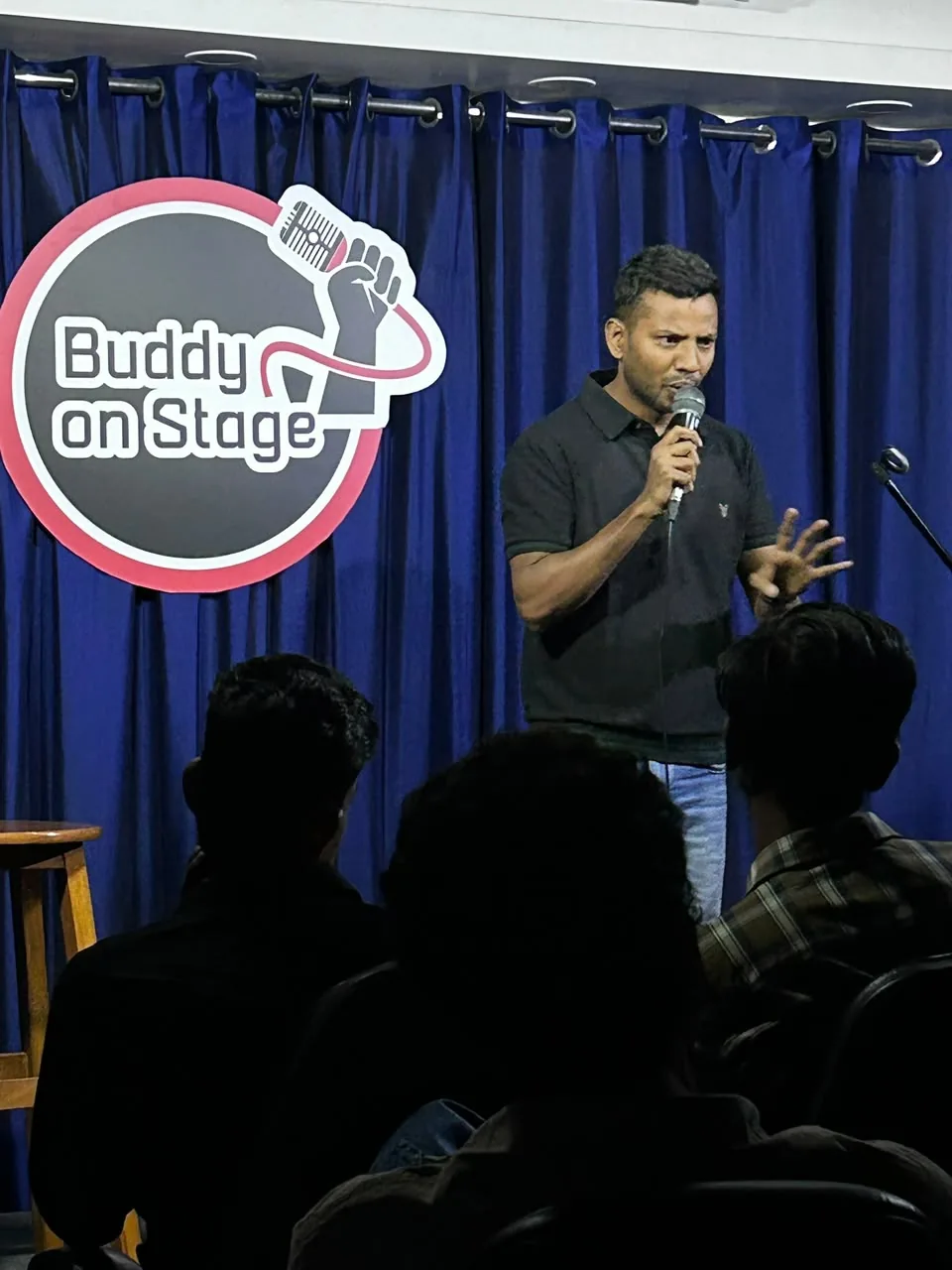
The core difference: stand-up comedy is mostly written and rehearsed, performed solo, straight to the audience; improv comedy is made up on the spot, usually by a team, inside scenes. Sketch comedy sits in between — written and rehearsed like stand-up, but performed as scenes with characters like improv. All three chase the same laugh; they just take different roads.
If you have ever wondered which one you should try (or why your friend who ‘does improv’ keeps saying ‘yes, and’ at dinner), here is the full breakdown.
What Is Stand-Up Comedy?
One performer, one mic, talking directly to the audience as themselves (or a version of themselves). The material is written, tested and tightened over many shows, so a polished five minutes might be the result of dozens of open mics. The comic is writer, director and performer at once. Want the full definition? Read What Is Stand-Up Comedy?
What Is Improv Comedy?
Improv (improvisational comedy) is unscripted. Performers take a suggestion — often from the audience — and build scenes, characters and stories in real time. It is usually a team sport. The famous rule is “yes, and”: accept what your scene partner offers and add to it, instead of blocking it. The comedy comes from listening, quick choices and the shared thrill of watching something be invented live.
What Is Sketch Comedy?
Sketch is short, scripted scenes with characters — think of a five-minute comedy scene with a clear premise that escalates. It is written and rehearsed like stand-up but acted out like a mini-play, often by a group. Many sketch writers come from improv, using it to discover ideas that they later script.
Improv vs Stand-Up: What Are the Key Differences?
- Script: stand-up is written and refined; improv is invented live; sketch is written and rehearsed.
- Team: stand-up is solo; improv and sketch are usually ensembles.
- Who you talk to: stand-up speaks directly to the audience; improv and sketch mostly play scenes with each other in front of them.
- Repeatability: a stand-up joke can be improved over a hundred shows; an improv scene happens once and is gone.
- Where the laugh comes from: stand-up relies on crafted punchlines; improv relies on discovery, character and reaction.
- How you practise: stand-up needs writing time plus stage time; improv needs regular group practice.
Curious about stand-up? Six minutes will tell you more than six articles.
Book a beginner-friendly slot at a Buddy On Stage open mic. Bring a few minutes of material — or just your nerves. No audition required.
Book My 6-Min SlotWhere Does Crowd Work Fit In?
Crowd work is the bridge. It is the part of stand-up where the comic talks to the audience — “Kya karte ho aap?” — and riffs on the answers. It borrows improv’s listening and quick reactions, but it is still solo and still aimed at the audience. Most strong crowd-work comics also have prepared lines ready for common answers, which is why it often looks more spontaneous than it is. Start with our guide to crowd work for beginners.

Which Skills Do Improv and Stand-Up Share?
- Listening: to scene partners in improv, to the room in stand-up.
- Commitment: a half-hearted choice dies in both forms.
- Timing: knowing when to speak and when to let a moment breathe.
- Recovering from silence: both forms teach you that a dead moment is survivable.
This is why many comics do both. Improv can loosen up a stiff stand-up; stand-up can teach an improviser to write tighter.
How Can a Stand-Up Comic Use Improv Skills?
You do not need to join an improv troupe to borrow its tools. Three habits translate directly to the mic:
- Say yes to the room: if a phone rings or someone laughs at the wrong moment, acknowledge it instead of pretending it did not happen. Rooms love a comic who is clearly present.
- Find new tags live: when a joke gets an unexpected reaction, follow it for a line or two. Some of the best tags are discovered on stage and written down afterwards.
- Commit to the choice: if you start an act-out, play it fully. Half an impression is less funny than a bold wrong one.
What About Other Comedy Forms Like Roasts and Musical Comedy?
Stand-up, improv and sketch are the big three, but comedy has plenty of cousins. Musical comedy uses songs and parody, often with a guitar or keyboard. Character comedy has the performer play a fully invented persona for the whole set. Roasts are structured insult comedy where everyone, including the target, agrees to the game. Most of these grow out of stand-up stages — plenty of musical and character acts first tried their bits at open mics. For the full map, see Types of Comedy.
Should I Do Improv or Stand-Up?
- Try stand-up if you love writing, have a strong point of view, want full control of your material, and are okay being alone on stage.
- Try improv if you love playing characters, think fast, enjoy collaborating, and find the idea of a written script limiting.
- Try sketch if you love writing and acting, and enjoy working with a group to polish a scene.
Honestly? Try more than one. The forms feed each other.
Common Mistakes When Switching Between Forms
- Improvising a whole stand-up set: riffing feels fun but usually produces fewer laughs than tested material.
- Writing improv scenes in your head: pre-planned lines kill the listening that improv depends on.
- Ignoring your recordings: in stand-up, the recording is your scene partner’s honest notes. Listen back.
Did your riff land, or just feel good?
Upload your set recording for timestamped AI feedback — where the room laughed, where it went quiet, your pace and one focus for next time. Hindi, Hinglish or English.
Get AI Feedback on My SetFinal Thoughts
Improv is jazz, stand-up is a song you keep rewriting, and sketch is a short film you perform live. None is ‘better’ — they are different instruments for the same music. If stand-up is calling you, the only real test is a stage.
Book a slot at a Buddy On Stage open mic, record your set, and use AI feedback on your set to see which written jokes and which riffs actually got the laugh.