
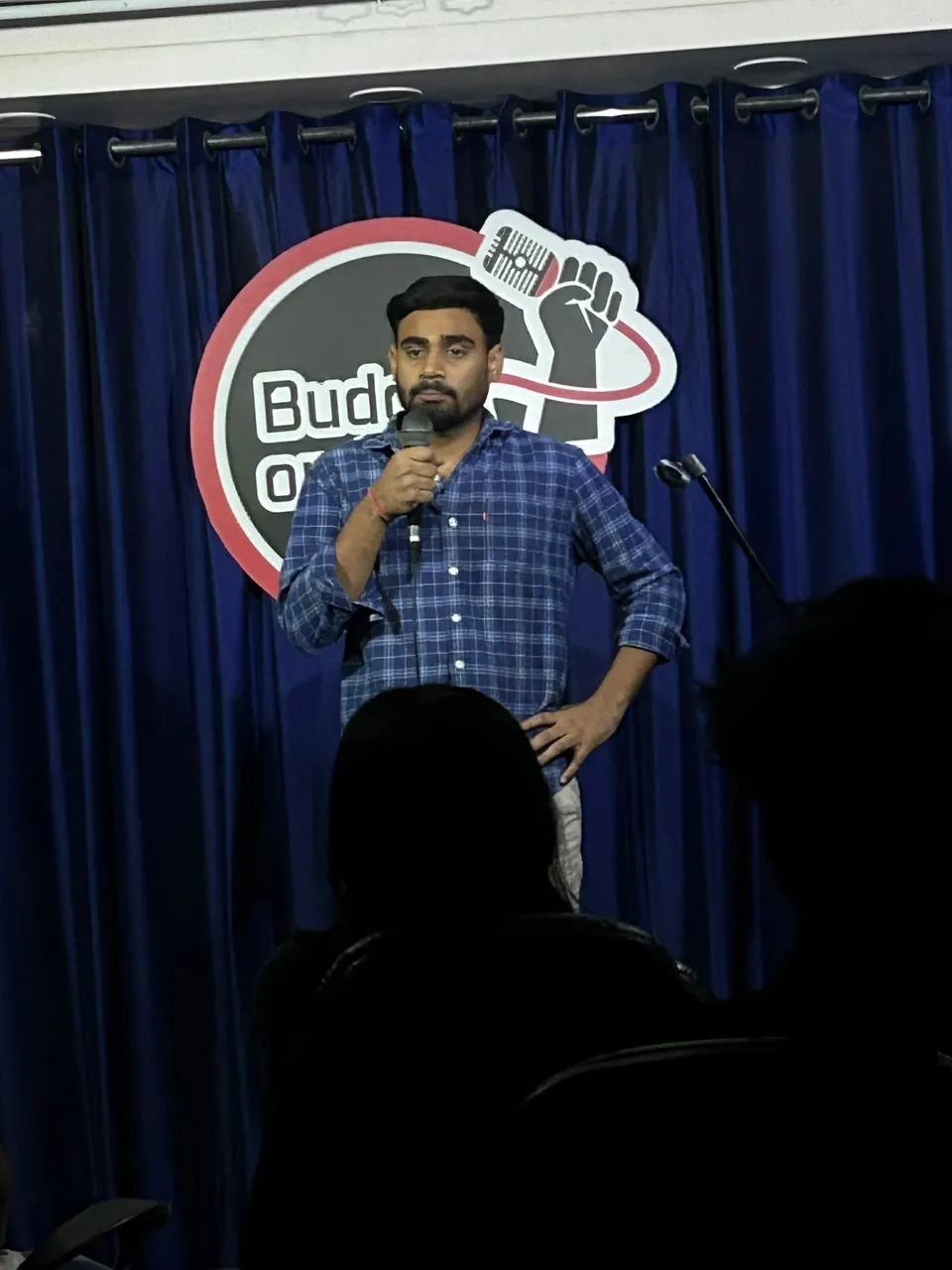
Imagine two performers. Both start on the same night, both are equally nervous, both have roughly the same five minutes of half-written material. Over the next twelve months they each do twelve open mics.
The first one does one a month. One in the first month, one in the second, one in the third. Neat, spaced out, sensible.
The second one does all twelve in a single month, then takes the rest of the year off.
Most people assume they end up in the same place. Twelve is twelve. But anyone who has spent time backstage knows exactly what happens: the second performer comes out of that month a genuinely different performer, and the first one comes out of the year still doing a slightly better version of their first mic.
Twelve reps is not twelve reps
A stage skill is not a fact you learn once. It is a physical, in-the-moment behaviour — where your feet go, what your voice does when the room is quiet, how long you hold before the punch, whether your hands know what to do with the mic stand. Those behaviours are built and kept the same way any physical skill is: by repeating them before your body has time to forget.
Do a mic on the first of the month and the next on the first of the next month, and you are not building on the last one. You are re-learning it. The first two minutes of every set go into remembering how to be on a stage at all, which means you spend your five minutes doing the warm-up you should have finished weeks ago.
Do a mic on Tuesday and the next one on Saturday, and something completely different happens. Saturday starts where Tuesday ended. The nerves are already spent. You are not re-learning — you are editing.
Spacing your mics out does not make each one count more. It makes each one count less, because every gap resets you to the start.
What one mic a month actually teaches you
Honestly? Mostly that you can survive an open mic. Which is worth something the first time and worth nothing the fifth time.
Here is the problem with a one-a-month cadence. Every single set is high-stakes, because it is the only one you are getting. You cannot afford to experiment. You will not try the risky new bit, the different opening, the slower delivery, the crowd work, because if it fails you have to wait four weeks to fix it. So you play safe. You do the material you know works. And material you already know works teaches you nothing.
Now put four mics in the same month. The stakes on any one of them collapse. A bad Tuesday is not a disaster, it is data — you have another stage on Friday. That safety is precisely what lets you take the risks that actually move you forward.

Three things only regularity gives you
1. A working memory of the room
Every venue has a personality — where the laughs sit, how the sound behaves, how the crowd arrives, which corner is dead. Go often enough and you stop being a visitor. You walk in already knowing what the room wants, which is half of stagecraft and cannot be read in a blog, including this one.
2. Reflexes instead of decisions
A beginner decides what to do when a joke dies. An experienced performer does not decide — they just do the next thing, because it has happened to them thirty times and their body has an answer. That conversion, from conscious decision to automatic reflex, only happens with closely spaced reps. If you want the long version, read how to handle silence on stage.
3. A feedback loop short enough to be useful
Feedback is only useful while you still remember the thing it is about. Record a set on the first, watch it on the third, apply the fix on the eighth — that loop works. Apply the fix thirty days later and you have forgotten the feeling you were trying to correct. This is why recording your set matters far more to a regular performer than to an occasional one.
Buy the month, not the night
The single biggest change most performers can make is not a new joke or a new opening. It is putting the next four mics on the calendar before the nerve wears off.
See the Monthly PassConsistency beats intensity, and it is not close
Every performer has had the week where they wrote for six hours straight, rehearsed in front of a mirror until their voice went, and felt enormously productive. Then did not touch it again for a month.
That week is worth less than fifteen unremarkable minutes a day for a month, followed by four real stages. Intensity feels like progress because it is uncomfortable. Regularity does not feel like anything at all, which is exactly why people undervalue it — and exactly why it works.
There is no dramatic moment in a regular performer's development. There is no night they suddenly became good. There is just a set in month three where they notice they were not scared, and a set in month five where they change something mid-way because the room asked them to, and neither of those felt like a milestone at the time.
What actually changes, mic by mic
Rough shape of what regular performers report, and what we watch happen from the back of the room:
- Mics 1–3: pure survival. You are managing your own nervous system, not performing. Most of your attention is inside your own head.
- Mics 4–6: you start hearing the room. You notice where they were with you and where you lost them — which you could not hear at all in the first three.
- Mics 7–10: you stop reciting. Words start coming out slightly differently each time, because you are actually talking to these people instead of performing at them.
- Mics 10–15: you develop taste. You can tell the difference between a bit that failed and a bit that failed tonight, which is the single most valuable judgement a performer owns.
- Beyond that: you start building rather than surviving — adding, cutting, arranging, and treating five minutes as something you shape rather than something you get through.
The important part is not the numbers. It is that this progression assumes the mics are close together. Stretch them across a year and each stage starts you somewhere near the beginning of the list instead of where you left off. For a fuller treatment, read how many open mics until you are actually good.
The real obstacle is not talent, it is the decision
Here is what actually stops people from performing regularly, and it is almost never ability. It is that every single mic requires a fresh decision. Check if there is one on. Decide if you are free. Decide if you feel ready. Decide if it is worth the money this week. Book it. Five separate opportunities to talk yourself out of it, repeated every time.
And you will lose that argument regularly, because there is always a reason not to go. You are tired. The material is not ready. You had a bad one last time. Next month is calmer.
The fix is not more willpower. The fix is to make the decision once instead of twelve times. That is the entire logic of an open mic monthly pass: you commit to a month of stages in a single decision, when you are motivated, and then the question stops being should I do a mic this week and becomes what am I trying tonight.
The thing nobody mentions: you also get a scene
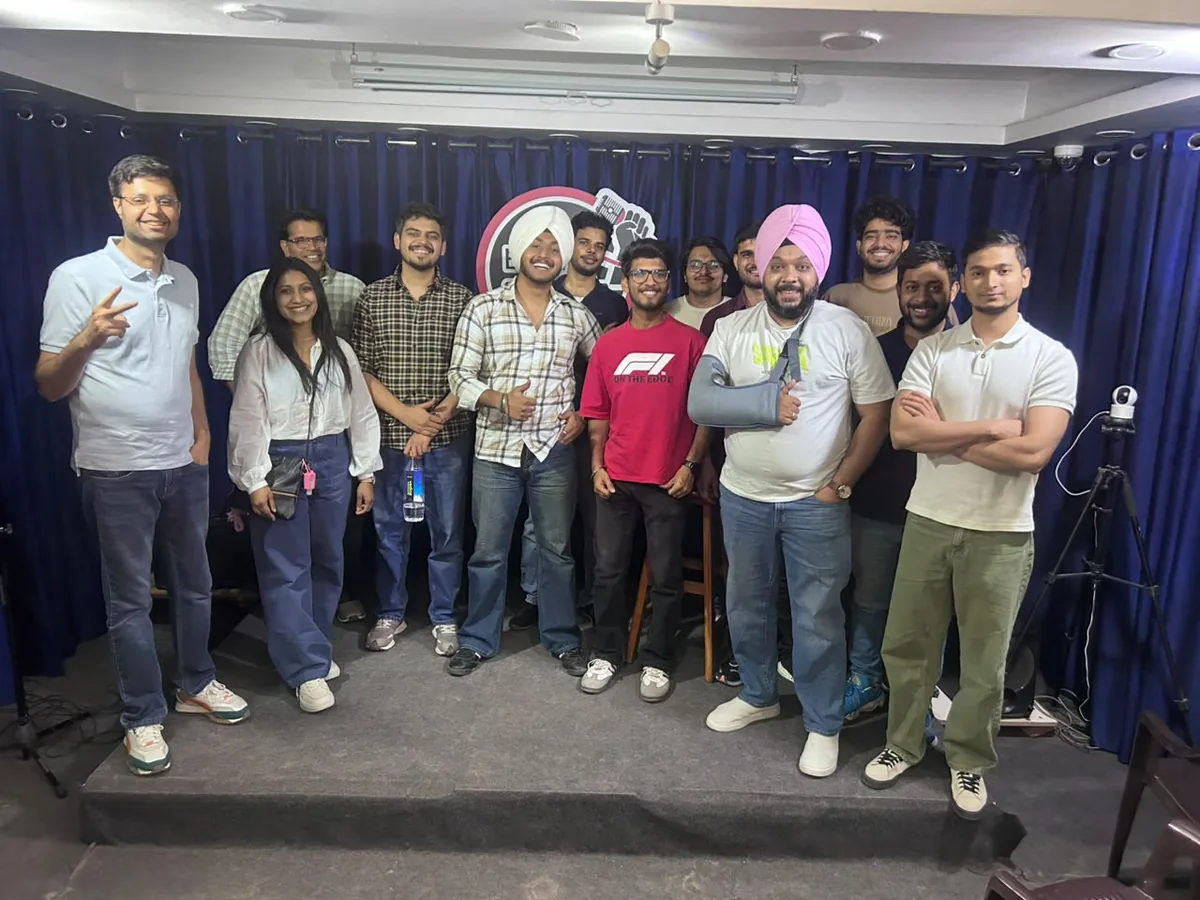
Turn up once and you are a stranger who did five minutes. Turn up every week for a month and you are one of the regulars — you know who is funny, who is struggling, who runs which room, who is putting together a show and needs an opener.
Almost every opportunity in live performance travels through people, not applications. The gigs, the recommendations, the someone-dropped-out-can-you-do-fifteen-minutes message: those go to the person the organiser saw on stage last Thursday, not the one who did a great set six months ago. That is not unfair, it is just how memory works. Networking in the performance community is mostly a side effect of attendance.
If you only take one thing from this
Do not think about it as twelve mics. Think about it as how much time passes between them. That single number — the gap — predicts your improvement better than your material, your confidence or your natural talent.
Shrink the gap, and everything else takes care of itself. That is the whole argument, and it is why we built a monthly pass instead of only selling single nights: because the performers who improved fastest were never the ones who booked the best single mic. They were the ones who booked the next one before leaving the venue.
If you would rather test the water first, browse the upcoming open mics and do one. Then come back and count the days before you do the second. That number is the thing to fix.