
Introduction — Why Finding the Right Stage Matters for Poets
If you are a poet in Delhi NCR looking for a stage, you are spoiled for choice. The open mic scene has exploded — and the best part is that there are now stages across every neighborhood, every format, and every language. Whether you want a dedicated poetry evening or a vibrant multi-genre night where your spoken word piece follows a stand-up set and precedes an acoustic performance, Delhi has it all.
Multi-genre open mics are actually one of the best places for poets to perform. When a poetry piece lands in a room full of people who came for different art forms, the impact is powerful — you win over listeners who did not expect to be moved by a poem. The diversity of the lineup keeps the energy dynamic, and poets often get some of the strongest audience reactions of the evening precisely because their art offers a different emotional register.
That said, every venue has its own character. Some are intimate and quiet, perfect for subtle pieces. Others are high-energy rooms where bold, performative poetry thrives. The key is finding stages that match your style — whether you write in Hindi, English, Urdu, or Hinglish, whether you perform shayari, spoken word, kavita, or ghazal.
This guide is a comprehensive tour of the best open mic venues and areas for poets across Delhi NCR. If you are new to the poetry open mic scene, our ultimate guide to poetry open mics in Delhi covers everything from formats to sign-up processes. We will cover specific platforms, neighborhoods known for their poetry scenes, what kind of poetry works best where, and practical advice for choosing the right stage for your voice. Whether you are a first-timer looking for a welcoming space to share your first poem or an experienced performer searching for new audiences, there is a stage in this city waiting for you.
What Makes a Venue Great for Poets
Before we dive into specific venues and areas, it helps to understand what separates a genuinely poet-friendly open mic from one that merely tolerates poetry. These are the qualities that matter most.
An Attentive Audience
This is the single most important factor. A poem that lands in a silent, listening room is a completely different experience from the same poem shouted over the clatter of dishes and background conversations. The best poetry venues cultivate a culture of active listening — the audience understands that they are participants in the performance, not passive consumers. They lean in during quiet moments, they react to strong lines, and they give the poet their full attention. You cannot force this — it comes from the venue's culture, the host's ability to set expectations, and the type of crowd the event attracts.
Decent Sound Setup
Poetry does not need a massive PA system or concert-level audio. But it absolutely needs a clear microphone, a speaker that does not crackle or feedback, and volume levels that are loud enough to fill the room without distorting. Many poets speak softly at points for emotional effect — if the sound system cannot handle dynamic range, those quiet moments are lost. A venue with a good sound engineer or at least a properly set-up system makes an enormous difference to how your poetry is received.
A Supportive Host
The host sets the tone for everything. A great host introduces poets with respect, asks the audience to settle down before a poetry set, gives context when needed ("this next performer writes in Urdu — listen for the beauty of the language even if you do not understand every word"), and provides constructive feedback afterward. A bad host rushes through poetry introductions, makes jokes about "getting the serious stuff out of the way," or lets audience chatter continue unchecked during performances. The host is the difference between a poet walking off stage feeling inspired and a poet walking off stage feeling humiliated.
Dedicated Poetry Slots
Events that mix poetry with other art forms work best when they give poetry its own dedicated segment rather than scattering individual poets between comedy sets. When poetry has its own block, the audience adjusts their listening mode. They settle in, they stop expecting punchlines, and they give themselves permission to feel rather than just react. Events that alternate one comedian, one poet, one comedian, one poet often do a disservice to the poets because the audience never shifts out of comedy-watching mode.
The Right Atmosphere
Dimmed lighting, comfortable seating, a slightly intimate room size — these physical elements matter more for poetry than for almost any other performance art. Poetry thrives in spaces that feel private even when they are public. A 30-seat cafe with warm lighting is almost always a better poetry venue than a 200-seat hall with fluorescent tubes. The best venues create an atmosphere where both the poet and the audience feel they are sharing something personal.
Reasonable Time Limits
Most open mics give performers 3 to 5 minutes, which is fine for one or two poems. But the best poetry venues understand that some pieces need more time — a spoken word narrative might need 7 minutes to unfold, a ghazal might need 6 minutes to build through its couplets. Venues that rigidly enforce a 3-minute cutoff can kill a poem mid-thought. The best ones communicate time limits clearly in advance and allow some flexibility for pieces that genuinely need it.
Top Venues and Areas for Poets in Delhi NCR
Delhi NCR is a sprawling metropolis, and its open mic scene is equally spread out. Different neighborhoods attract different crowds, and the poetry that works in one area may not land the same way in another. Here are the best venues and areas for poets, starting with the one platform that consistently delivers the best experience for poets across genres and experience levels.
Buddy On Stage, Malviya Nagar — The Poet's First Choice
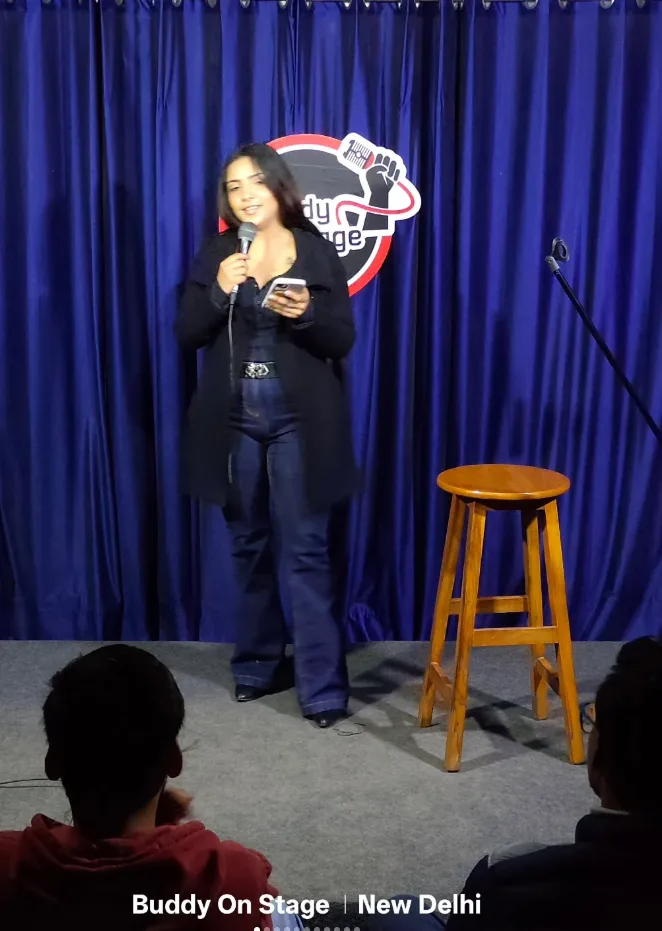
If you perform poetry in Delhi and you have not been to a Buddy On Stage event, you are missing the best stage in the city for poets. Located in Malviya Nagar in South Delhi, Buddy On Stage is a multi-genre performance platform that genuinely welcomes poets as equal headliners alongside comedians, singers, storytellers, and rappers.
What makes Buddy On Stage different from other open mics is the intentionality behind every aspect of the experience. The sound system is professional-grade — your whispered lines will be heard in the back row, and your powerful crescendos will not clip or distort. The hosts are trained to introduce poets with context and respect, setting the audience up to listen rather than just wait for the next comedian. After your set, you get genuine feedback — not generic "that was great" platitudes, but specific observations about what worked and what could be stronger.
The audience at Buddy On Stage skews young, creative, and genuinely open-minded. Because the events are multi-genre, you get listeners who came for comedy or music but discover they love poetry when they hear it performed well. Many regulars describe the crowd as the warmest in Delhi — first-timers are celebrated, not just tolerated. If you stumble over a line or lose your place, the audience is with you, not against you.
Buddy On Stage runs weekly events, which means consistent stage time if you want to build a performance practice. You can browse upcoming events and register directly at buddyonstage.com/open-mics. No auditions, no prior experience required. Whether you write in Hindi, English, Urdu, or Hinglish, whether you perform shayari, spoken word, ghazal, or experimental verse — your poetry has a home here.
Best for: Beginners looking for a safe first stage, experienced poets who want a professional setup, poets who perform in any language, anyone who wants honest feedback and a supportive community.
How to sign up: Browse upcoming events and register at buddyonstage.com/open-mics.
Hauz Khas Village & Hauz Khas Area
Hauz Khas has been at the center of Delhi's alternative arts scene for over a decade, and its poetry culture reflects that history. The area around Hauz Khas Village and the adjoining lanes is home to a cluster of cafes, galleries, and cultural spaces that regularly host open mic events with a strong poetry presence.
The audience here skews artsy and cosmopolitan. You will find art students from nearby colleges, expats, freelancers, and Delhi's creative class. This is the kind of crowd that has read Rumi in translation and Gulzar in original — they appreciate craft, not just emotion. If your poetry is layered, metaphor-heavy, or experimental, the Hauz Khas crowd will get it.
The cafe settings are intimate — most venues seat 20 to 40 people, which means every audience member is close enough to see your expressions and hear your breathing. This intimacy is a double-edged sword: it makes good performances feel electric, but it also means there is nowhere to hide if you are underprepared. The bohemian vibe of the area means audiences are comfortable with both Hindi and English poetry, and bilingual performances — mixing Hindi verses with English explanations or vice versa — are received particularly well.
Events in Hauz Khas are often organized by independent collectives rather than established platforms, which means they appear and disappear with some regularity. Check Instagram accounts of cafes in the area and search hashtags like #HauzKhasOpenMic and #HauzKhasPoetry to find upcoming events.
What works here: Literary poetry, bilingual pieces, Urdu ghazals, experimental spoken word, introspective and philosophical themes.
Pros: Attentive and cultured audience, intimate settings, great atmosphere for poetry. Cons: Events can be irregular, some venues get noisy during peak hours, can feel cliquish if you are new to the scene.
North Campus — Hudson Lane & Surrounding Areas
If Hauz Khas is where Delhi's art school poets perform, North Campus is where the city's raw poetic energy lives. The area around Hudson Lane, Kamla Nagar, and the University of Delhi colleges is a hotbed of open mic activity, with events happening almost every night of the week during the academic year.
The crowd here is young — overwhelmingly college-aged — and they bring an energy that older, more "sophisticated" venues cannot match. When a line lands at a North Campus open mic, the reaction is physical: snapping, stomping, shouting, standing ovations for pieces that hit hard. This audience does not politely applaud — they erupt. For a poet, there is nothing quite like the feeling of a North Campus crowd losing their minds over a particularly devastating closing line.
Hindi poetry is king in North Campus. While English pieces are welcomed, Hindi shayari, kavita, and spoken word receive the strongest reactions by a significant margin. The DU literary culture runs deep here — many audience members are themselves writers and poets, and they listen with the ear of practitioners. Revolutionary poetry, romantic shayari, social commentary, and deeply personal spoken word all find enthusiastic audiences.
Events are typically very affordable, organized by student collectives, college cultural committees, or small independent organizers. The venues range from cafe basements to rooftop spaces to college auditoriums. Quality varies widely — some events are impeccably organized with great sound, while others are chaotic affairs with a single bluetooth speaker and no host. Ask around or attend as an audience member first to find the well-run events.
What works here: Hindi shayari, passionate spoken word, revolutionary and protest poetry, romantic kavita, high-energy performance pieces.
Pros: The most energetic audiences in Delhi, strong Hindi poetry culture, affordable, frequent events. Cons: Variable event quality, venues can be cramped, events thin out during exam periods and summer break.
Connaught Place & Central Delhi
Connaught Place occupies a unique position in Delhi's open mic map. As the geographic and cultural center of the city, CP draws audiences from every corner of the NCR — North Delhi college students, South Delhi professionals, East Delhi artists, and visitors from Noida and Gurgaon who do not want to venture into unfamiliar neighborhoods. This diversity of audience is both CP's greatest strength and its biggest challenge for poets.
The mixed crowd means you cannot assume your audience shares your cultural references, language preferences, or poetic sensibilities. A piece that kills at a North Campus Hindi open mic might receive a polite but muted response at a CP venue where half the audience is more comfortable in English. The best approach for CP events is to bring versatile material — bilingual pieces, universally relatable themes, and strong performance energy that transcends language barriers.
On the positive side, CP has some of the best-equipped venues in Delhi. The restaurants, lounges, and cultural spaces in and around the inner and outer circles often have professional sound systems, proper lighting, and comfortable seating. Several venues host regular weekly events with consistent quality. The metro connectivity is unbeatable — Rajiv Chowk station puts CP within easy reach of virtually anywhere in Delhi NCR, which means you will never struggle with the "but the venue is too far" excuse.
The mix of locals, office-goers, and visitors creates an interesting dynamic. Weekday evening events tend to attract after-work professionals looking for cultural stimulation, while weekend events draw a younger, more casual crowd. Some of the most memorable open mic moments happen at CP venues because the audience is so unexpected — your poem about heartbreak might move a 45-year-old banker to tears in a way that a college crowd would not show.
What works here: Bilingual poetry, universally relatable themes, polished performance pieces, English spoken word, Hindi shayari with broad appeal.
Pros: Excellent metro access, diverse audiences, well-equipped venues, regular events. Cons: Some venues prioritize food and beverage sales over performance quality, parking is a nightmare if you drive, audience can feel transient rather than community-driven.
Shahpur Jat & Champa Gali
If you are a poet who finds most open mic venues too loud, too chaotic, or too focused on entertainment over art, Shahpur Jat and the adjoining Champa Gali might be your ideal home. These narrow lanes in South Delhi — tucked between Hauz Khas and IIT Delhi — have become a hub for boutique cafes, independent bookshops, design studios, and artisanal spaces that host intimate cultural events.
The open mics here are small by design. A typical event might have 15 to 25 audience members seated in a compact cafe with exposed brick walls, warm pendant lighting, and the smell of specialty coffee in the air. The atmosphere is quiet, focused, and almost reverential — these audiences come specifically to listen, and they treat each performer with the attention usually reserved for a private reading.
This is the area for poets whose work rewards close listening. If your poetry relies on subtle wordplay, layered metaphors, quiet emotional turns, or delicate imagery, the Shahpur Jat audience will catch every nuance. The hipster-artsy crowd here appreciates literary craft — they will notice your enjambment, your alliteration, your carefully chosen line breaks. This is not the venue for crowd-pleasing one-liners; it is the venue for poetry that you would submit to a literary journal.
Events in Champa Gali in particular have a curated, almost gallery-like quality. Some cafes host themed poetry evenings — love poetry on Valentine's week, monsoon-themed readings in July, year-end reflective sessions in December. These themed events can be wonderful for poets who write within specific emotional territories.
What works here: Literary and introspective poetry, English and bilingual pieces, quiet spoken word, nature and philosophical themes, experimental forms.
Pros: The most attentive audiences in Delhi, beautiful intimate settings, appreciation for poetic craft, quiet atmosphere. Cons: Very small audiences, events are infrequent, the area can be hard to find for first-timers, limited to certain types of poetry.
Noida — The Growing Poetry Frontier
Noida's open mic scene has exploded over the past two years, and for poets willing to cross the Yamuna, it offers something increasingly rare in Delhi: uncrowded stages and audiences hungry for live performance. While Delhi's established venues often have waitlists of 15 to 20 performers per event, many Noida open mics have shorter lineups, which means more stage time and a more relaxed atmosphere.
The audience in Noida is predominantly young professionals and students from institutions like Amity University, Jaypee Institute, and the numerous private colleges in Greater Noida. They are enthusiastic but still developing their listening culture — which can actually work in a poet's favor. These audiences have not become jaded by seeing three open mics a week. For them, a powerful poetry performance is still a novelty, and they respond with genuine surprise and delight.
Sectors 18, 15, and 62 in Noida have the most active event scenes, with cafes and cultural spaces hosting events on weekends. Greater Noida has a smaller but growing scene driven largely by college communities. The venues are newer and often well-equipped — many opened in the last couple of years and invested in proper sound and lighting from the start.
For poets based in Noida, the growing local scene means you do not have to travel to Delhi for every performance. That said, combining Noida events with regular performances at Buddy On Stage in South Delhi gives you the best of both worlds — a local stage for convenience and a professional platform in Delhi for growth and community.
What works here: Hindi spoken word, relatable life poetry, romantic shayari, motivational and self-discovery themes, Hinglish pieces.
Pros: Less competition for stage time, enthusiastic fresh audiences, newer and well-equipped venues, growing community. Cons: Fewer events compared to Delhi, audience culture still maturing, can feel disconnected from the core Delhi poetry scene.
Gurgaon (Gurugram) — Corporate Meets Creative
Gurgaon's open mic scene reflects the city itself — polished, professional, and surprisingly diverse once you look past the corporate exterior. The Cyber Hub area in particular has emerged as Gurgaon's cultural center, with several restaurants and event spaces hosting regular open mic nights that draw a fascinating mix of performers and audiences.
On weekday evenings, the crowd is predominantly corporate professionals — people who spend their days in MNC offices and their evenings looking for creative outlets. This audience is educated, well-traveled, and generally comfortable with both Hindi and English. They appreciate wit, intelligence, and emotional depth in poetry. What they may lack in the raw energy of a college crowd, they make up for in attentiveness and genuine respect for the performer.
Weekend events draw a more diverse crowd — families, young couples, freelancers, and the growing community of Gurgaon-based artists and writers who have been building their own scene independent of Delhi's. Weekend open mics in Gurgaon tend to be more relaxed and social, with audiences staying for longer and engaging with performers after their sets.
Beyond Cyber Hub, areas like Sohna Road, Golf Course Road, and Sector 29 have venues that host occasional open mic events. The quality varies, but the best ones rival anything in Delhi. Gurgaon's advantage for poets is the relatively smaller performer pool — you get more stage time, more audience attention, and organizers are often actively looking for poets to add variety to their lineups.
What works here: Corporate humor meets poetry, relatable urban life pieces, English and bilingual spoken word, Hindi shayari with contemporary themes, introspective and philosophical verse.
Pros: Attentive professional audiences, good venue infrastructure, less crowded than Delhi events, growing scene with room for new voices. Cons: Events can feel commercial, some venues prioritize dining revenue over performance quality, distance from Delhi's main poetry community.
How to Choose the Right Venue for Your Poetry
With so many options across Delhi NCR, choosing where to perform can feel overwhelming. Here is a practical framework for matching your poetry to the right stage.
Match Your Poetry Style to the Audience
This is the most important decision you will make, and it requires honest self-assessment. The beauty of a multi-genre platform like Buddy On Stage is that it welcomes every style — high-energy Hindi spoken word, delicate English literary poetry, Urdu ghazals, Hinglish pieces — all on the same stage. The diverse audience means your work reaches listeners beyond your usual circle. Start there, and as you grow, you will naturally discover which other venues complement your style.
Consider Your Language Preference
Language matters more than most poets realize when choosing a venue. Hindi-dominant events tend to cluster in North Campus, East Delhi, and Noida. English-friendly events are more common in South Delhi, Hauz Khas, and Gurgaon. Bilingual events — where Hindi and English performances coexist comfortably — are found at platforms like Buddy On Stage and in Connaught Place. Hindi poets should also check our dedicated guide on Hindi poetry open mics in Delhi. If you perform in Urdu, look for events that explicitly mention shayari or mushaira in their descriptions — these audiences will appreciate the linguistic nuance of your work.
Try Multiple Venues Before Committing
If you are unsure where to start, attend a Buddy On Stage event as an audience member first. Watch how the host manages transitions, notice how the audience responds to poetry, and experience the professional sound and supportive atmosphere firsthand. Most poets who attend one event as audience come back the following week to perform — the welcoming energy makes the decision easy. Once you are comfortable on stage, you can explore other venues across Delhi NCR to expand your audience.
Start Small and Scale Up
If you are new to performing, start at a venue that is specifically built to support beginners. Buddy On Stage is ideal for this — the hosts go out of their way to make first-timers comfortable, the audience is warm and encouraging, and the intimate setting feels safe without being too small. Read our complete guide to performing poetry for the first time before your debut. Build your confidence with a few performances at Buddy On Stage, and once you feel solid on stage, branch out to explore other venues and audiences across Delhi NCR.
Tips for Getting the Most Out of Any Venue
Regardless of where you perform, these practices will help you maximize every open mic experience.
Arrive Early
Getting to the venue 20 to 30 minutes before the event starts serves multiple purposes. You can introduce yourself to the host, check the sound system, get a feel for the room size and layout, and settle your nerves before the audience fills in. Early arrival also signals to the organizer that you are serious and professional, which can lead to better slot placements and future featured-performer invitations. Many of the best connections in Delhi's poetry scene are made in the 30 minutes before an event starts, when performers and organizers are relaxed and chatty.
Be a Good Audience Member
This cannot be overstated. If you want audiences to listen to your poetry with respect and attention, you must give every other performer that same gift. Put your phone away during other people's sets. Do not whisper to your friends. Do not step out for a smoke break right before someone's performance. React genuinely — snap for lines you love, applaud generously, make eye contact with the performer to show you are present. Poets who are great audience members earn the respect of the community quickly, and that respect translates to warmer receptions when they take the stage themselves.
Network Authentically
After the event, talk to other performers. Tell them specifically what you liked about their work — not generic compliments, but specific lines or moments that struck you. Exchange Instagram handles. Ask them about other events they recommend. Share your own experience — were you nervous, what surprised you, what did you learn. These conversations are how Delhi's poetry community works. The poets who show up regularly, who listen generously, and who engage authentically become part of the inner circle that hears about featured slots, paid gigs, collaborative projects, and competitions before they are announced publicly.
Exchange Instagrams, Not Just Numbers
Today, your Instagram is your poetry portfolio. When you connect with fellow poets, organizers, and enthusiastic audience members, your Instagram handle is the thing they will actually check later. Make sure your profile reflects your work — post your written pieces, share clips of your performances, and use relevant hashtags like #DelhiPoetry, #HindiShayari, #SpokenWord, and #OpenMicDelhi. When an organizer is looking for a poet to feature at next month's event, they will scroll through your Instagram to decide. A well-maintained poetry Instagram opens more doors than any business card.
Try the Same Venue Multiple Times
One visit is never enough to judge a venue. Your experience at an open mic depends on dozens of variables — the specific audience that night, the host's energy, whether you got an early or late slot, the performer who went before you, even the weather (a rainy Delhi evening creates a very different vibe than a scorching summer night). Give any promising venue at least three visits before you decide whether it is right for you. By the third time, you will have a reliable sense of the crowd, you will know the host, and the regulars will start recognizing you — which changes the audience dynamic entirely.
Bring Friends (but Not Too Many)
Having two or three friends in the audience provides genuine moral support and guarantees at least a few enthusiastic faces when you look out from the stage. But do not bring a group of ten who are only there for you and start chatting during other performances — this annoys the host, the other performers, and the regular audience. Your friends should be briefed: listen to everyone, react genuinely, and be respectful. If they cannot do that, ask them to come to a different event and just support you from Instagram.
Frequently Asked Questions
Which open mic in Delhi is best for poetry beginners?
+Buddy On Stage in Malviya Nagar is widely considered the best open mic for poetry beginners in Delhi. Their weekly events are specifically designed to be beginner-friendly, with supportive hosts who introduce first-timers gently, a warm audience that encourages new performers, and professional sound so your words are heard clearly. You can browse events and register at buddyonstage.com/open-mics — no audition or prior experience required. The multi-genre format also means less pressure — you are not performing in front of a room full of expert poets judging your technique.
Are there open mics only for poetry (not comedy)?
+Yes, Delhi has dedicated poetry-only open mics, though they are less common than multi-genre events. You will find poetry-focused events in areas like Hauz Khas, North Campus, and Shahpur Jat, often organized by poetry collectives or literary communities. However, many poets actually prefer multi-genre events because the mixed audience brings fresh listeners who might not attend a poetry-only night. Platforms like Buddy On Stage run multi-genre shows but dedicate proper slots and respect to poets alongside comedians, singers, and storytellers.
Can I perform at multiple venues in one week?
+Absolutely. Many active poets in Delhi perform at two to four venues per week. Performing at multiple venues is actually one of the fastest ways to improve because each audience is different and you learn to adapt your delivery. Just make sure you are not repeating the exact same set at events that share audience members — regulars notice. Use different venues to test different pieces, try new material at smaller events, and save your strongest set for the venues with the largest or most engaged audiences.
Do Delhi open mic venues pay poets?
+Most standard open mic events do not pay performers — they are open platforms where anyone can sign up for stage time. However, as you build a reputation, paid opportunities emerge. Some venues offer featured poet slots with honorariums ranging from INR 1,000 to INR 5,000. Poetry slam competitions offer prize money from INR 2,000 to INR 25,000. Corporate events, college festivals, and private shows pay significantly more. The open mic circuit is where you build your skills and reputation; the paid gigs come as a natural result of that investment.
How do I find poetry open mics happening this week?
+The easiest way is to check Buddy On Stage's website at buddyonstage.com/open-mics for their upcoming events. Beyond that, follow Delhi open mic pages on Instagram — search hashtags like #DelhiOpenMic, #DelhiPoetry, and #OpenMicDelhi. Join WhatsApp and Telegram groups dedicated to Delhi's poetry and performance scene. Follow venue Instagram accounts in areas like Hauz Khas, North Campus, and Shahpur Jat. Most events are posted 3 to 7 days in advance on social media, so checking Instagram every Monday will give you a good picture of the week ahead.
Your Stage Is Waiting
Delhi NCR has more stages for poets than at any point in history. From the professional, beginner-friendly environment at Buddy On Stage in Malviya Nagar to the electric energy of a North Campus open mic, from the quiet intimacy of a Shahpur Jat reading to the growing scene in Noida — there is a venue in this city that matches your voice, your style, and your comfort level.
The hardest part is not finding the right venue. The hardest part is showing up for the first time. Every poet who has ever performed at an open mic remembers the terror of that first walk to the microphone — the dry mouth, the racing heart, the sudden conviction that every word you have written is garbage and you should turn around and leave right now. That feeling is universal, and it is temporary. The moment you speak your first line and see even one person in the audience lean forward to listen, it changes everything.
Do not wait until your poetry is "ready." It will never feel ready. Do not wait until you have "enough experience." Experience only comes from doing. Start with Buddy On Stage — a platform built to treat every poet with respect, whether it is your first time on stage or your hundredth — and grow from there.
If you want to take the simplest possible first step, check the Buddy On Stage upcoming events page and sign up for a show this week. Show up, and perform. Your poetry was never meant to exist only on paper or in your notes app. It was meant to be spoken aloud in a room full of people who came to listen. Delhi is full of those rooms. Find yours.