
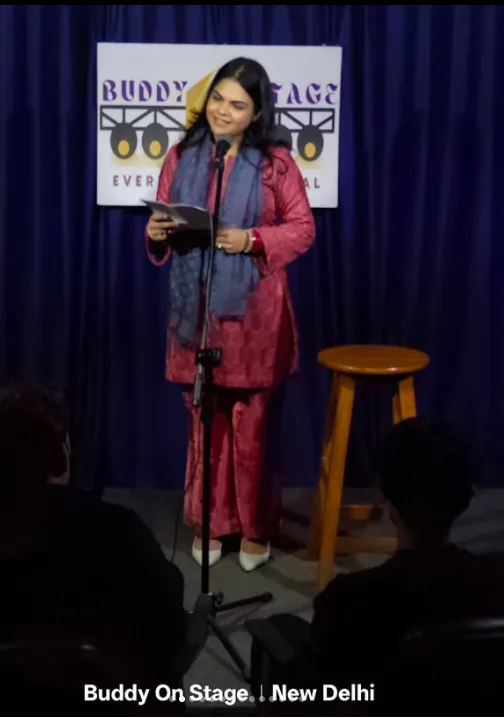
The Moment Before You Speak
There is a very specific feeling that hits you the night before your first poetry open mic. It is not quite fear and not quite excitement — it is both at once, tangled together so tightly you cannot separate them. Your stomach drops and your heart races and a small, persistent voice in your head asks: What if I forget my lines? What if nobody claps? What if my voice shakes?
Here is the truth that every poet who has ever performed live will tell you: that feeling never fully goes away. Not after your tenth performance, not after your fiftieth. The difference is that experienced poets learn to recognize it as fuel rather than a warning. That nervous energy is your body preparing to do something meaningful. It means you care about your words enough to feel vulnerable sharing them.
If you are reading this, you are probably considering performing your poetry at an open mic for the first time. Maybe you have been writing for years and your notebook is full of pieces nobody has ever heard. Maybe you started writing last month and you already feel the pull to share your words out loud. If you are still exploring what poetry open mics are and where to find them, start with our complete guide to poetry open mics in Delhi. Either way, this guide will walk you through everything — from choosing your poem to stepping off the stage after your first performance. By the end, you will not just feel prepared. You will feel ready.
Choosing Your Poem
The poem you choose for your first open mic performance matters more than you might think. This is not about picking your "best" poem in some objective sense — it is about picking the right poem for a live audience and for your current comfort level on stage.
Original vs. Cover
Most open mics welcome both original poetry and covers — performances of poems written by someone else. If you perform a cover, always credit the original poet before you begin. That said, original work is what makes open mics special. There is a rawness and authenticity to hearing someone share words they wrote themselves that no cover can replicate. If you have original material, lean toward performing it. If you are not there yet as a writer, performing a cover is a completely valid way to get comfortable on stage.
Length Matters
For your first performance, choose a poem that runs 3 to 5 minutes when spoken at a natural pace. This is the standard time slot at most open mics, and it is a comfortable length for both you and the audience. A poem that is too short — under a minute — can feel abrupt and leave you wishing you had more time. A poem that is too long — over 7 minutes — is risky for a first-timer because it gives your nerves more time to creep in and gives the audience more time to lose focus.
Pick Material That Resonates with You
Do not choose a poem because you think the audience will like it. Choose a poem because you feel something when you read it. Your emotional connection to the material is what will carry your performance. If you are genuinely moved by the words you are saying, the audience will feel it — even if your delivery is not perfect. Conversely, if you perform a technically polished piece that you feel nothing about, the audience will sense the disconnect. If you write in Hindi, Urdu, or Hinglish, our guide on performing Hindi poetry at open mics has specific tips for Hindi performers.
Avoid Overly Complex Pieces for Your First Time
Your first open mic is not the time to debut that experimental twelve-minute poem with five different voices and three tempo changes. Save the complex pieces for when you have more stage experience. For now, choose something straightforward — a poem with a clear emotional arc, language that flows naturally when spoken aloud, and a structure you can follow even if your hands are shaking. Simple does not mean shallow. Some of the most powerful poems ever written are devastatingly simple.
Should You Memorize or Read from Paper?
This is one of the most common questions first-time poets ask, and the honest answer is: both approaches work, and each has trade-offs.
The Case for Memorizing
A memorized performance frees you to make eye contact with the audience, use your hands for gestures, and move naturally on stage. You are not tethered to a screen or a piece of paper. The audience feels a stronger connection because you are looking at them, not down at your notes. Memorized performances also tend to feel more rehearsed and polished, which can boost your confidence.
The downside? Memorization takes significant time and practice. And if you blank on stage — which happens to everyone eventually — there is no safety net to glance at. The pressure of knowing you must remember every word can actually increase your anxiety.
The Case for Reading
Reading from your phone or a notebook is perfectly acceptable at most open mics. It removes the fear of forgetting your lines entirely, which can be a massive relief for a first-timer. Many experienced poets read from notes regularly — there is no shame in it. Reading also allows you to perform newer material that you have not had time to memorize.
The downside is that reading can create a barrier between you and the audience. If you are staring at your phone screen the entire time, you lose the intimacy of eye contact. Your delivery can also become flat and monotone when you are reading rather than speaking from memory.
The Best Approach for Beginners
Here is what works for most first-timers: memorize the first two lines and the last two lines, and read the rest. This way, you start strong by looking directly at the audience, you have the safety of your notes for the body of the poem, and you finish strong with your eyes up. The opening and closing are the moments the audience remembers most, so nailing those creates the impression of a fully polished performance even if you were reading from your phone for the middle section.
If you do read from your phone, increase the font size, turn off auto-lock, set it to Do Not Disturb so notifications do not pop up, and charge it fully before you leave the house. Nothing kills a performance like a phone dying on stage.
Practicing Your Performance
Here is a mistake almost every first-time poet makes: they practice their poem by reading it silently in their head. This is not practice. This is reading. Practice means performing — out loud, at full volume, with the same energy you intend to bring on stage.
Rehearse Out Loud
Stand up. Hold your phone or paper the way you will on stage. Say the words out loud at the volume you plan to use in the venue. Do this at least five times on different days. You will be surprised how different a poem feels when you speak it versus when you read it silently. Words that look beautiful on paper can be clunky when spoken. Phrases that seemed unremarkable in writing suddenly hit harder when delivered with your voice. Speaking your poem out loud is how you find its natural rhythm.
Record Yourself
Use your phone to record a video of yourself performing. Yes, watching yourself on video feels awkward. Do it anyway. You will catch things you would never notice otherwise — a nervous habit of swaying, a tendency to drop your volume at the end of lines, a section where you rush through the words. Recording yourself is the closest you can get to seeing your performance from the audience's perspective.
Perform for a Friend
If you have someone you trust — a friend, a sibling, a partner — perform for them before the open mic. This is invaluable because it simulates the experience of having a real person listening. The nervousness you feel performing for even one person is a smaller, more manageable version of what you will feel on stage. It helps you build that muscle. Ask your friend for honest feedback, but more importantly, pay attention to how you feel during the performance. Where did you stumble? Where did you feel strong? That awareness will serve you on the actual night.
Work on Pacing and Pauses
First-time poets almost universally perform too fast. Nerves make you rush. Consciously slow yourself down during practice. Mark places in your poem where you want to pause — after a powerful line, before a shift in tone, at the end of a stanza. Silence on stage is not emptiness. It is emphasis. A well-placed pause after a heavy line gives the audience time to absorb what you just said. It also gives you time to breathe and steady yourself.
What to Expect When You Arrive
Walking into a poetry open mic for the first time can feel intimidating if you do not know what to expect. Here is what a typical event looks like, so nothing catches you off guard.
The Venue
Most open mics in Delhi happen in cafes, small performance spaces, or dedicated venues like Buddy On Stage in Malviya Nagar. The setup is usually simple: a small stage or designated performance area, a microphone on a stand, basic lighting, and chairs or cushions for the audience. The atmosphere is intimate — you are performing for a room of 20 to 50 people, not a stadium. This intimacy is what makes open mics powerful.
The Sign-Up Process
Most events have a sign-up process. Platforms like Buddy On Stage let you register online through their website — just browse upcoming events and pick a show. Some other events have a walk-in sign-up sheet at the venue where you write your name when you arrive. Either way, you will be given a slot number or an approximate time for your performance. Always register in advance if you can — slots fill up fast at popular venues.
Waiting Your Turn
You will likely not perform immediately. There may be 10 or 15 people before you. Use this time wisely. Watch the other performers. Pay attention to how they use the mic, how they handle the stage, how the audience responds. This is free education. You will also notice that the audience is supportive — they clap for everyone, they snap their fingers at powerful lines, they are genuinely there to listen. This realization alone can calm your nerves significantly.
The Energy in the Room
Open mic audiences are unlike any other audience. They are not passive consumers waiting to be entertained. They are fellow artists, aspiring performers, and poetry lovers who showed up specifically to hear new voices. The energy is warm, encouraging, and communal. People are not there to judge you. They are there to share in the experience of live art. Once you feel this energy, your fear will start to dissolve.
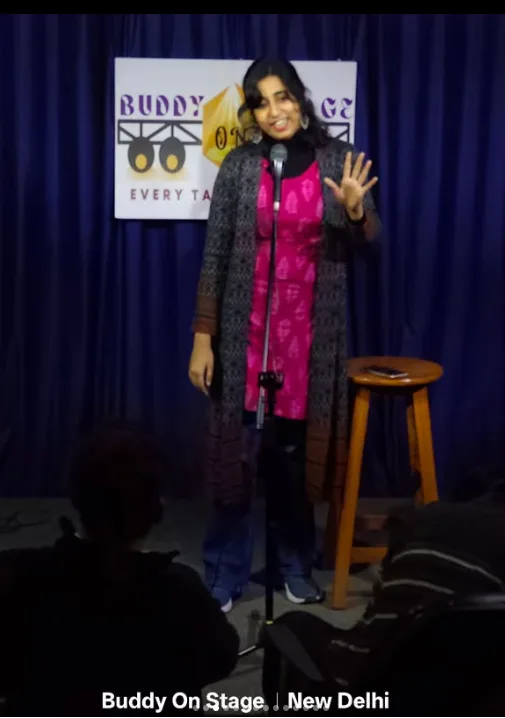
On Stage: Your First 30 Seconds
The first 30 seconds of your performance set the tone for everything that follows. Here is how to make them count.
How to Introduce Yourself
Keep it simple. Walk up to the mic, smile, and say something like: "Hi, I'm [your name], and this is my first time performing. This poem is called [title]." That is it. You do not need a long backstory. You do not need to explain what the poem is about. Mentioning that it is your first time is actually a smart move — the audience will root for you even harder.
Eye Contact
You do not need to maintain constant eye contact with the audience. That would feel unnatural even for experienced performers. Instead, use the "lighthouse technique": slowly sweep your gaze across the room as you perform, briefly making eye contact with different people in different sections. This makes everyone in the audience feel included. If direct eye contact feels too intense, look at the foreheads or hairlines of audience members — from even a short distance, it looks identical to eye contact.
Mic Technique
If the mic is on a stand, keep it there. You do not need to remove it. Stand about four to six inches from the microphone — close enough that it picks up your voice clearly, far enough that it does not pop on your "p" and "b" sounds. Speak across the mic rather than directly into it. If the mic is too high or too low, adjust the stand before you begin — do not spend your entire performance craning your neck or bending down.
What to Do with Your Hands
If you are holding your phone or notebook, this question answers itself — your hands are occupied. If you have memorized your poem, let your hands do whatever feels natural. Some poets gesture expressively. Others keep their hands at their sides or rest them on the mic stand. The only thing to avoid is fidgeting — clicking a pen, pulling at your clothes, or gripping the mic stand so tightly your knuckles turn white. If you notice yourself fidgeting, take a breath and consciously relax your hands.
Owning the Space
When you step on stage, take a moment before you begin. Plant your feet. Look at the audience. Breathe. This two-second pause before your first word does two things: it settles your nerves, and it commands the room's attention. Rushing into your poem the instant you reach the mic makes you look nervous. Taking a beat makes you look confident — even if you do not feel it yet. Fake it for two seconds and your body will start to believe it.
Dealing with Stage Fright
Stage fright is not a flaw. It is a feature. Every performer experiences it. The goal is not to eliminate nervousness — it is to manage it so it sharpens your performance rather than sabotaging it.
Arrive Early
Get to the venue 15 to 20 minutes before the event starts. Sit down, look around, get familiar with the space. When the room is no longer a strange new environment, it feels less threatening. If possible, walk up to the stage area before the event begins and stand there for a moment. Let your brain register that this is just a room with chairs and a microphone. Familiarity is the enemy of fear.
Deep Breathing
This sounds cliche because it is cliche — and it works. Before your slot, find a quiet corner and do a simple breathing exercise: breathe in for four counts, hold for four counts, breathe out for six counts. Do this five times. It activates your parasympathetic nervous system and physically lowers your heart rate. The reason experienced performers swear by breathing exercises is not because they read it in a self-help book — it is because the technique genuinely calms your body down.
The Audience Wants You to Succeed
This is the single most important thing to internalize: the audience is on your side. They did not come to a poetry open mic to watch people fail. They came to hear poetry, to feel something, to connect with a stranger's words. When you walk on stage, every person in that room is silently hoping you are about to blow them away. They will clap when you finish regardless of how you performed. They will come up to you afterward and tell you they liked your work. Open mic audiences are the most supportive audiences in all of live performance. They are not your enemy. They are your team.
What to Do If You Forget Your Lines
If you blank on stage — and there is a reasonable chance you will, so plan for it — here is the protocol: pause, breathe, and continue. Take a beat. Look at your notes if you have them. If you do not, skip to the next line you remember. If you genuinely cannot remember anything, say "Let me start that section again" and restart the stanza. The audience will not mind. In fact, they will respect you for handling it calmly rather than panicking.
Here is the secret that will bring you enormous comfort: the audience does not have your script. They do not know what you were supposed to say. If you skip a line, they think you meant to. If you pause, they think it is a dramatic beat. If you change a word, they have no idea. The only person who knows you made a mistake is you. And you do not have to tell them.
After Your Performance
You did it. You stepped off the stage. Your heart is pounding and your hands might be trembling and you feel a rush of adrenaline that is unlike anything you have experienced before. Here is what comes next.
Handling Feedback
After your performance, people will approach you. Some will say "That was amazing" — accept the compliment genuinely, even if you feel your performance was imperfect. Some will offer constructive feedback — listen without becoming defensive. Not all feedback will be useful, and that is okay. Take what resonates and leave the rest. The important thing is to remain open. The poets who grow fastest are the ones who listen.
Connecting with Other Poets
Open mics are not just performance venues — they are communities. The people you meet at your first open mic can become collaborators, friends, and your most honest critics. After the event, introduce yourself to performers whose work you enjoyed. Tell them specifically what you liked — not just "that was great" but "the line about the train station really stayed with me." Specific compliments start real conversations.
Exchange Instagram Handles
Instagram is the social hub for the poetry community in India. Follow the poets you met, follow the venue's page, share your experience in your stories. Tag the event and the venue. This is not just networking — it is how you stay plugged into the community and learn about future events. Many friendships in the poetry scene start with a follow request after an open mic.
What to Work on Next
After your first open mic, give yourself a day to decompress. Then sit down and honestly assess: What went well? Where did you struggle? Was your poem the right length? Did you rush? Were you happy with your volume? Use these observations to set goals for your next performance. Growth in spoken word is not about giant leaps — it is about small, consistent improvements over many performances.
Common Mistakes First-Time Poets Make
Knowing the most common first-timer mistakes in advance means you can avoid them. Here are the ones we see most often at Buddy On Stage events — and every other open mic in Delhi.
- Going over the time limit. Every event has a time limit per performer, usually 3 to 5 minutes. Going over it is disrespectful to the other performers and the host. Time your poem during practice. If it runs long, cut it or choose a shorter piece.
- Apologizing on stage. "Sorry, I'm really nervous" or "Sorry, this probably isn't very good" — stop. Apologizing undermines your performance before it even begins. The audience does not need you to tell them you are nervous. They need you to share your poem. Save the self-deprecation for after the show.
- Reading too fast. This is the number one performance mistake across all experience levels, and it is amplified tenfold for first-timers. Nerves make you speed up without realizing it. Consciously slow down. When you think you are going too slowly, you are probably going at the right pace.
- Not projecting your voice. Even with a microphone, you need to speak with intention. Do not whisper into the mic hoping it will amplify your words to the right level. Speak clearly and at a volume slightly louder than your normal conversational voice. The mic does the rest.
- Looking down the entire time. Even if you are reading from your phone, look up at the audience regularly. Every few lines, lift your eyes. A performance where the poet never looks up feels like they are reading to themselves rather than performing for a room.
- Not engaging the audience. Poetry is a conversation, not a monologue you deliver to the wall. Acknowledge the audience with your eyes, your energy, and your presence. Let them in. A small smile, a deliberate look, a moment where you let a line hang in the air — these are the things that turn reading into performing.
Where to Find Beginner-Friendly Poetry Open Mics in Delhi
Not all open mics are created equal, especially for first-timers. Some events are competitive and intense — not ideal when you are still finding your stage legs. What you want for your first time is a venue that is supportive, welcoming, and genuinely designed for beginners.
Buddy On Stage in Malviya Nagar, South Delhi, is one of the best places in the city for your first poetry performance. The hosts are experienced, patient, and go out of their way to make first-timers feel comfortable. The audience is a mix of regulars and newcomers, so you will not feel like the only beginner in the room. The venue itself is intimate — not too big, not too small — which makes it easier to connect with the people listening to you. Events happen regularly, so you can attend as an audience member first to get a feel for the space before you sign up to perform.
To book a slot, visit the upcoming events page and sign up for a show that fits your schedule. If it is your first time, the team will make sure you are well taken care of.
Beyond Buddy On Stage, look for events that specifically label themselves as "beginner-friendly" or "all-levels welcome." For a full list of poet-friendly venues across Delhi NCR, see our guide to the best open mic venues for poets. Check Instagram regularly — most Delhi open mics promote their events through stories and posts. Join poetry WhatsApp groups in your area to stay updated on upcoming events. And if you are not sure whether an event is right for you, message the organizer and ask. Good hosts will always be honest about the vibe of their event.
Your First-Timer Checklist
Print this list. Screenshot it. Tape it to your mirror. Here is everything you need to do before your first poetry open mic:
- Choose your poem — original or cover, 3 to 5 minutes long, something that genuinely moves you
- Practice at least 5 times out loud — standing up, at performance volume, not just in your head
- Charge your phone fully if you are reading from it — and set it to Do Not Disturb with auto-lock turned off
- Arrive 15 minutes early — get familiar with the venue, find a seat, settle your nerves
- Bring a bottle of water — your mouth will get dry, guaranteed
- Watch 2 to 3 performers before your slot — observe the mic placement, the audience energy, and how the stage feels
- Breathe — four counts in, four counts hold, six counts out, five times before your slot
- Have fun — seriously. You are about to share your words with a room full of people who want to hear them. This is supposed to feel good
Frequently Asked Questions
What if I forget my poem on stage?
+Forgetting a line happens to every poet at some point — even seasoned professionals. If it happens to you, pause, take a breath, and either skip ahead to the next line you remember or glance at your phone or paper if you have it as a backup. The audience is far more forgiving than you expect. Most of the time, they will not even notice you skipped a line. The worst thing you can do is panic or apologize repeatedly. A calm pause actually looks like a deliberate dramatic beat to the audience.
How long should my poem be for an open mic?
+Most open mics give each performer 3 to 5 minutes on stage. For poetry, this typically means one longer piece or two shorter ones. A poem that takes about 2 to 3 minutes to perform at a natural pace is ideal for a first-timer. Avoid going over your allotted time — it is disrespectful to other performers waiting for their turn and to the host managing the event schedule. When in doubt, time yourself during practice and aim for the shorter side.
Can I read from my phone at a poetry open mic?
+Yes, most open mics allow you to read from your phone, a notebook, or printed paper. Many experienced poets do this regularly. However, try to look up from your screen as much as possible to make eye contact with the audience. A good technique is to memorize the first and last few lines of your poem so you can deliver those directly to the audience, and refer to your phone only for the middle sections. Also, make sure your phone is fully charged and the screen does not auto-lock during your performance.
Do I need to perform original poetry?
+Not necessarily. Many open mics welcome cover performances where you recite someone else's poem, as long as you credit the original poet. However, performing original work is strongly encouraged at most events because it is what makes open mics special — hearing fresh voices and new perspectives. If you are not yet confident in your own writing, performing a cover is a perfectly valid way to get comfortable on stage before debuting your original material.
What should I wear to a poetry open mic?
+There is no dress code at poetry open mics. Wear whatever makes you feel comfortable and confident. You will see everything from kurtas to graphic tees to formal shirts at any given event. The only practical advice is to avoid anything that makes you physically uncomfortable on stage — if your shoes pinch or your collar is too tight, it will distract you from your performance. Wear something that feels like you, because authenticity is the entire point of poetry.
Your Words Deserve to Be Heard
You have been carrying poems inside you — in your notes app, in your diary, in the back of your mind during late-night metro rides and early-morning walks. Those words were not written to stay silent. They were written to be spoken, to fill a room, to make a stranger in the audience feel something they did not expect to feel tonight.
Your first open mic will not be perfect. Your voice might shake. You might stumble over a line. You might forget to look up from your phone. None of that matters. What matters is that you showed up, that you stood in front of a room of strangers, and that you said your words out loud. That takes more courage than most people will ever understand, and every single person in that audience knows it.
The poet you will become a year from now — more confident, more polished, more connected to the community — that poet starts with one decision: to perform for the first time. Everything else builds from there. Every open mic you attend sharpens your delivery. Every poem you share teaches you something about your voice. Every night you spend in a room full of poets makes you feel a little less alone in the world.
So find an event. Buddy On Stage's open mics in Malviya Nagar are the perfect starting point — beginner-friendly, warm, and built for poets who are finding their voice. Check the upcoming events page and register for a show this week. Choose your poem. Practice it out loud. And when your name is called and you walk up to that microphone for the first time — remember that every poet in history has stood exactly where you are standing, felt exactly what you are feeling, and spoken anyway.
It is your turn now. Speak.