
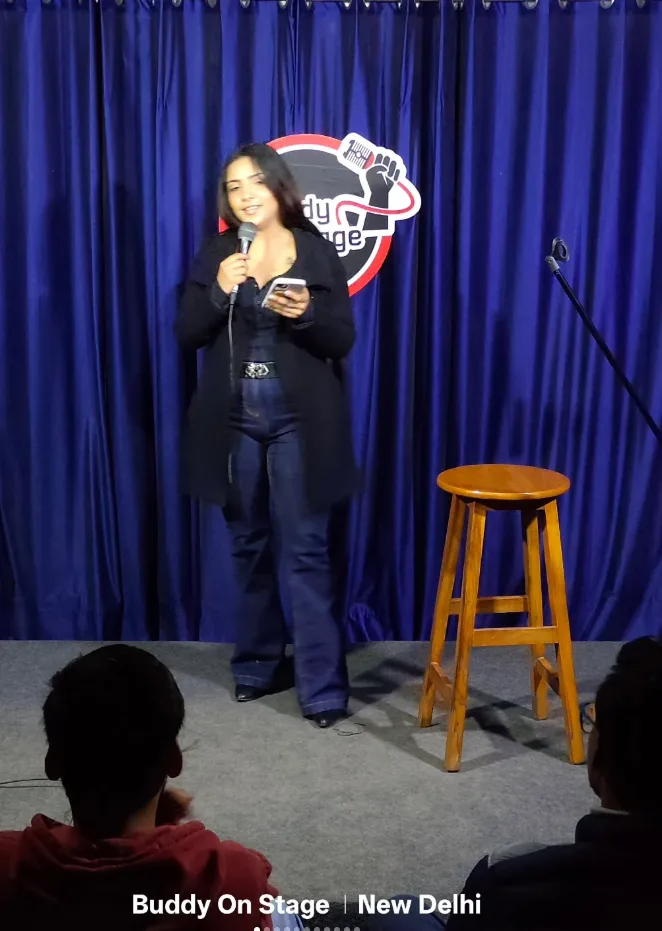
Why Delhi Is India's Poetry Open Mic Capital
Delhi is not just a city where poetry happens. It is the city where poetry lives, breathes, and refuses to be silenced. From the Mughal-era mushairas that drew the greatest shayars of the subcontinent to the candle-lit cafes of Hauz Khas Village where a twenty-year-old nervously reads her first spoken word piece into a microphone — poetry has been woven into Delhi's identity for centuries. No other Indian city comes close.
Today, the poetry open mic scene in Delhi has reached a level of richness and accessibility that would have been unimaginable a decade ago. Every week, there are dozens of events across the NCR region — in South Delhi basements, Connaught Place rooftops, North Campus chai stalls turned performance spaces, and purpose-built venues like Buddy On Stage in Malviya Nagar. The explosion has been driven by social media (Instagram made poetry cool for an entire generation), by the pandemic (which forced performance culture online and then supercharged the return to live events), and by a genuine hunger among young Indians to express themselves in their own languages and their own voices.
Whether you write in Hindi, Urdu, English, Hinglish, Punjabi, or Haryanvi — whether you compose classical ghazals or raw spoken word about your daily metro commute — there is a stage in Delhi waiting for you this week. This guide will show you exactly how to find it, what to expect when you get there, and how to make the most of your time on stage.
What Is a Poetry Open Mic?
If you have never attended a poetry open mic, the concept is beautifully simple. An organizer books a venue, sets up a microphone and a basic sound system, and opens the stage to anyone who wants to perform. You sign up — usually through the organizer's website or sometimes by walking in — and you get a slot. That slot is typically 3 to 5 minutes. You step up to the mic, and you share your poetry with a live audience.
That is it. No auditions. No prerequisites. No minimum followers on Instagram. No literary degree required. The open mic format is radically democratic — it exists specifically to give a platform to people who do not have one yet. The seasoned poet who has performed at fifty events signs up the same way as the teenager who has never spoken her words aloud outside her bedroom. Both get the same microphone and the same five minutes.
The audience at a poetry open mic is not a passive crowd waiting to be entertained. It is a community of listeners — fellow poets, aspiring writers, curious friends who tagged along, and regulars who show up every week because they love hearing new voices. The culture at most Delhi open mics is supportive and encouraging. People snap their fingers or clap after lines that resonate. They stay quiet during vulnerable moments. And they applaud warmly when you finish, regardless of whether you stumbled over a line or delivered flawlessly. The point is not perfection. The point is the courage of standing up and sharing something real.
Most poetry open mic events also include a featured performer or two — someone the organizer has invited specifically because they bring a high level of craft and stage presence. The featured set is usually longer (10 to 15 minutes) and serves as a centerpiece for the evening. But the open slots are the heart of the event, and they are what make every night different and unpredictable.
Types of Poetry Open Mics in Delhi
Not all poetry open mics are the same. Understanding the different types will help you find the events that match your style, your language, and your comfort level.
Hindi and Urdu Shayari Nights
These are dedicated evenings for shayari, ghazal, nazm, and kavita — the rich tradition of Hindi-Urdu poetry that Delhi has nurtured for generations. The audience at these events tends to be deeply familiar with poetic conventions. They know when to say "wah wah." They appreciate a well-constructed sher (couplet) with the kind of knowing recognition that only comes from a shared literary tradition. If you write in Hindi or Urdu and want an audience that truly understands the craft behind your words, shayari nights are where you belong. These events are particularly popular in areas like Lajpat Nagar, Rajouri Garden, and Old Delhi, though you will find them across the city.
English Spoken Word Events
English spoken word in Delhi draws from the global slam poetry tradition — think performance-driven poetry with strong rhythms, emotional intensity, and themes that range from personal identity to social justice to heartbreak. The delivery style tends to be more theatrical than traditional recitation: poets use repetition, pace changes, volume shifts, and physical gesture as deliberate performance tools. English spoken word events are common in South Delhi (Hauz Khas, Shahpur Jat, Greater Kailash), at international cultural centers, and at English-medium college campuses. They attract a crowd that is comfortable with English as a performance language, often with exposure to Western spoken word via YouTube and Instagram.
Multilingual and Multi-Genre Open Mics
These are the most inclusive events in Delhi's poetry landscape. A multilingual open mic welcomes performers in any language — Hindi, English, Urdu, Hinglish, Punjabi, Marathi, or anything else you bring. Multi-genre events go further by combining poetry with other art forms: stand-up comedy, acoustic music, storytelling, rap, and more. Buddy On Stage is one of Delhi's best-known multi-genre platforms, hosting weekly events in Malviya Nagar that welcome all languages and all performance styles. The beauty of these events is the cross-pollination — a poet hears a comedian and learns about timing, a rapper hears a ghazal and discovers new rhythmic possibilities. For beginners, multilingual events are often the most comfortable entry point because you are not expected to fit a specific mold.
Slam Poetry Competitions
A poetry slam is a competitive format where poets perform original work and are scored by a panel of audience judges. Unlike a regular open mic, slams have winners, and many offer cash prizes ranging from INR 2,000 to INR 25,000. The competitive element pushes poets to write tighter, perform harder, and take creative risks. Delhi hosts slams regularly at college festivals, cultural centers, and independent venues. If you have honed your craft at open mics and want to test yourself against other strong performers, slams are the natural next step. The key difference from a regular open mic is that covers (performing someone else's poetry) are typically not allowed — you must perform your own original work.
Where to Find Poetry Open Mics in Delhi NCR
Delhi's poetry scene is spread across the entire NCR region. Here is an area-by-area breakdown of where to find events. For a detailed area-by-area breakdown of the best stages, check our guide to the best open mic venues for poets in Delhi NCR.
South Delhi
Malviya Nagar has emerged as one of Delhi's most active hubs for open mic events, largely due to Buddy On Stage establishing its venue here. Buddy On Stage runs weekly open mic events that are specifically designed to be welcoming for first-time performers. The venue is intimate, the sound is clean, and the host creates an atmosphere where nervousness transforms into excitement. If you are looking for your first poetry open mic in Delhi, this is the place to start. The area is well-connected by metro (Malviya Nagar station on the Yellow Line) and has plenty of dining options for pre-show meals.
Hauz Khas and the surrounding area have been synonymous with Delhi's creative scene for over a decade. Several cafes and art spaces here host poetry nights, though the frequency and quality vary. The vibe tends to be more English-leaning and artsy, attracting a crowd of young professionals and design students. Hauz Khas Village itself has become touristy, but the lanes behind it still house intimate performance spaces.
Shahpur Jat and Champa Gali are South Delhi's other creative corridors. The cafes here are small and atmospheric — exactly the kind of space where poetry feels at home. Events in Shahpur Jat tend to attract a curated audience that is genuinely interested in arts and culture, which makes for attentive listening.
Central Delhi and Connaught Place
Connaught Place and the surrounding areas of Central Delhi host poetry events in a mix of settings — from established cultural institutions like the India Habitat Centre and India International Centre to rooftop cafes in the inner circle. CP is easy to reach from almost anywhere in Delhi, which makes events here well-attended. The audience tends to be diverse — a mix of office-goers stopping by after work, college students from nearby campuses, and dedicated poetry enthusiasts. Several restaurants and cultural spaces in Khan Market also host periodic poetry and literary events, though these lean more toward curated readings than open mics.
North Campus and Delhi University Area
North Campus is the beating heart of student poetry culture in Delhi. The cafes on Hudson Lane and Kamla Nagar have been hosting open mics for years, drawing from the enormous student population at DU colleges like Hansraj, Hindu, Ramjas, St. Stephen's, and Miranda House. The energy at North Campus events is raw and enthusiastic — large audiences, loud reactions, and a willingness to experiment. Hindi poetry is particularly strong here, as is Hinglish spoken word. The limitation is that many events happen during college hours or festival seasons, and the cafe environments can be noisy. But for sheer energy and a sense of being part of a movement, North Campus is hard to beat.
Noida
Noida's poetry scene has grown significantly in recent years, driven by the large population of young professionals in sectors 18, 62, and the Expressway corridor. Cafes and co-working spaces host regular open mic events, and several Noida-based poetry collectives organize monthly gatherings. The events tend to be multilingual, reflecting the diverse backgrounds of Noida's residents who have migrated from across India for work. If you live in Noida and the thought of travelling to South Delhi for a Tuesday night open mic sounds exhausting, the local scene is strong enough to keep you performing regularly.
Gurgaon
Gurgaon (Gurugram) has a growing but still developing poetry open mic culture. Events happen primarily in CyberHub, Sohna Road cafes, and the cultural spaces popping up in sectors along Golf Course Road. The audience skews toward working professionals, and English-language poetry tends to dominate. Gurgaon events are well-organized and the venues are often more polished than their Delhi counterparts, but the scene lacks the gritty, democratic energy of places like North Campus or Malviya Nagar. For poets who live and work in Gurgaon, these events are convenient and worthwhile. For the full Delhi poetry experience, however, crossing the border into Delhi proper is worth the trip.
How to Sign Up and What to Expect
You have decided to perform at your first poetry open mic. Here is exactly what happens from the moment you decide to the moment you leave the venue.
Registration
Registering for an open mic is simple. Platforms like Buddy On Stage let you browse upcoming events and register directly through their website — pick a show, sign up, and your slot is confirmed. Some other events use Instagram DMs or walk-in sign-ups on the day, but slots are limited and fill up fast — always register in advance if you can. When you register, you will typically be asked your name, your art form (poetry, comedy, singing, etc.), and sometimes the language you plan to perform in.
The Typical Evening Flow
A standard poetry open mic evening in Delhi looks something like this. Doors open 30 to 45 minutes before the show starts, giving people time to settle in and order food or drinks if the venue serves them. The host opens the evening with a brief welcome, explains the format, and sets the ground rules — respect the performers, keep your phones on silent, save your conversations for the break.
Then the performances begin. Each poet is called up by name, takes the stage, performs their 3-to-5-minute set, and sits back down. A good host keeps the energy flowing between performers with brief introductions and transitions. Most events have 12 to 20 performers across the evening, which means the show runs about 90 minutes to 2 hours. Some events include a short intermission halfway through. The evening often ends with a featured performer or a group activity — sometimes a collective jam or an impromptu prompt-based exercise.
Audience Size and Atmosphere
Audience size varies widely. A small cafe event might have 20 to 30 people. A popular venue like Buddy On Stage typically draws 40 to 80 attendees on a good night. College festival events can pack 200 or more into a hall. As a first-timer, a smaller audience is actually an advantage — it feels more intimate and less intimidating. The atmosphere at most Delhi poetry open mics is warm and communal. People are there because they chose to be. Unlike a bar where poetry competes with football on a screen, a dedicated open mic audience is present and engaged.
Etiquette
The unwritten rules are simple. Listen when others perform — no side conversations, no scrolling through Instagram. React genuinely — snap, clap, or murmur appreciation for lines that move you. Do not leave during someone's performance — if you need to step out, wait for the transition between performers. Respect the time limit — if your slot is five minutes, do not take seven. Going over time is one of the fastest ways to lose goodwill with both the host and your fellow performers. And stay for the full show if you can. The poet who performs last deserves the same audience that the first poet had.
Tips for First-Time Poetry Performers
Your first open mic performance will be one of the most memorable experiences of your creative life. Here is how to prepare for it.
Choosing Your Material
Pick a piece you genuinely love. Not the one you think will impress people. Not the one your friend said was your best. The one that makes you feel something every time you read it. When you are standing in front of a microphone with your heart pounding, the only thing that will carry you through is genuine connection to your own words. If you have multiple pieces ready, bring two or three and decide on the night based on the energy in the room. For your first time, though, have one piece that you know cold and treat anything else as a bonus.
Memorization vs Reading
This is a practical question with a practical answer: it is completely acceptable to read from a notebook or your phone at most Delhi open mics. Many experienced poets do this, especially when performing new material. However, a memorized performance is almost always more powerful. When you are not looking down at a screen, you can make eye contact with the audience, use your hands expressively, and respond to the energy in the room. The ideal approach for a beginner is to memorize your primary piece but keep your phone in your pocket as a safety net. If your mind goes blank — and it might, and that is fine — you glance at the screen, find your place, and continue. Nobody will judge you for it.
Stage Presence and Delivery
The biggest mistake first-time poets make is rushing. Nervousness compresses time — a poem that takes three minutes in your bedroom suddenly takes ninety seconds on stage because you blaze through it at double speed. Consciously slow down. Pause between stanzas. Let silence do its work. A well-placed pause after a powerful line is worth more than ten lines delivered in a breathless rush.
Stand with your feet roughly shoulder-width apart. Do not sway or pace unless the movement is deliberate. Hold the microphone (or stand near it) at a consistent distance — about a fist's width from your mouth. Speak clearly and project your voice even if there is amplification. Make eye contact with different parts of the room — not a fixed stare at one person, but a gentle sweep that makes multiple audience members feel included.
Dealing with Nerves
You will be nervous. Accept this as a certainty rather than hoping to avoid it. Nervousness before a performance is not a problem to be solved — it is energy to be channeled. The physical symptoms (racing heart, shaky hands, dry mouth) are your body preparing for a heightened experience. They are the same symptoms athletes feel before a race. The nervousness does not mean you are not ready. It means you care about what you are about to do.
Practical techniques: take three slow, deep breaths before you walk to the stage. Have a sip of water. Arrive early so you are not rushing in at the last minute. If you know anyone in the audience, make eye contact with them during your performance — a friendly face is an anchor. And remember that the audience is on your side. They want you to succeed. Every person in that room who has ever performed knows exactly how you feel, and they are silently cheering for you. For a complete step-by-step walkthrough, read our beginner's guide to performing poetry at an open mic.
Mic Technique
If you have never used a microphone before, a few basics will save you from common pitfalls. Do not cup the mic head — hold it by the body. Keep it about 4 to 6 inches from your mouth. If you turn your head, move the mic with you so your voice stays on-axis. When you want to be loud, do not shout into the mic — pull it slightly farther away and project. When you want to be quiet and intimate, bring it a little closer. These are small details, but they make the difference between an audience hearing your words clearly and struggling to understand you through feedback and distortion.
Hindi Poetry vs English Poetry at Open Mics
Delhi is a bilingual city at its core, and this shapes the poetry open mic scene in fascinating ways. If you write in both languages — or if you are deciding which language to perform in — understanding the dynamics will help you make better choices.
Hindi Connects Deeper with Delhi Audiences
This is not a value judgment about the languages themselves. It is a practical observation about audience response. Hindi is the language in which most Delhi audiences think, argue, love, and grieve. When you perform a sher about heartbreak in Hindi, the audience hears it in the same language their own heartbreak speaks to them. There is no translation layer. The emotional impact is immediate and visceral. At Delhi open mics, Hindi shayari and kavita consistently produce the strongest audience reactions — audible gasps, spontaneous "wah wahs," the kind of charged silence that means your words have landed somewhere deep.
Hindi also carries the weight of an extraordinary literary tradition. When you perform a ghazal in Delhi, you are tapping into a lineage that runs through Ghalib, Faiz, Dushyant Kumar, and Gulzar. The audience feels that lineage even if they cannot articulate it. There is a resonance that comes from centuries of accumulated meaning in specific words, images, and forms.
English Has Its Strengths
English spoken word thrives in certain Delhi contexts — corporate events, international audiences, English-medium college campuses, and events that attract a crowd of young professionals from Gurgaon and South Delhi. English allows for specific types of wordplay, cultural references, and structural experimentation that do not always translate to Hindi. And if English is genuinely your stronger creative language — if your best lines arrive in your head in English — then performing in English is the right choice. A powerful English poem delivered with conviction will always beat a mediocre Hindi poem performed for authenticity points.
The Rise of Hinglish
Hinglish — the fluid, unselfconscious mix of Hindi and English that most young Delhiites actually speak — has become a legitimate and increasingly celebrated poetic language. At open mics across Delhi, Hinglish performances feel the most natural and authentic because they mirror how the audience actually communicates. A poet might start a stanza in English and land the punchline in Hindi, or weave English phrases into an otherwise Hindi piece in exactly the way a Delhi conversation flows.
The strategic advantage of Hinglish is inclusivity. It reaches both the crowd that is comfortable in English and the crowd that connects more deeply with Hindi, without alienating either. For poets who feel they are not "pure" enough in either language, Hinglish is not a compromise — it is its own creative space with its own possibilities. Some of the most exciting poetry being written in Delhi right now lives in this space between languages. If you write in Hindi, our detailed guide on Hindi poetry open mics in Delhi covers everything from shayari to kavita to ghazal performances.
How Buddy On Stage Supports Poets
Buddy On Stage is one of Delhi's most active platforms for live performance, and it has become a home base for hundreds of poets across the NCR region. Here is what makes it different from a random cafe hosting an occasional poetry night.
Weekly Events with Consistent Quality
Buddy On Stage hosts open mic events every week at its venue in Malviya Nagar, South Delhi. This consistency is critical for poets. Building performance skills requires regular stage time — not one event every few months, but a reliable weekly opportunity to test new material, refine your delivery, and build confidence. The events are multi-genre (poetry, comedy, music, storytelling, rap) and multilingual (Hindi, English, Urdu, Hinglish — all welcome). This means you are performing for a diverse audience, which is far better training than always performing for the same poetry-only crowd.
Genuinely Beginner-Friendly
Many events claim to welcome beginners but do not actually create an environment where a first-timer feels comfortable. Buddy On Stage does this deliberately. The host guides nervous performers, the audience is primed to be supportive, and the sound setup is professional enough that your words are heard clearly even if your voice is shaking. A significant percentage of performers at every Buddy On Stage event are doing it for the first time, which normalizes the beginner experience. You are not the only nervous person in the room.
Easy Sign-Up Process
Registration is straightforward. Browse upcoming events on buddyonstage.com/open-mics, pick a show that fits your schedule, and register for your slot — all online. The team confirms your spot and sends you all the details you need — venue address, timing, what to bring, and what to expect. There is no complicated application process. If you have something to share, you are in.
A Venue Built for Performance
Buddy On Stage's Malviya Nagar space is purpose-built for live performance, not a cafe that clears some tables when there is an event. The sound is clean, the lighting is set up to make the performer look and feel good on stage, and the seating is arranged so every audience member has a clear sightline. These details matter more than most people realize. A good venue elevates your performance. A bad venue fights against it. Performing at Buddy On Stage, you can focus entirely on your words and your delivery because the technical environment is taken care of.
Community Beyond the Stage
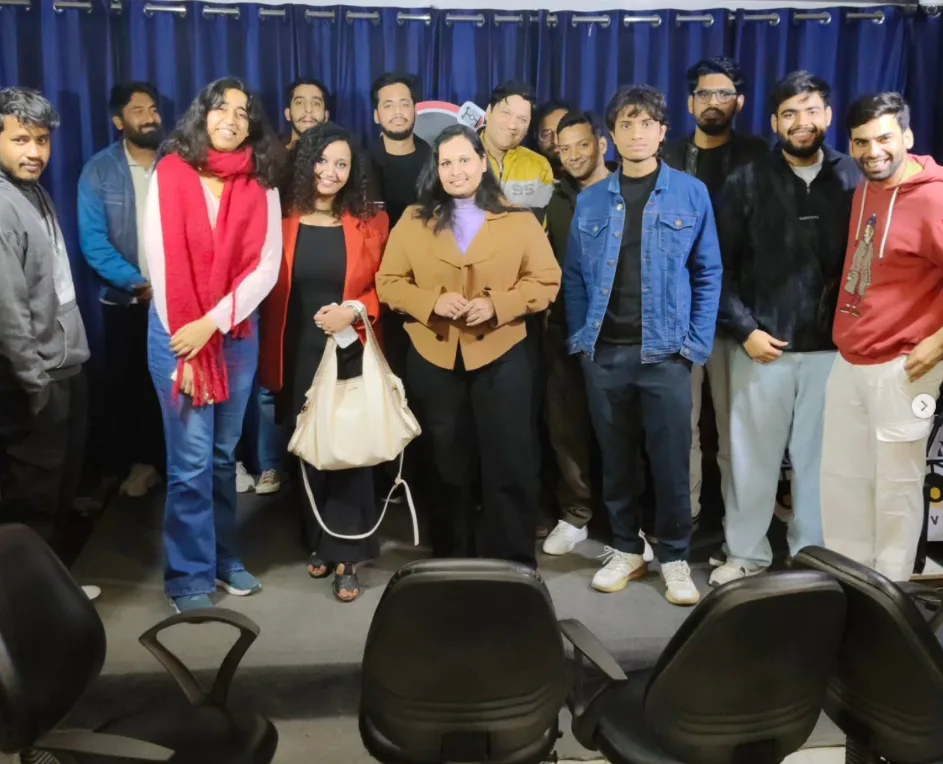
Buddy On Stage is not just an event — it is a community. Performers connect with each other, form writing groups, collaborate on projects, and support each other's growth. The platform's social media features poets regularly, giving them visibility beyond the live event. For a poet trying to build a presence in Delhi's creative scene, having a platform that actively champions your work is invaluable.
Frequently Asked Questions
Where can I perform poetry in Delhi?
+Delhi has dozens of poetry open mic events every week across the NCR region. You can perform at dedicated poetry nights, multi-genre open mics, cafe events, and college festivals. Buddy On Stage in Malviya Nagar, South Delhi hosts weekly open mic events where poets of all levels can sign up to perform shayari, spoken word, kavita, or any other form in Hindi, English, Urdu, or Hinglish. Other areas with regular poetry events include Hauz Khas, Connaught Place, North Campus, Noida, and Gurgaon.
How much do poetry open mics cost in Delhi?
+Poetry open mics in Delhi are very affordable. Most events charge a minimal entry fee — typically between INR 199 and INR 499 — to cover venue, sound equipment, and hosting costs. This small fee ensures the organizer can maintain a professional setup with quality sound, proper lighting, and a dedicated performance space. Some cafe-hosted events include a beverage with the entry fee. Check the specific event listing on buddyonstage.com/open-mics to know the exact cost.
Can I perform Hindi shayari at an open mic?
+Absolutely. Hindi shayari is one of the most popular and celebrated forms at Delhi open mics. Most events actively welcome performances in Hindi, Urdu, and Hinglish alongside English. In fact, Hindi-language performances often receive the strongest audience reactions because the language connects more deeply with local listeners. Platforms like Buddy On Stage encourage all languages and poetic forms including shayari, ghazal, kavita, nazm, and contemporary spoken word.
How long is a poetry open mic slot?
+A typical poetry open mic slot in Delhi is 3 to 5 minutes. This gives you enough time to perform one to three poems depending on their length. Some events offer longer featured slots of 7 to 10 minutes for experienced poets or competition rounds. If you are performing for the first time, prepare two short pieces that fit comfortably within 5 minutes so you have flexibility without the pressure of filling a long slot.
Do I need experience to perform at a poetry open mic?
+No experience is needed. Poetry open mics are designed to be welcoming spaces for performers at every level, from complete beginners to seasoned poets. Many people perform for the very first time at an open mic. Platforms like Buddy On Stage are specifically beginner-friendly — the host guides new performers, the audience is supportive, and there is no judgment on skill level. All you need is a piece you want to share, whether it is original or a cover of a poem you love.
How do I find poetry open mics near me in Delhi NCR?
+The best ways to find poetry open mics in Delhi NCR are: follow open mic platforms like Buddy On Stage on Instagram for weekly event announcements, join Delhi poetry WhatsApp groups and communities, check event listing platforms like BookMyShow and Paytm Insider, search Instagram hashtags like #DelhiOpenMic and #DelhiPoetry, and ask at local cafes in cultural hubs like Hauz Khas, Shahpur Jat, and Champa Gali. You can also visit buddyonstage.com/open-mics to browse upcoming events directly.
Your Poetry Deserves a Stage — Take the First Step
You have read this far, which means you are not casually curious about poetry open mics. You are ready. Maybe you have a notebook full of shayari that nobody has heard. Maybe you have a spoken word piece saved in your notes app that you have rewritten seventeen times. Maybe you have been attending open mics as an audience member for months, telling yourself "next time" every single time. This is next time.
Delhi's poetry open mic scene is the most vibrant and accessible it has ever been. There are events every week, in every part of the city, in every language you might want to perform in. The audiences are kind. The communities are welcoming. The stages are waiting. The only thing missing is you.
Start with Buddy On Stage's weekly events in Malviya Nagar — they are built for exactly this moment, when a poet decides to stop being a writer and start being a performer. Check the upcoming events page to find a show that fits your schedule and sign up for your slot.
Your words were never meant to stay on paper. Speak them. Delhi is listening.