
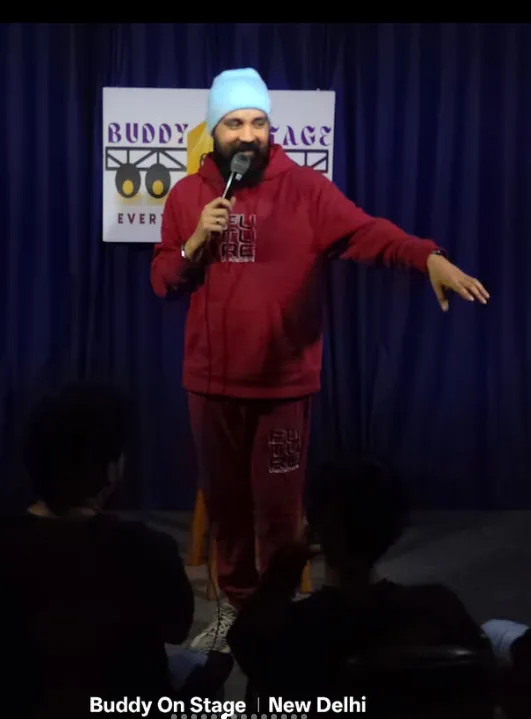
Every working comedian has bombed recently. The ones on Netflix. The ones at your local cafe. The ones headlining clubs for lakhs per show. They have all walked off silent stages within the last 90 days. Not one of them has found a way to skip this part of the craft.
If you think bombing is something you graduate out of, you have the wrong model of comedy. Bombing is not a failure state you occasionally fall into — it is a regular, structural part of a healthy comic's working life, especially when testing new material. Here is why, and how to use yours well.
What A Bomb Actually Is
A bomb is simply a set that did not land the way you intended. Not a character flaw. Not a verdict on your future. Not evidence you are wrong to try. Just an event — one data point in a long series.
The emotional weight of bombing comes from treating it as personal judgement. Reframe it as a lab result and the sting reduces by half immediately. The data says these jokes, this room, this night, did not work. That is all.
Why Bombs Are Irreplaceable Teachers
Bombs Show You Precisely What Does Not Work
A set that killed teaches you one broad thing: your material worked in that room that night. That is useful but low-resolution information — you do not know exactly why it worked or whether it will work again.
A set that bombed teaches you high-resolution details. Which premise was weak, which setup buried its punchline, which tag overreached, which delivery rushed, which moment lost the room. Bombs are dense with diagnostic data that good sets rarely provide. Comics who chase only comfortable rooms plateau; comics who occasionally face cold rooms grow faster.
Bombs Build Your Comedy Immune System
The fear of bombing is always worse than the actual bombing experience. Once you have survived a few real silent sets, the mystery dissolves. By your 5th bomb, it barely registers emotionally. By your 10th, you walk off thinking about the rewrites, not the humiliation.
Pros are not pros because they stopped bombing. They are pros because bombing stopped stopping them. That immune system only develops through reps.
Bombs Force Rewrites You Would Never Do Voluntarily
When a joke lands well, you leave it alone — even if it could be better. When it bombs, you are forced to open the notebook and rebuild it. Most of the strongest material in a working comic's set is stuff that was rewritten three or four times after initially bombing. The rewrites would never have happened without the initial failure.
The only comics who never bomb are the ones who never perform
Buddy On Stage open mics are the safest place to bomb, learn, and come back. Book your next 6-minute slot this week.
Register for an Open MicCommon Reactions After A Bomb (And How To Handle Each)
- "I'm not cut out for this." This is the most common reaction and it is almost always wrong. One bomb is not a signal you should quit. Book the next mic before this voice convinces you otherwise — ideally within 7 days.
- "The audience was wrong." Sometimes partially true, usually not fully. The instinct to blame the crowd feels good but blocks learning. Assume material flaws first; audience-blaming becomes a habit that stalls growth permanently.
- "I need a month off to recover." Wrong direction entirely. The longer the gap after a bomb, the bigger the emotional weight grows. Next mic within 14 days is the rule — ideally within 7. A fresh set on top of the bomb neutralises it.
- "I need to rewrite everything in my set." Overreaction. Rewrite only the jokes that consistently flop across 3+ mics. Rewriting everything based on one bad night means chasing noise instead of signal, and you will make good jokes worse in the process.
What To Do In The 24 Hours After A Bomb
- Do not watch or listen to your recording that night. Adrenaline crash + distorted self-judgement = harmful review. Wait until morning.
- Eat. Sleep. Rest. The adrenaline crash affects your body genuinely — treat it like a minor physical recovery.
- Next morning, review the recording with the 3-pass system. Cold, clinical, forward-looking. The analysis becomes productive only after the emotion has settled.
- Pick 2-3 specific fixes for next mic. Not 10. More than 3 simultaneous fixes and you freeze on stage trying to remember them all. Focused change, not total overhaul.
- Book the next open mic within 14 days. The booking itself pulls the work out of you and shortens the emotional tail of the bomb.
"I had a 4-joke streak of total silence at my 6th mic. I almost skipped the next week. Went anyway, same set with two rewrites, got my first strong night. The gap between my worst and best set was 7 days and one notebook session."
The Bomb Story Every Comic Has
Ask any experienced comedian about their worst bomb and you will get a 2-minute story they now laugh about. That story is a badge. Every serious comic has one; many have several. The ability to tell your bomb stories with affection instead of shame is one of the clearest signs you have truly internalised the craft.
The bomb you are dreading tonight is tomorrow's green-room story. Go get it.
Bombs are the tuition. The comic who refuses to pay tuition never graduates.