
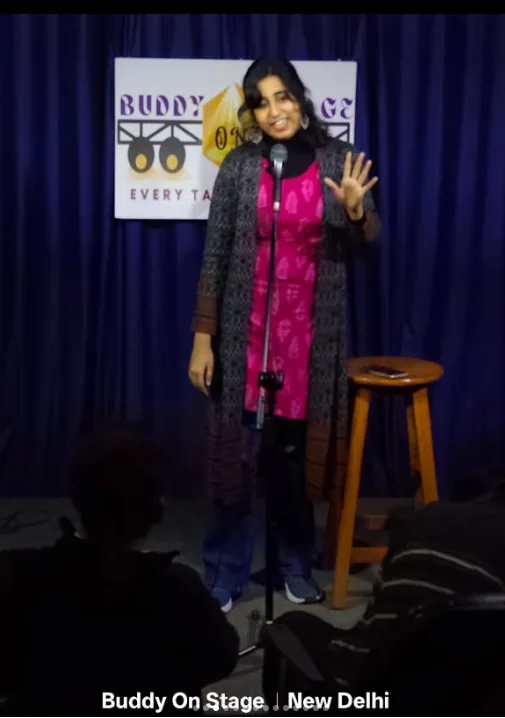
Let us kill the fantasy early. Your first stand-up performance will probably suck. Not in a catastrophic, career-ending way — just in a mediocre, awkward, mostly-forgettable way. You will rush lines, mispronounce a word, forget a joke, and walk off thinking the whole thing was worse than it actually was. And that is exactly what a first set is supposed to be.
This blog is not about lowering your expectations. It is about aligning them with reality — because unrealistic expectations are the single biggest reason first-time comics quit after one attempt.
The Myth Of The Killer First Set
Every now and then, on Reddit or Instagram, you will hear someone say "I killed my first open mic." Those stories exist, they are real, they are also extremely rare — and almost always self-edited in the retelling. The comic conveniently forgets the rushed middle section, the joke that got polite silence, the closer they stumbled on.
For every one "I killed it" story, there are 99 comics whose first sets were mediocre, whose second sets were slightly less mediocre, whose tenth sets were decent, and whose fiftieth sets were good. That gradual progression — not the overnight breakthrough — is the actual pattern.
Killing your first set is not the goal. Finishing it is.
What A Typical First Set Actually Looks Like
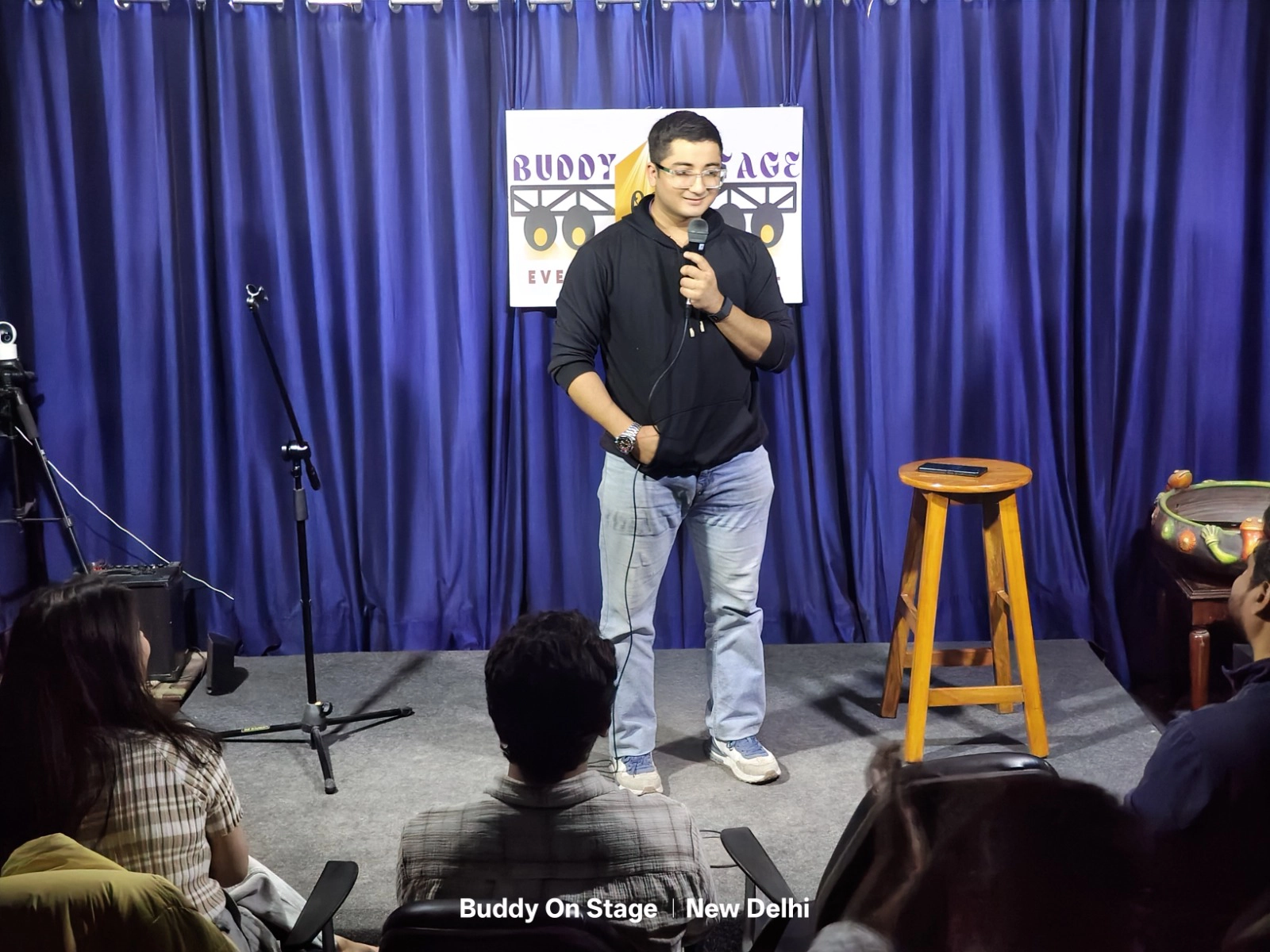
If you have done any of these on your first mic, congratulations — you are a normal first-time performer. None of these are failure signals; they are universal first-time experiences:
- You rush the opener by 30%. Adrenaline compresses time perception. You thought you were speaking at normal pace; the audio says otherwise.
- You speak louder than planned. Voice projection calibration is a learned skill; first-timers almost always overcompensate.
- You forget at least one planned joke. The brain under pressure loses the middle of the setlist more often than the start or end.
- You get 2-3 genuine laughs, 3-4 polite smiles, and one full silence. That is actually a decent first-set outcome.
- You walk off thinking it was worse than it was. Post-performance adrenaline distorts self-perception toward the negative.
This is the baseline. Anything better is a bonus, not the expectation. Mediocre is the target.
Why A Bad First Set Is Actually A Good First Set
You literally cannot skip the first set. It is the entry fee to the craft. And a mediocre or bad first set is dense with information that a great first set would not give you:
- You discover what the stage actually feels like. Very different from how you imagined it for weeks beforehand.
- You find out which jokes were only funny in your head. Some lines that killed in your bedroom die on stage, and the opposite also happens.
- You learn your real pace under pressure. Usually 30% faster than rehearsal pace — now you can compensate for set 2.
- You feel the specific fear and survive it. That survival becomes a reference point your brain returns to for every future mic.
Set #2 has structure that set #1 never had. By set #5, your pacing is cleaner. By set #10, you are a different comic. None of this is possible without first completing the mediocre set #1.
Get your bad first set out of the way
The first brick is the hardest one to lay. Book your Buddy On Stage open mic this week and cross the line from thinking to doing.
Register for an Open MicThe People Who Never Start
The comics who wait for the perfect first set never start. They write, rewrite, read blogs like this one, watch hours of YouTube, and convince themselves they are "preparing." Meanwhile, the comic who booked and bombed last Thursday is three mics ahead. By the time the perfectionist finally books, the early-mover is at mic 10.
Mediocre done beats perfect imagined, every single time. This is one of the clearest patterns in the craft: the single best predictor of long-term progress is whether you started at all.
How To Mentally Prepare For A Bad First Set
- Decide in advance that a bad first set is the plan, not the failure. Expectations matter. If your target was killing, you will feel defeated. If your target was finishing, you will feel triumphant.
- Set one clear success metric: "I finished my 6 minutes." That is the only measure that matters on night one. Everything else is a bonus.
- Ignore the voice comparing you to comics who have done 200 shows. They were as bad as you on their first night. You cannot skip the steps they took.
- Plan to be at set #2 within 14 days. The best antidote to a bad first set is a better second set. Book mic 2 before walking off mic 1.
"My first set had 45 seconds of pure silence in the middle. I was sure I would never come back. I came back the next week, rewrote the quiet joke, and it got my biggest laugh. Thank god I did not listen to the voice telling me to quit that night."
What People Actually Remember About First Sets
Years later, you will not remember most of the jokes. You will remember the walk up to the mic, the specific quality of the lights, one unexpected laugh, and the moment you walked off. The rest blurs. The feelings of embarrassment you are dreading are real in the moment and gone within 48 hours.
Your first set is not a performance. It is a ritual. You cross from "person who wants to try comedy" to "person who tried." Everything after is craft.